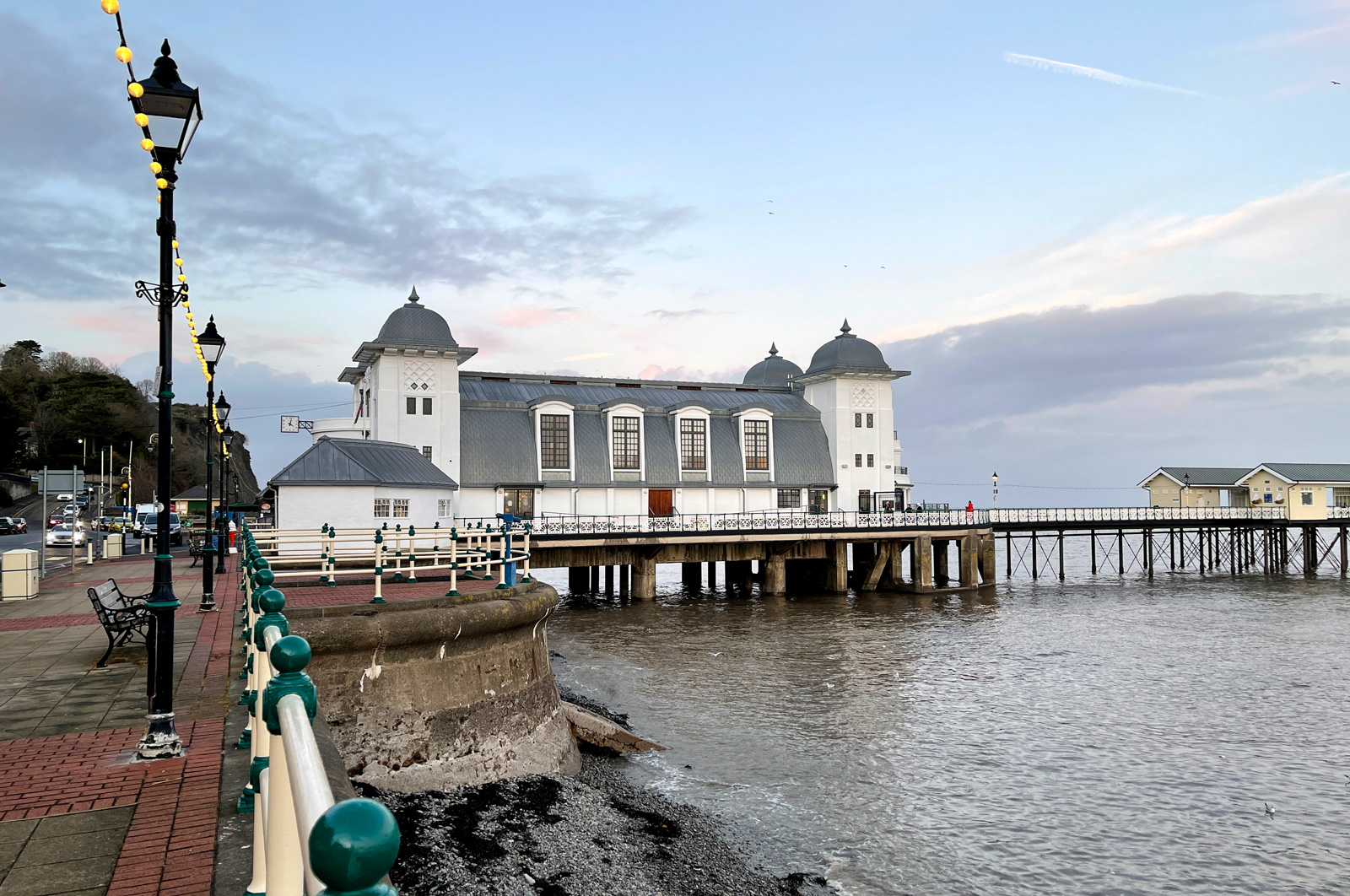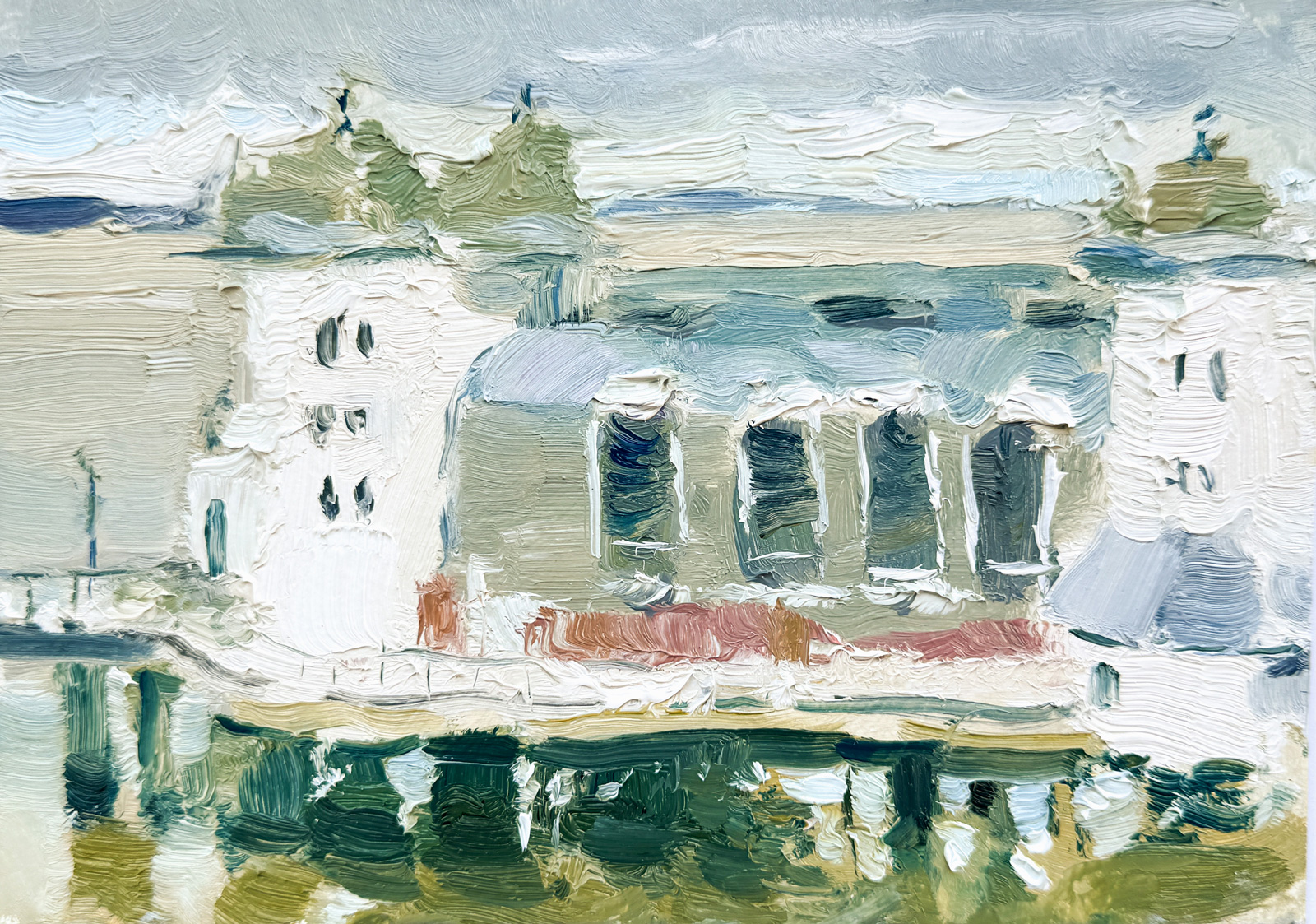
For a long time, my flat in Penarth had a few windows facing east, towards the channel. I could see a slice of esplanade, a black line of railings, and the long grey shape of Penarth Pier walking out into the Bristol Channel. I painted that view a lot for 3 years. Mostly sitting inside and looking out. Sometimes from the beach, looking up at the pier. Once even from Alexandra Park, but I couldn’t see the pier itself from there, only a small piece of sea.
I am not good at history and dates of this place. But as its silent observer I collected a bunch of photos of it. And a few paintings and sketches. I found out that the same place is never the same.
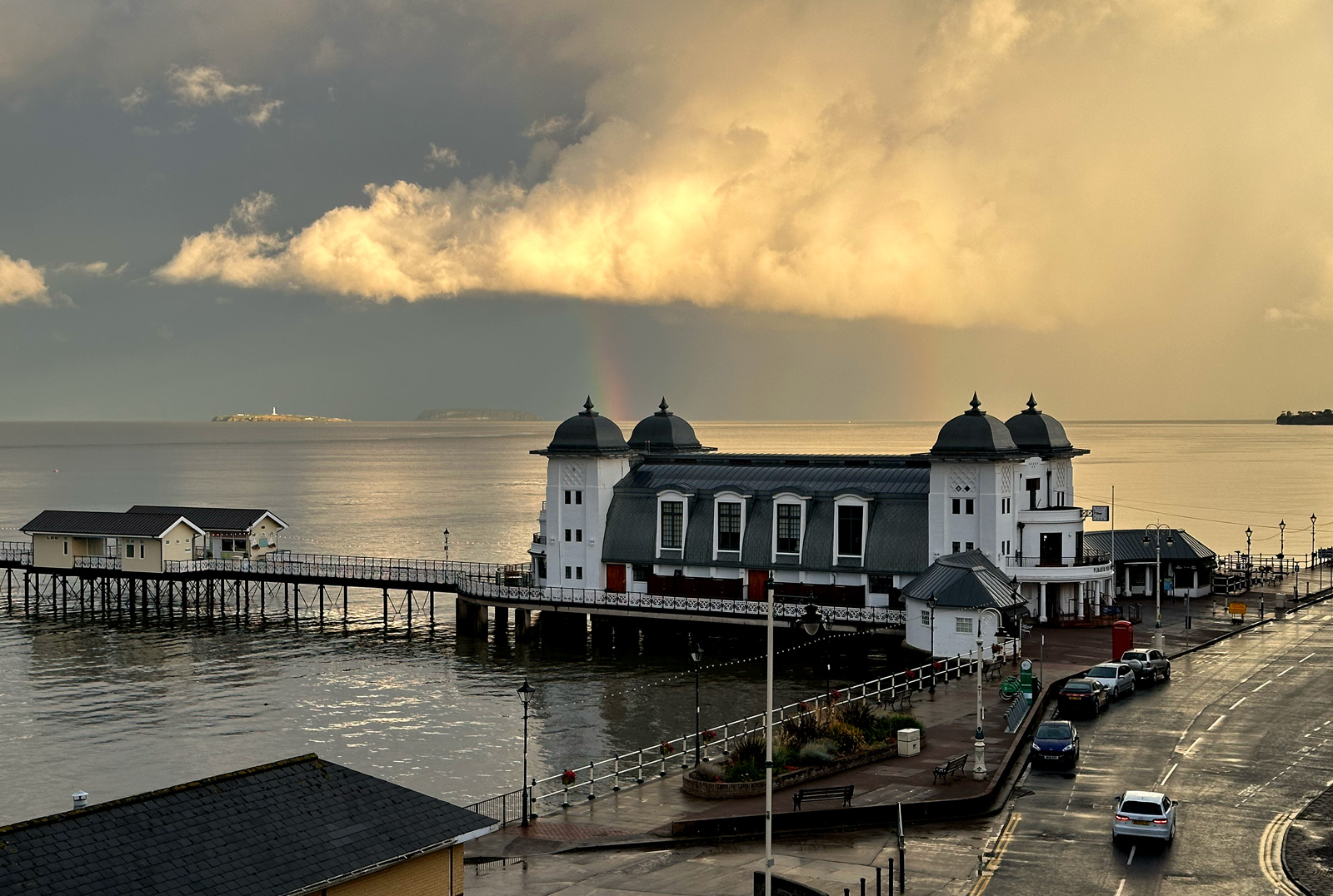
When not sure what to paint, I painted this view. It was always there. Sometimes illuminated by the sun, sometimes under thunderclouds, mysterious, foggy, at night… Countless states, endless inspiration.
The colour the water actually is
People who do not live by the channel are often surprised when I tell them the water changes colour many times in an afternoon. They think of the sea as one colour. But the Bristol Channel is restless. It borrows from everything around it — the sand, the cliffs, the sky, the tide.
In an hour I have seen it go from pale slate to a warm bronze to a cool olive green and back to slate. The cliffs at Penarth Head are red sandstone, so when the sun is low the water near the rocks goes a strange dusty pink. When clouds pass over, the colour can change in the time it takes to mix a new note on the palette.
There is also the question of the mud. The Bristol Channel has one of the largest tidal ranges in the world, and at low tide the bed shows through — a soft, warm brown that I once heard a visitor call “disappointing”. I do not agree. The brown of the channel bed is one of the most useful colours I have. When I want to give a Penarth Pier painting that feeling of the place, the brown does more than the blue.
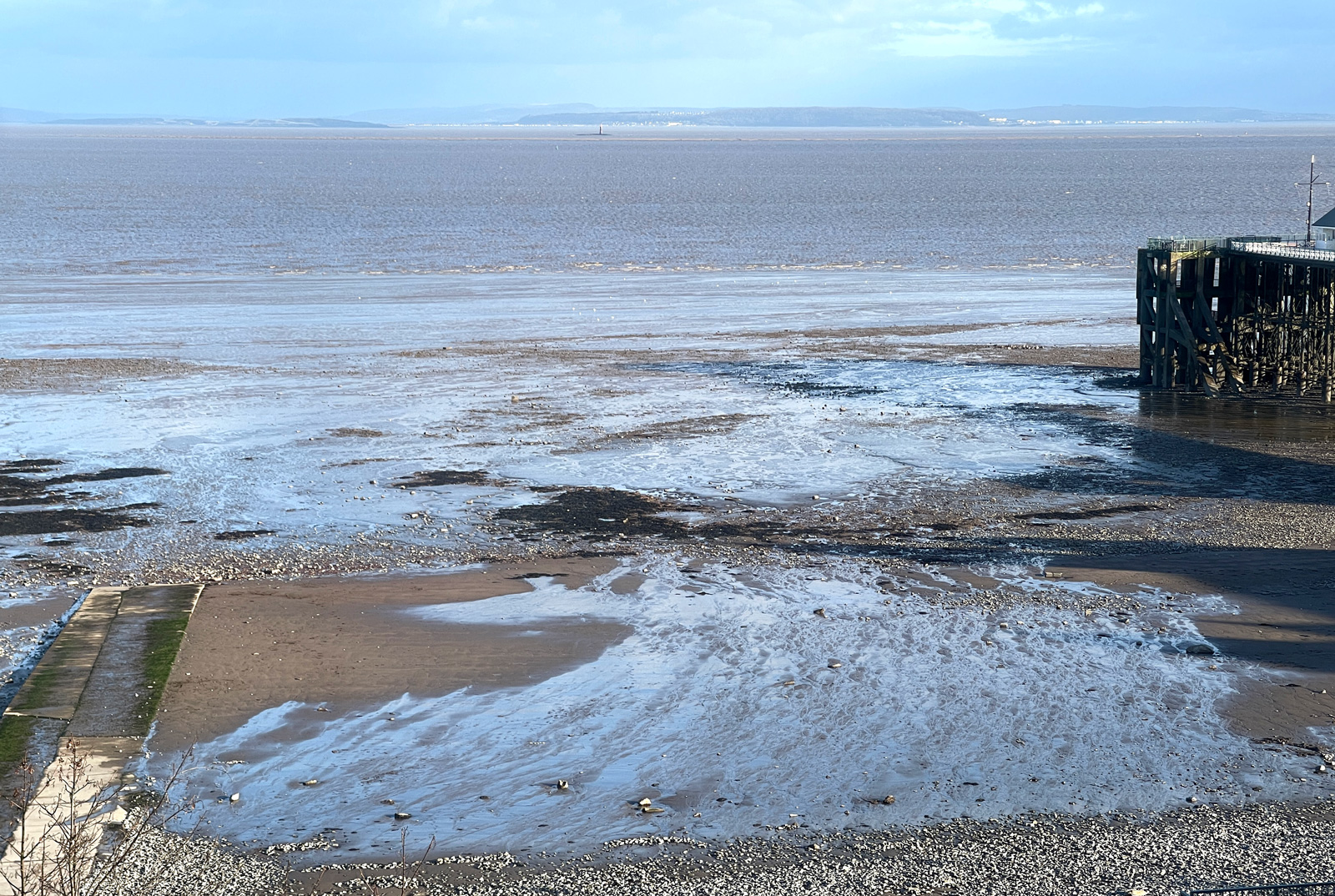
This is the part of painting Penarth Pier no photograph can teach you. A camera will tell you “the sea was grey today”. The eye will tell you it was a hundred greys, layered and moving. I learned to trust the eye over the camera, slowly, by watching the same window for a long time.
A small word about Alfred Sisley
You cannot paint Penarth Pier for long without thinking about Alfred Sisley. In 1897, near the end of his life, he came to South Wales and made a small group of paintings of the Bristol Channel from Penarth. One of them is called “Bristol Channel from Penarth, Evening”. You can find it in books, sometimes in exhibitions.
I first saw a reproduction of it years before I lived in Penarth. Now, after three years of painting the same view, I notice things in it I did not see before. The way Sisley refuses to make the channel dramatic. The way the cliffs sit quietly on the right of the picture. The way the light is held in the water rather than thrown across it.
I do not paint like Sisley. I do not want to. But it is good to know that an Impressionist of his level stood somewhere near my window and decided this place was worth a painting.
Spring, and the first real blue
Spring on the pier is shy. It does not arrive with flowers — there are no flowers on the pier itself, only the bedding plants in the cliff-top gardens. Spring arrives in the water.
In late February the sea begins to lighten. By March there is a real blue back in it. Not the warm Mediterranean blue of postcards but a cool northern blue with a little green in the deep places. I reach for ultramarine and a touch of viridian. I have to work fast — winter painting is patient, but spring painting is impatient. I always want to finish before the light moves.
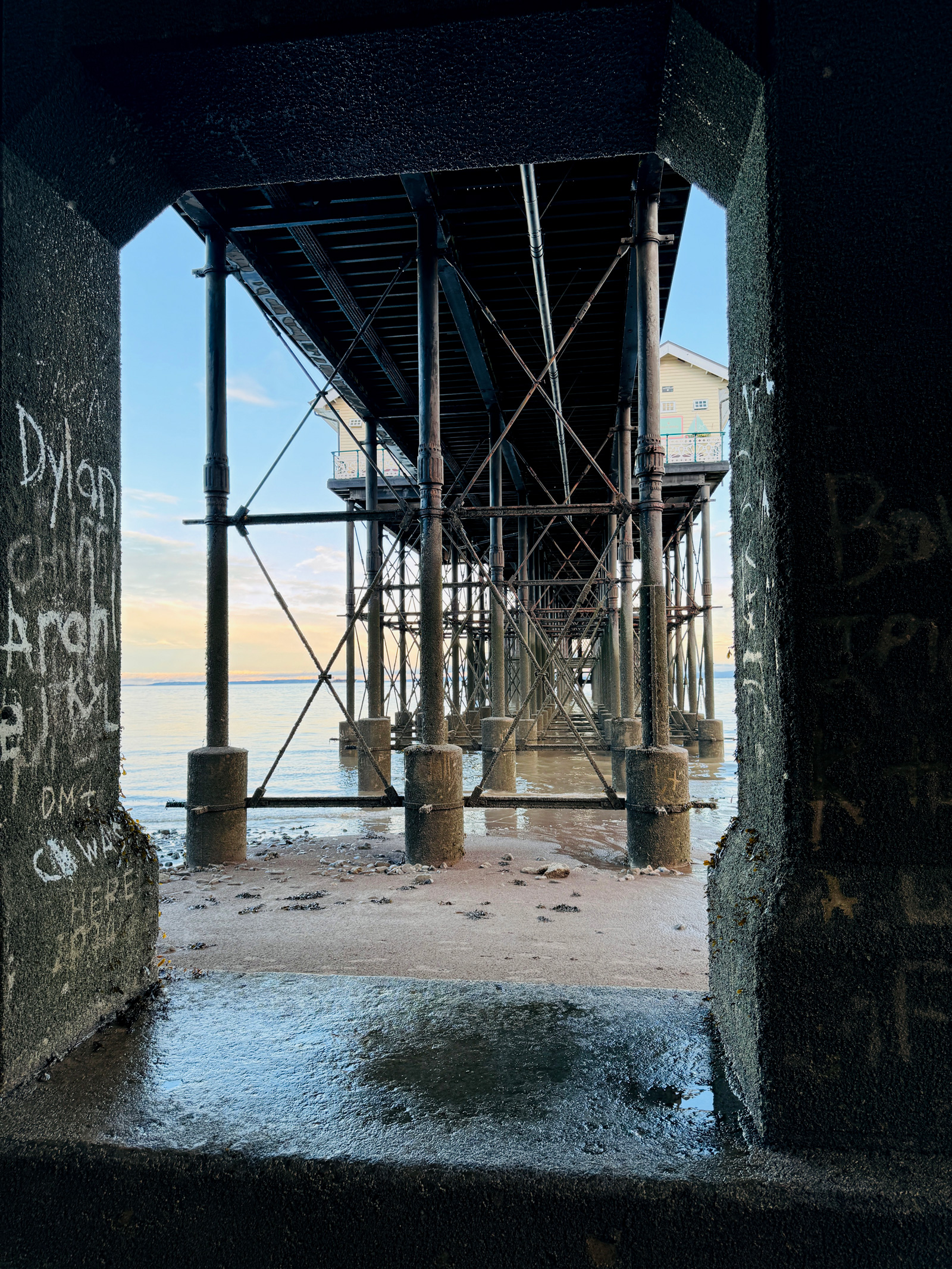
Summer evenings on the Bristol Channel
If I had to pick a favourite season for painting the Bristol Channel, it would not be summer. Summer is too easy.
The colours are lovely. The channel in July, in the right light, is a real blue. The pier looks postcard-perfect. The mistake an artist can make in summer is to settle for the postcard.
So in summer, I paint it from unusual angles. From below, on the beach, looking up. Or I wait for days when the channel is filled with small white triangles — a regatta — and the pier becomes the still part of a moving picture.
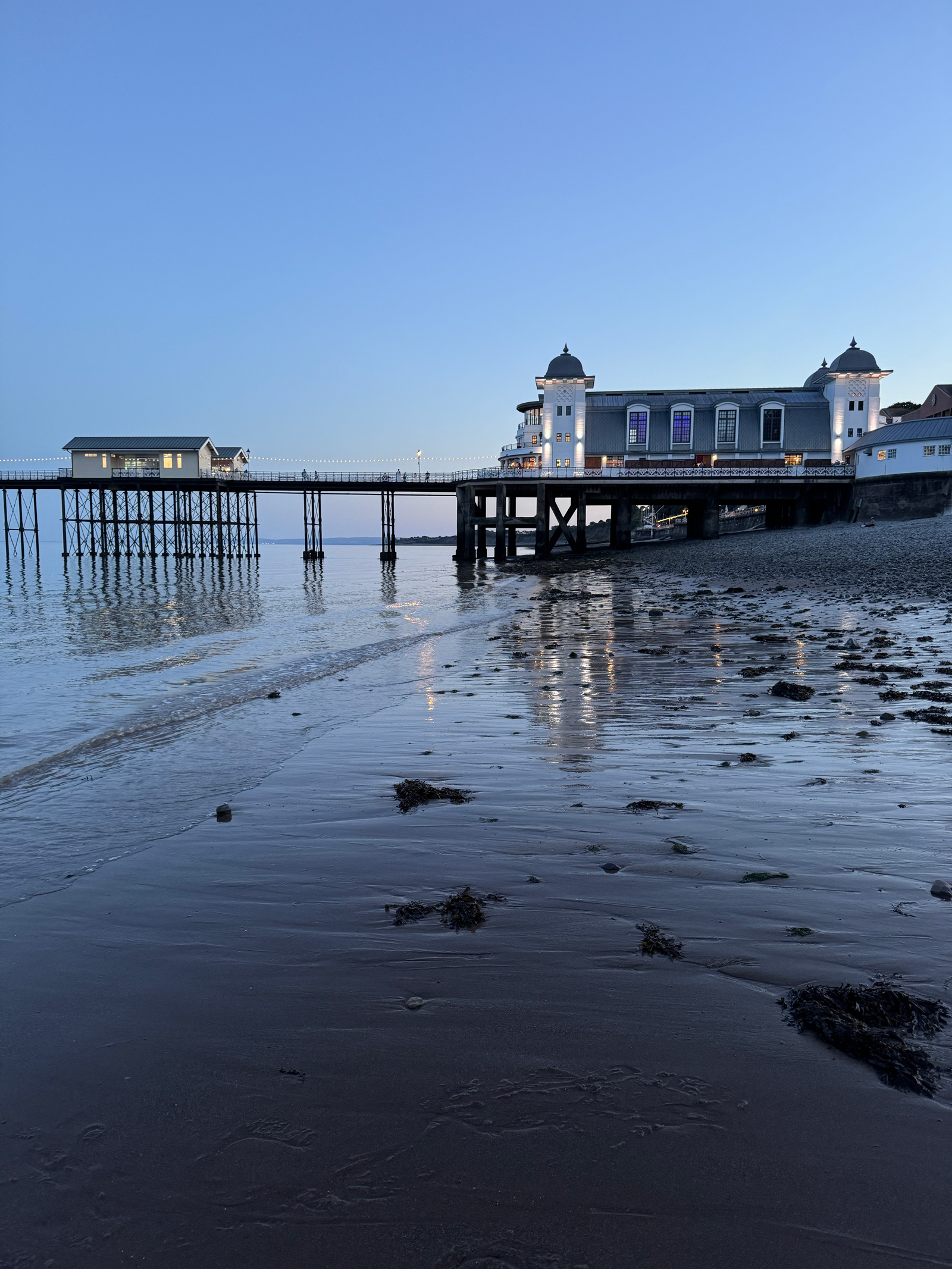
Summer also gives me my best plein-air working hours. I take a tiny pochade box down to the pebble beach. Two hours, one or two panels, no expectations. Most of these summer studies are not finished pictures. They are notes, like a writer’s notebook on a long train journey. But every now and then a summer note becomes a full oil painting in the studio months later.
Autumn, when the channel goes silver
Autumn is, for me, the most beautiful month on the pier. The crowds thin. The cafés stay open. The light turns soft and slow.
There is a moment, just before the tide turns, when the Bristol Channel goes silver and the cliffs of Penarth seem to lean toward the water.
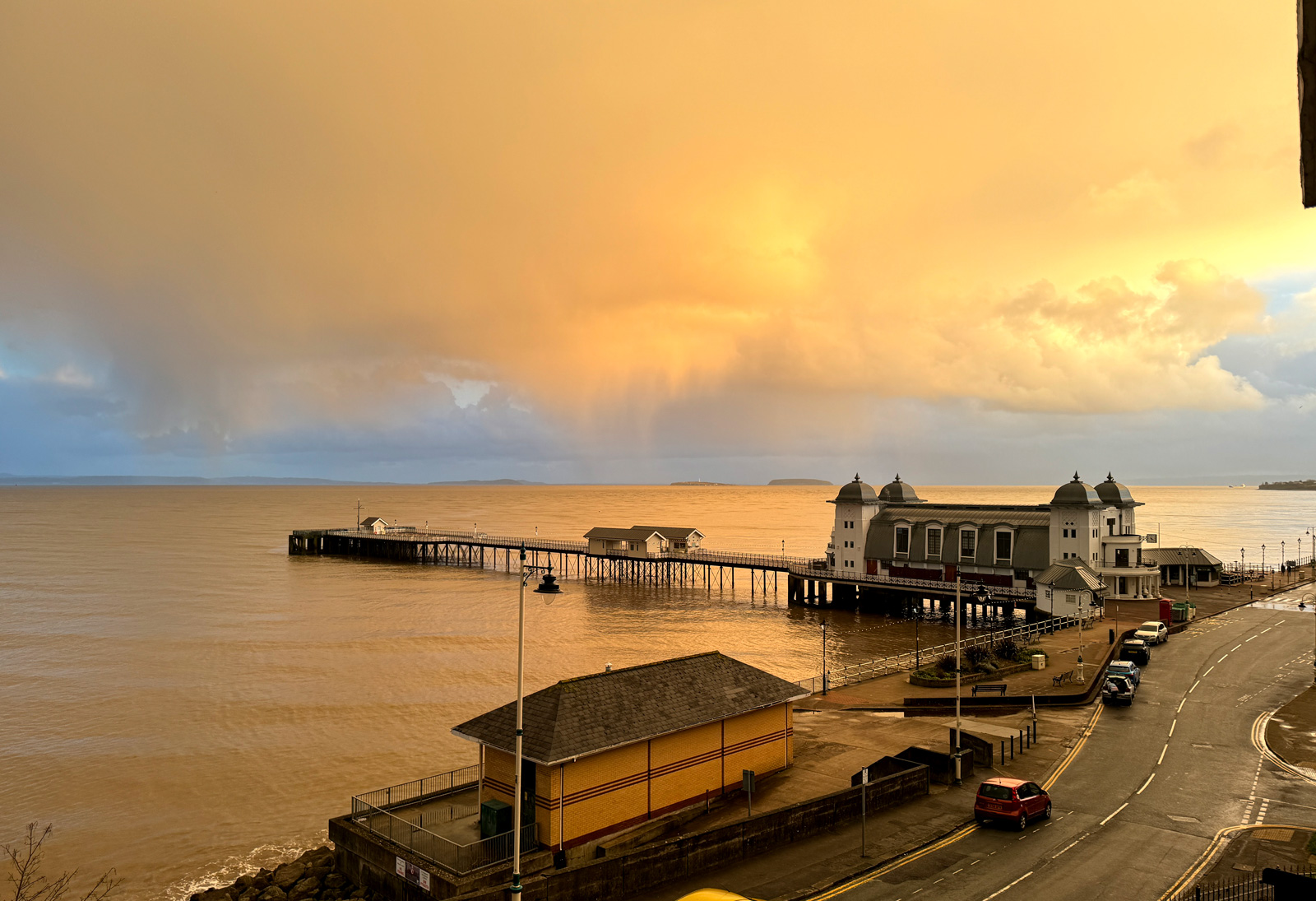
What changes in autumn is the temperature of the light. It is warmer than spring or winter — the sun comes in low, almost from the side — but the water is cooler. That temperature gap is what makes the channel silver. Mix the painting too warm or too cool, and you lose it.
I almost always work in oil pastel in autumn. The medium suits the season. Oil pastel forgives the wind, the cold fingers, the lack of patience. I use solvent to soften the layers, so the work does not look like a sketch even when it is one. The technique is simple. The looking is the hard part.
When the pier disappears
Some days the pier is not there.
I mean it has gone into the fog. On a foggy October morning the channel can swallow the pier in twenty minutes. I have stood with a brush in my hand and watched it happen. The wood disappears first, then the railing, and finally the long curve of the lamp standards. What is left is a soft grey rectangle where the pier was.
These are the days I love most.
A pier you can paint perfectly is too easy. A pier that is half a pier — a memory of a pier — is a real subject.
There are also the storm days, when you cannot work outside at all and the pier becomes a black silhouette in your window. The sky behind it does something dramatic that ruins half a dozen photographs in the time it takes to make tea. On those days I paint from the warmth of the kitchen.
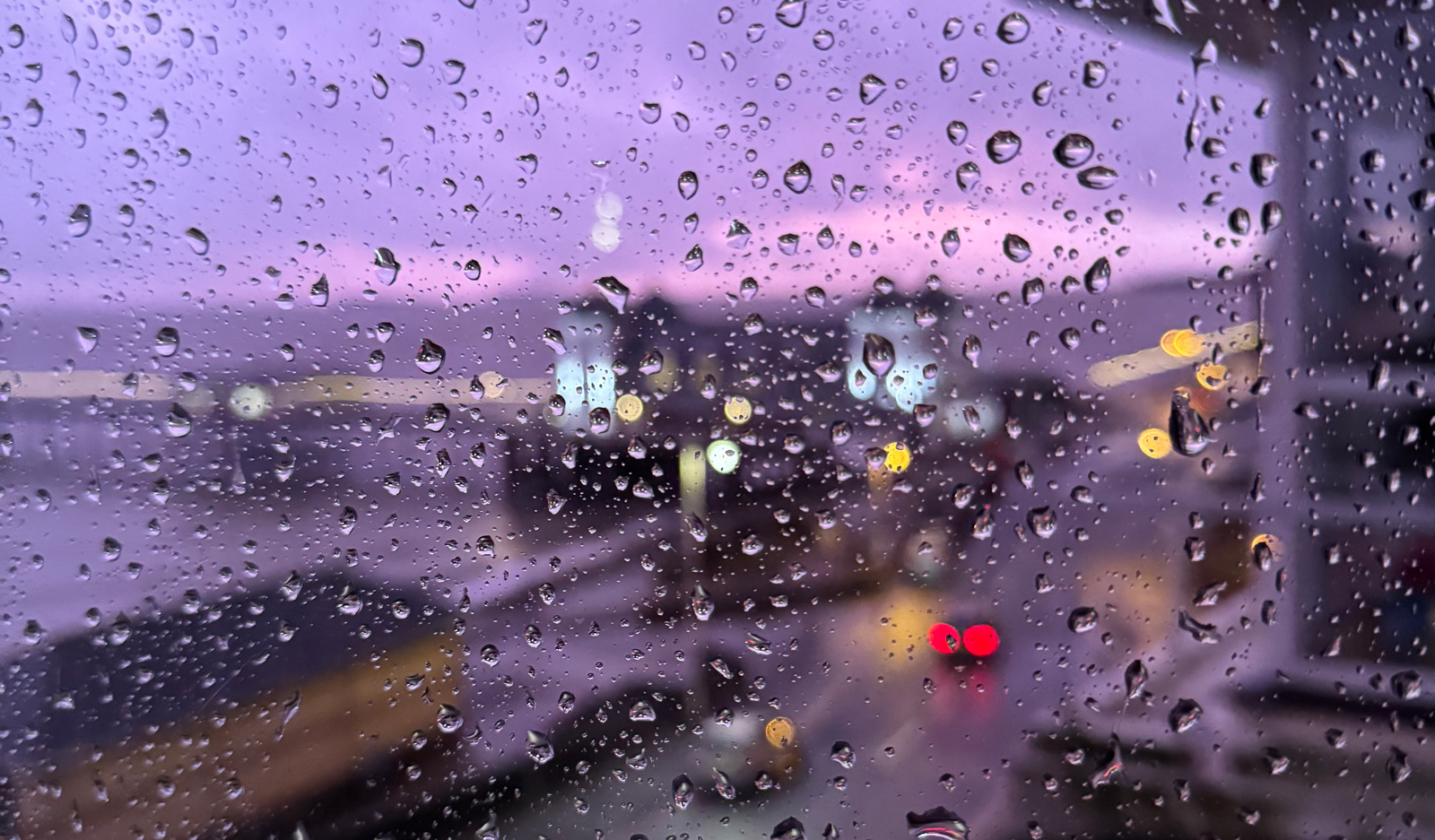
What the window taught me about painting the Welsh coast
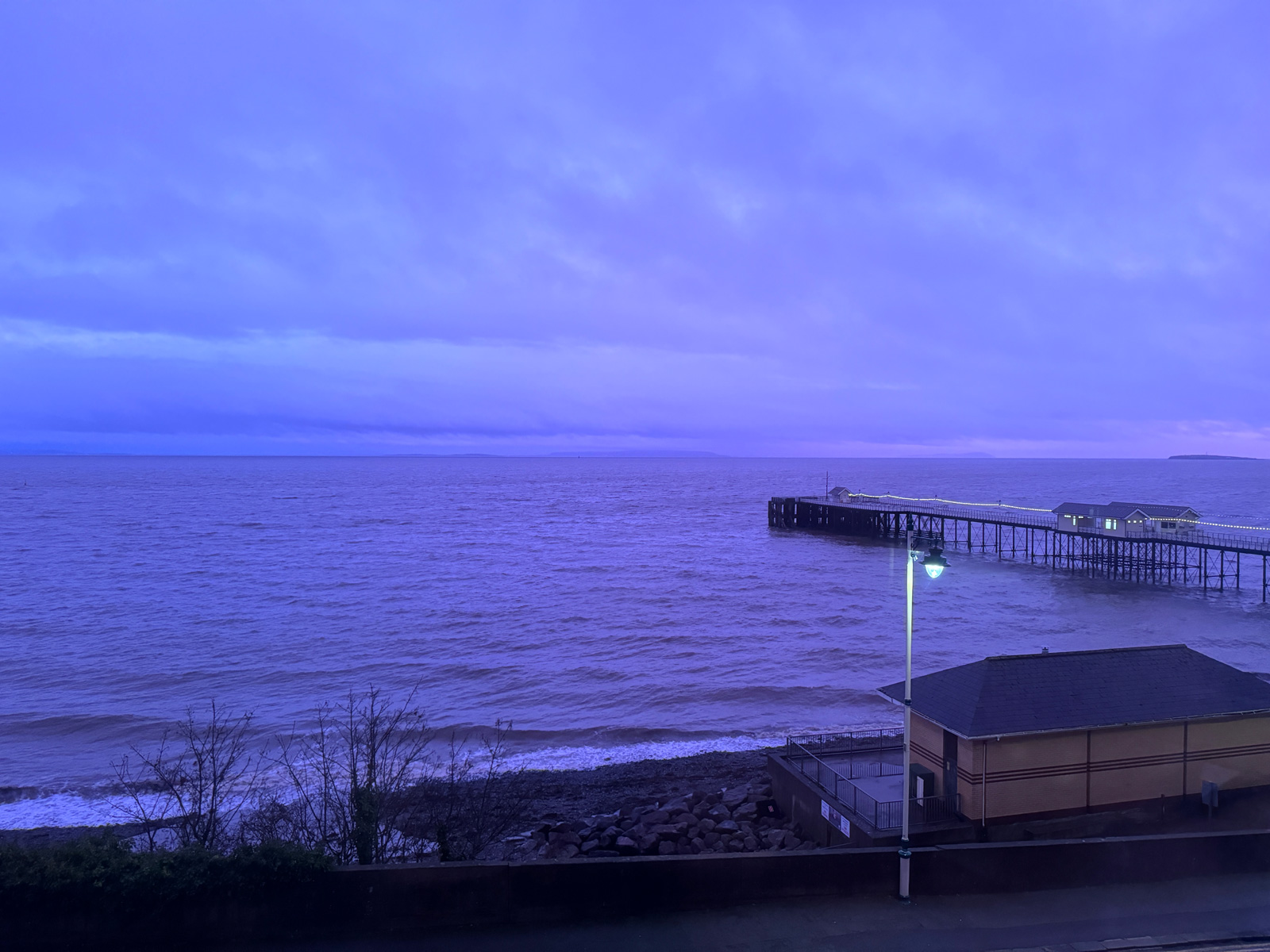
I do not live in that flat any more. The window is someone else’s window now. But the pier is still my pier, the way a place can be yours after you have looked at it long enough.
The window taught me one important thing. Painting the same place, over and over, is not boring. It is the slowest, kindest way of getting to know a piece of the world. Each painting is a question — what is the colour today? what is the light doing? — and the answers are different every time.
This is also why I paint Penarth and the Welsh coast and not somewhere more dramatic. There are mountains in Wales — Snowdonia, the Brecon Beacons — that are easier to turn into striking pictures. But a small pier in a small Welsh town has been mine for years, and that closeness shows in the work.
If you are looking for a Penarth Pier painting for your home, it is likely that you also know this place. You have walked it on a Sunday, or watched the lights come on from the cliff path, or had a coffee at the end of the boards while the wind tried to take your napkin. You do not need me to explain the pier to you. You need a piece of canvas or paper that remembers it the way you do.
This is also true for those of you reading from further away — from London, from Bristol, from somewhere that is not the Welsh coast. A small painting of the pier on your wall is a strange and useful thing. It does not pretend to bring Penarth into your room. It just makes a small corner of the wall behave like the channel does — quietly, changing with the light. That is enough. That is the whole point.
A few notes on the paintings
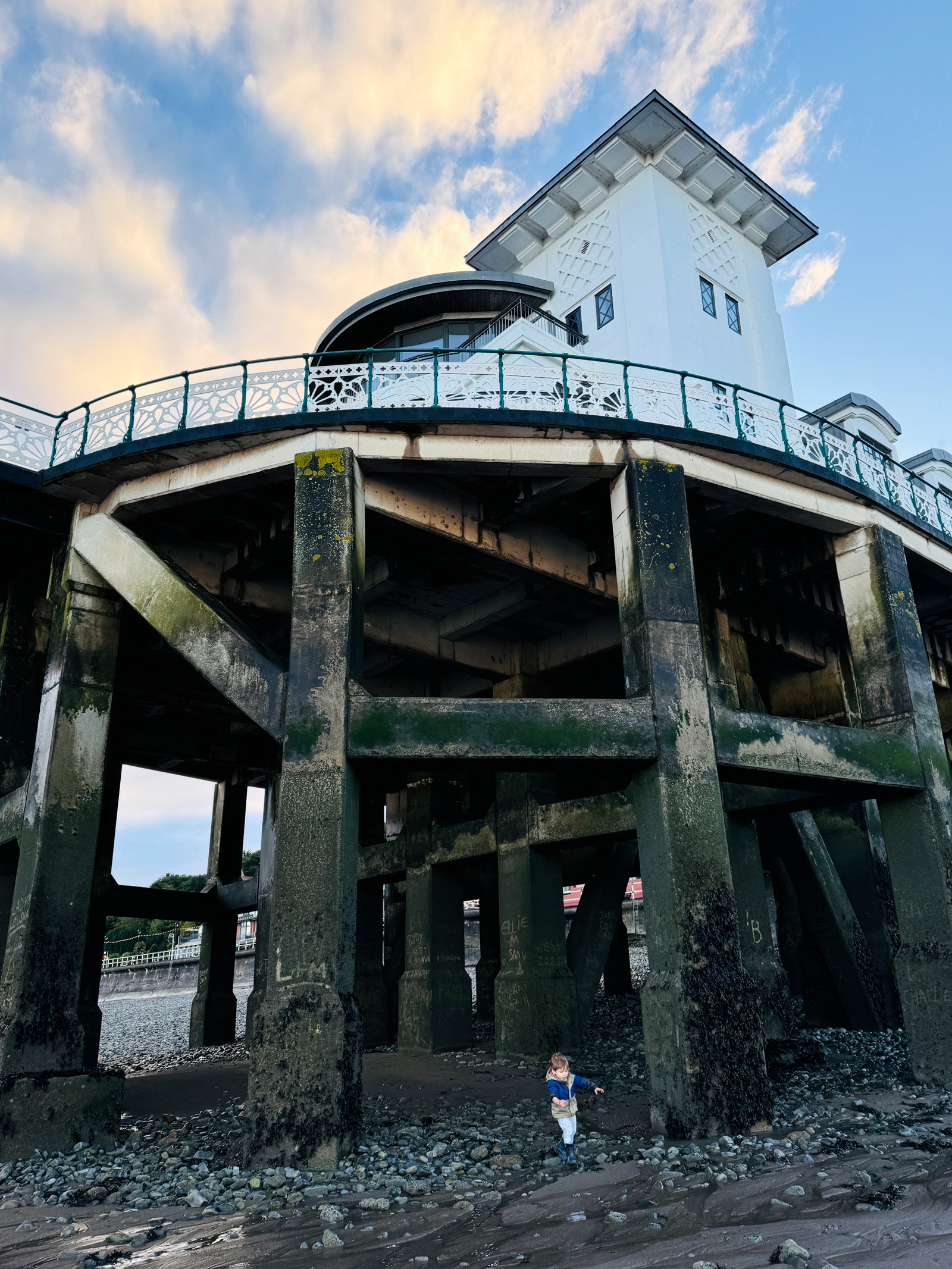
You can find the most recent Penarth Pier paintings in the shop. Some are small enough to fit on a quiet wall by a doorway. Others are made for above a sofa. If you would like to commission a particular view — the pier from the cliffs, the pier in fog, the pier at night — I am very happy to talk about it.
Thank you for reading this far. Painting the same place for three years was a quieter project than I expected. It made me a slower painter, a more patient one. The pier is still there. The light is still changing. There are more Penarth Pier paintings to make.