Italian Gardens in Penarth is a very small place. You can walk through it in a few minutes, especially if you are only trying to get from Penarth Esplanade to the pier.
But for drawing, small can be useful. You do not have to search for a subject for long. There are palms, stone walls, steps, benches, flowers, big leaves, railings, a cafe nearby, and the Bristol Channel behind everything. The place gives you a lot before you have even opened the sketchbook.
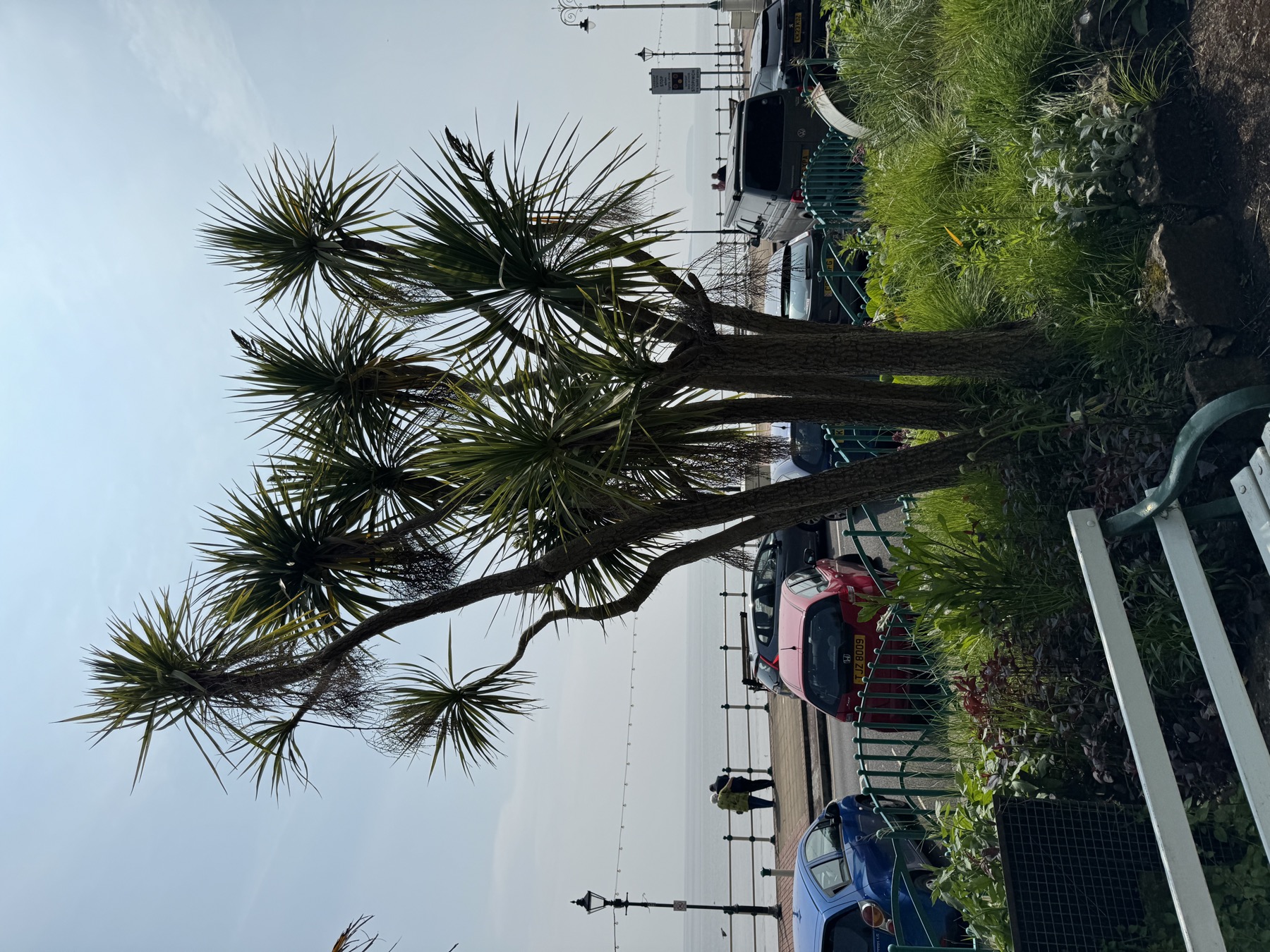
We have come here many times with sketchbooks. In sun, in grey weather, in that very Welsh situation where it is not exactly raining, but it is also not exactly not raining.
That is one reason I like this garden. If the weather turns, Coffi Co is close enough to escape into. You can sit outside when it is dry, or go inside with coffee and keep drawing from the window, from memory, or from whatever is in front of you. There is also a restaurant on the other side, so the garden is squeezed between useful places. This is a very practical kind of romance.
Why it works for drawing
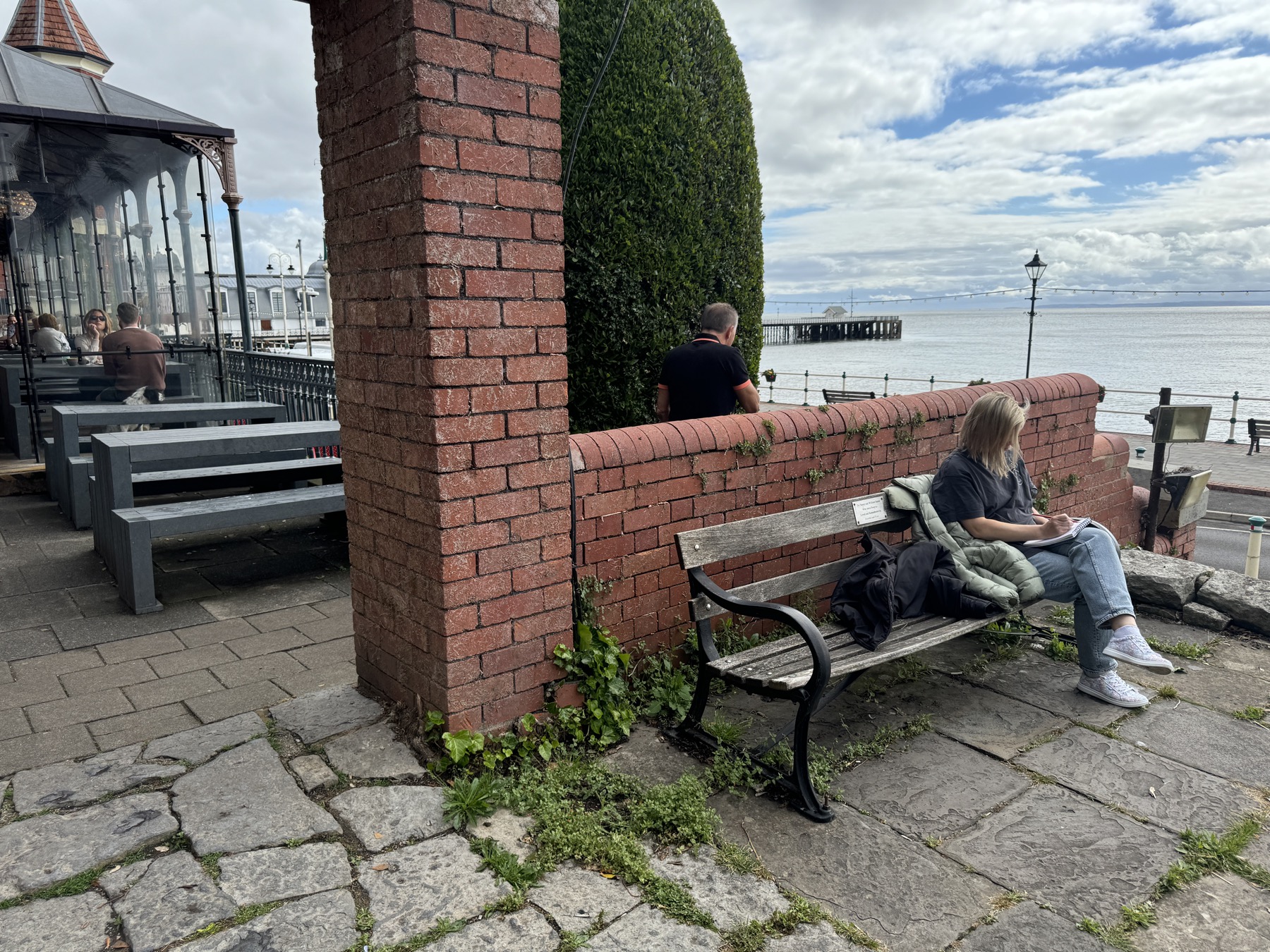
Italian Gardens has good sitting places. That sounds like a small thing, but when you draw outside it matters a lot. If the bench is in the wrong place, I usually last about ten minutes.
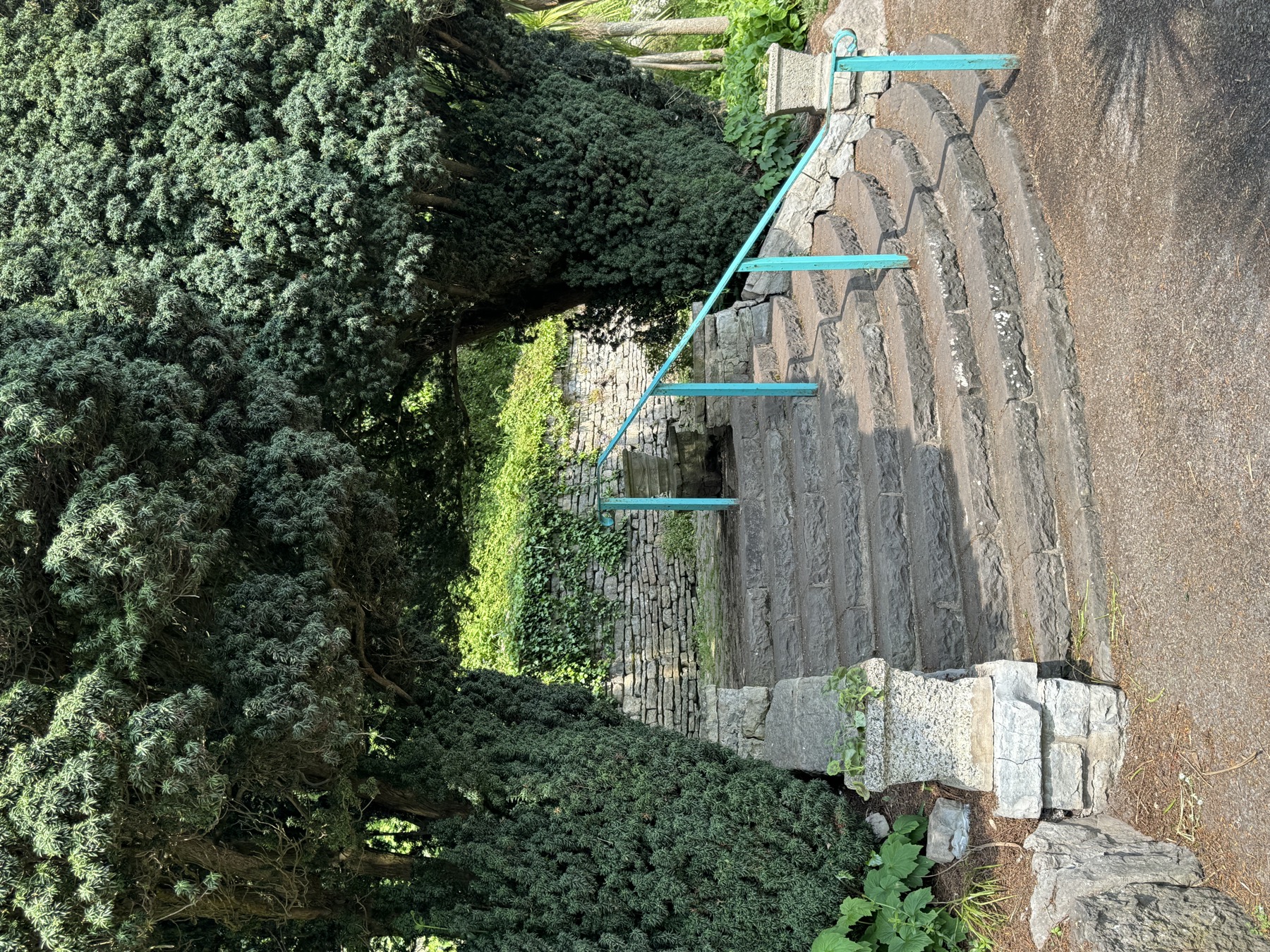
From one bench you can see palms against the sea. From another, the stone steps and dark trees. If you sit closer to the planting, the subject becomes all leaves and flowers. If you look outwards, the garden opens into the Esplanade, the pier, people walking, cars, railings, lamps, and the pale line of water.
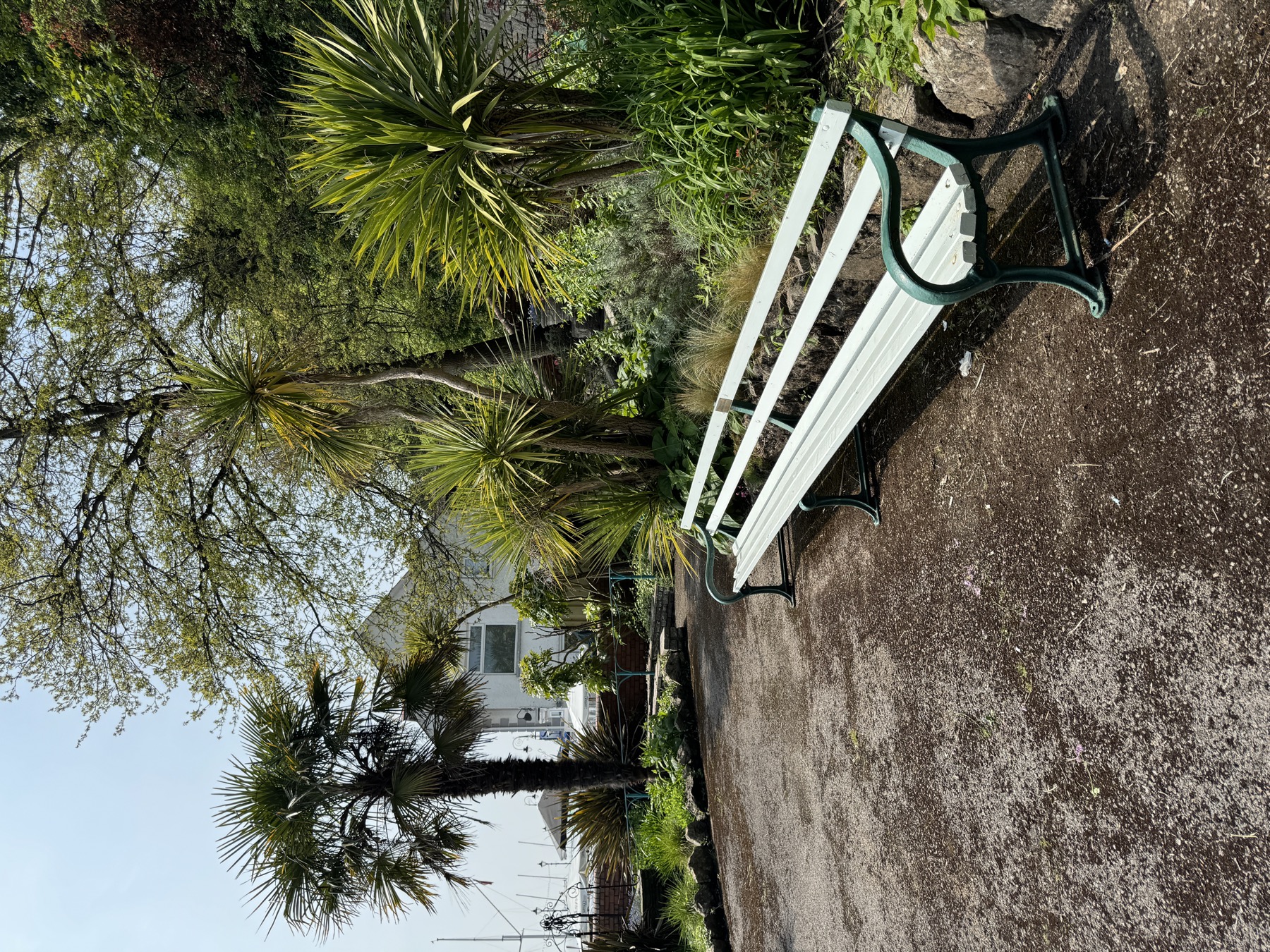
There is also a nice mix of shapes. The palms are sharp and spiky. The stone walls are heavy. The flowers are softer. The railings make thin bright lines. The sea behind it all is almost too well behaved sometimes, like it is pretending not to be part of the composition.
Palms, steps, leaves
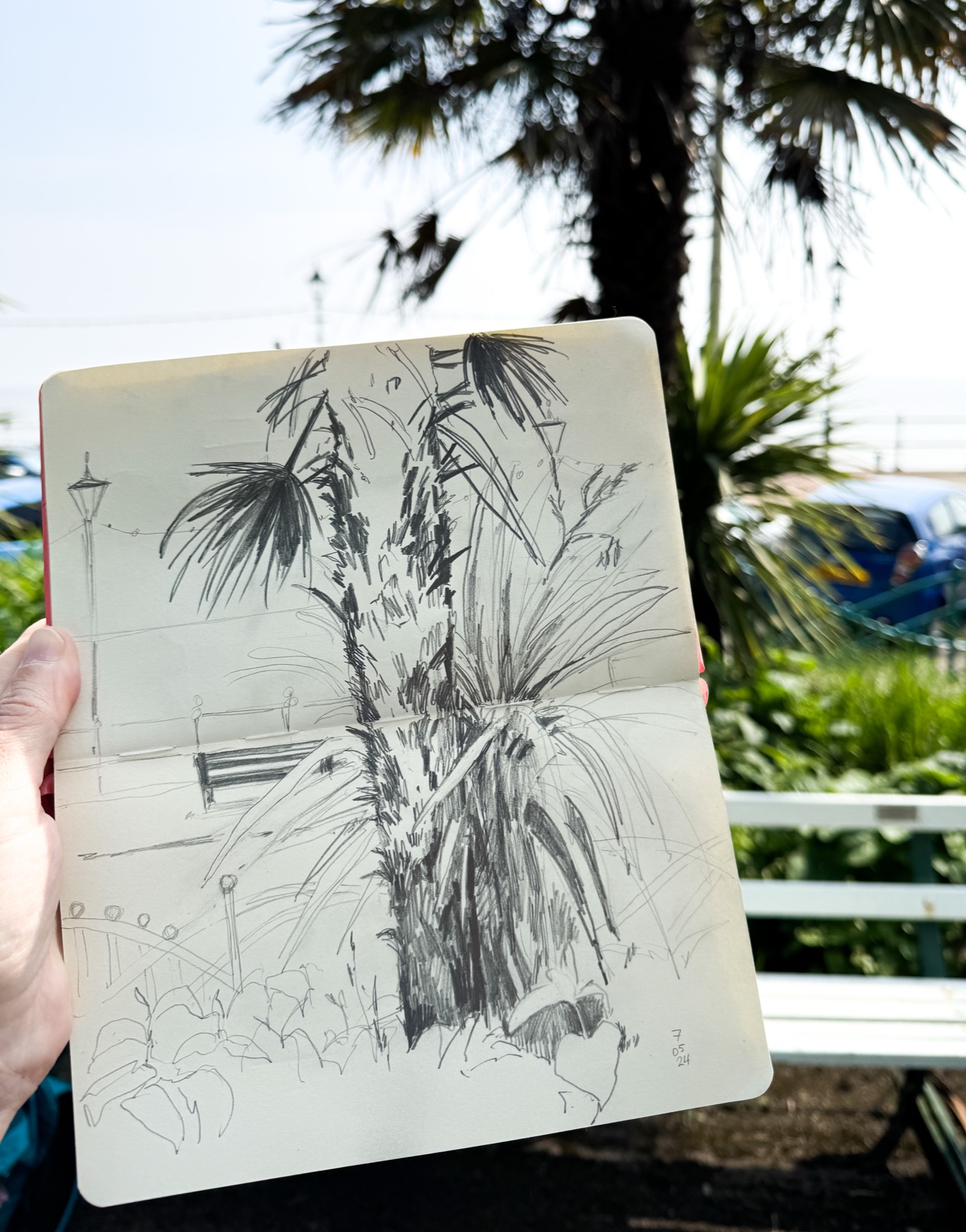
The palms are the obvious stars. They make the garden feel slightly unlikely, especially on a cold day. They also make excellent drawing subjects because they refuse to be tidy. Every leaf points somewhere else. The trunks are rough and dark. The top of the tree is a small explosion.
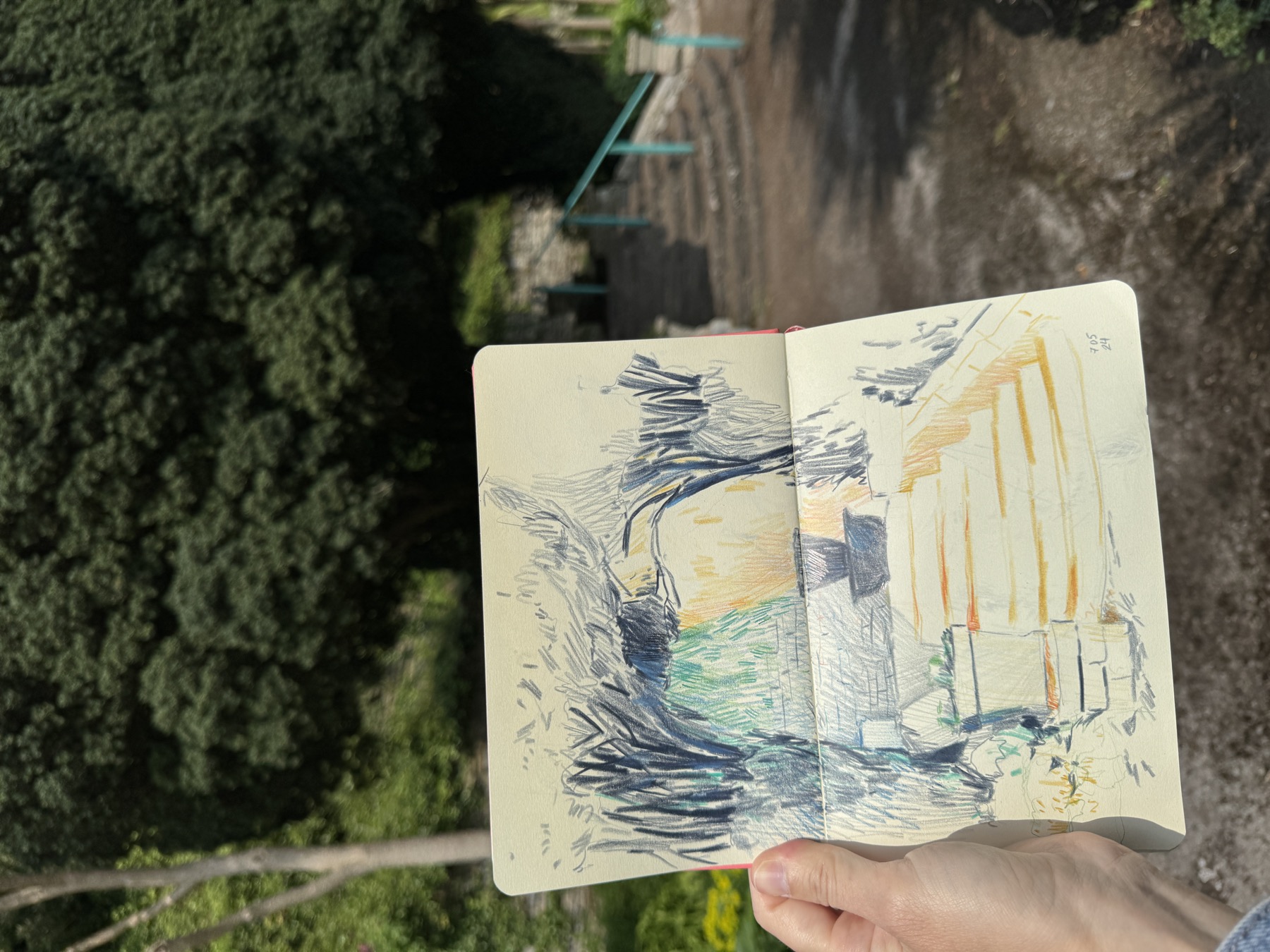
I like drawing them quickly in pencil. Not every leaf, just the direction of the leaves, the weight of the trunk, the dark gaps, the bits that catch the light.
The plants closer to the ground are a different problem. They are not architectural like the palms. They spread, overlap, hide each other, and make little arguments about green.
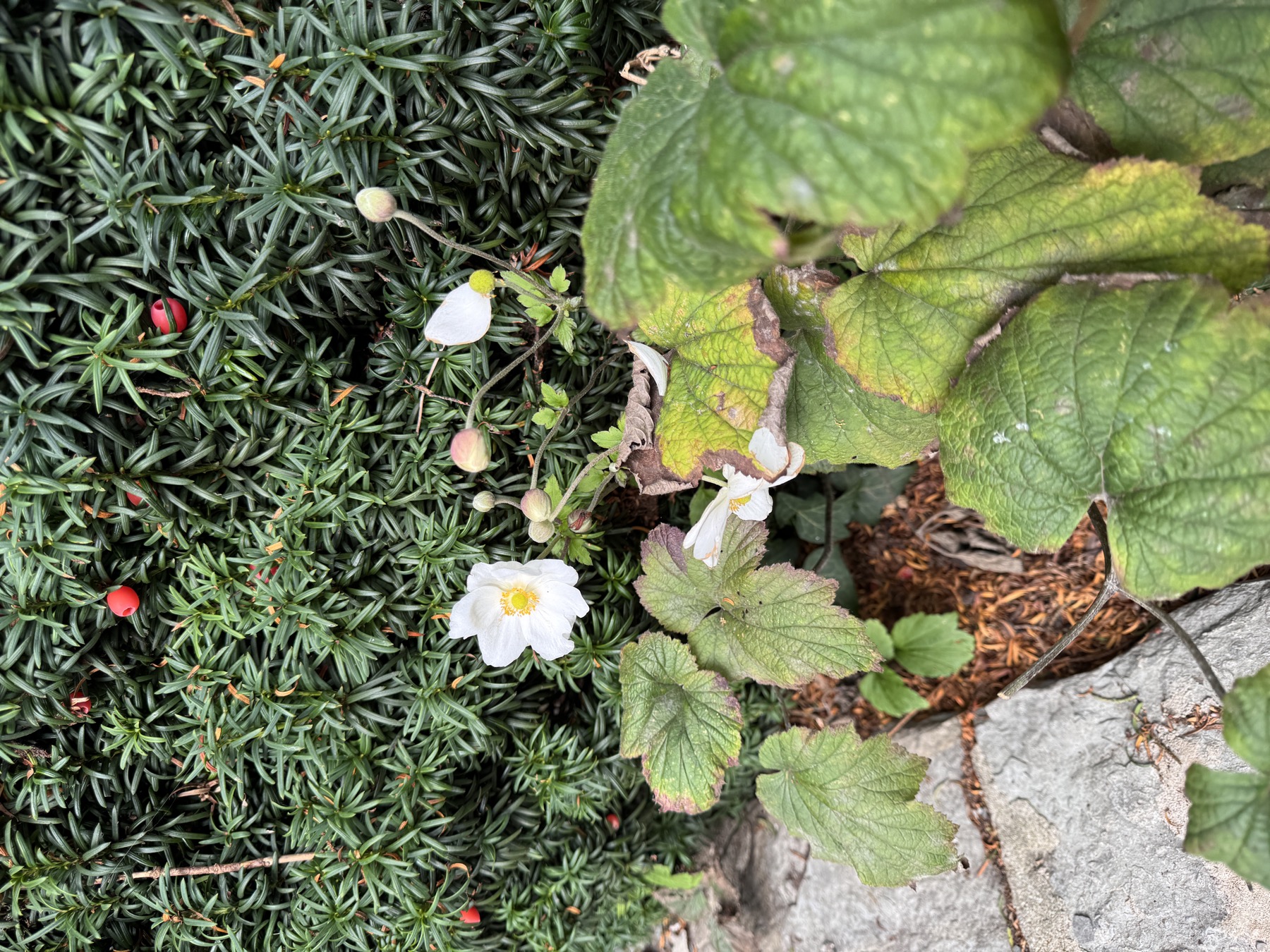
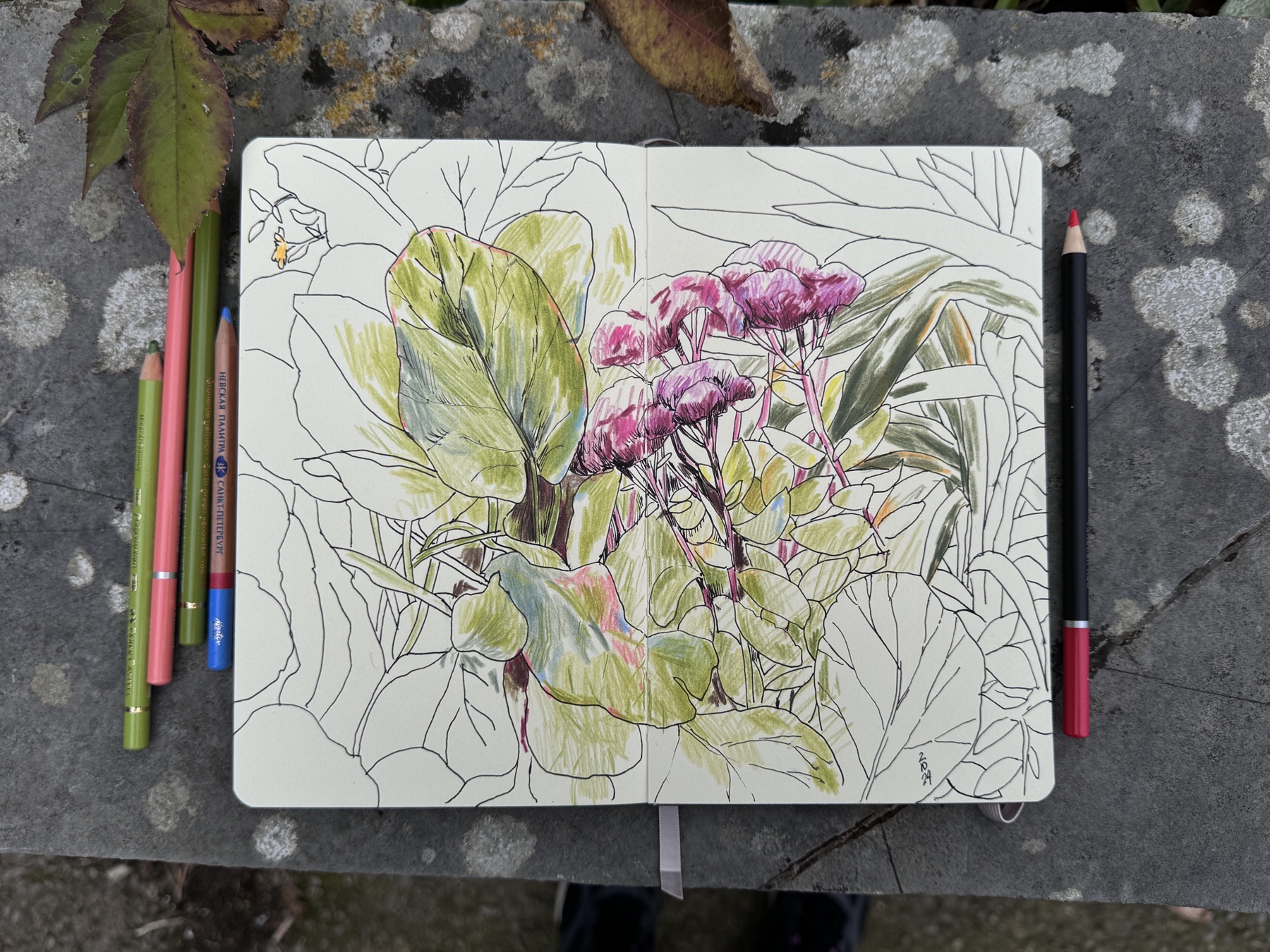
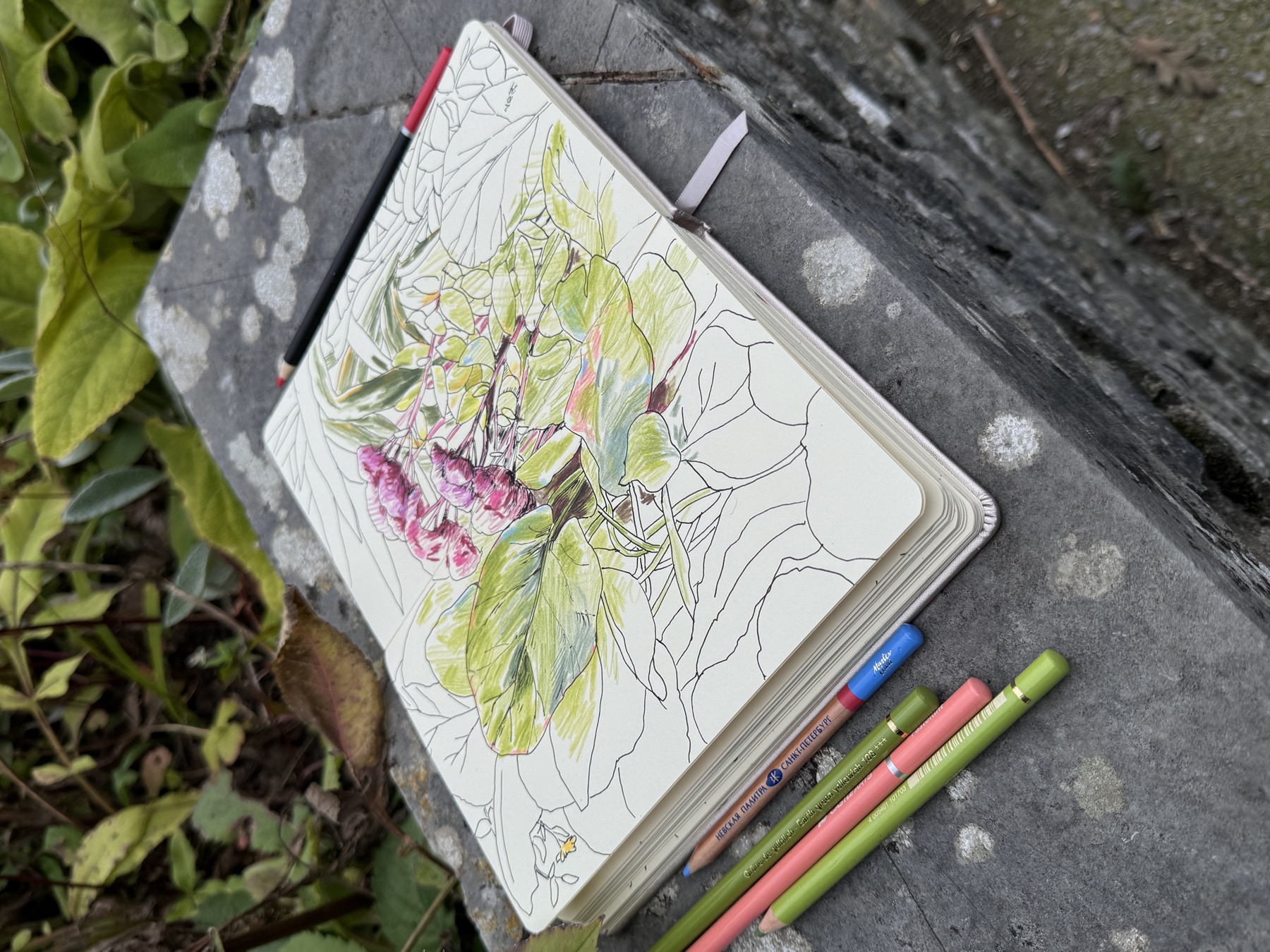
Sometimes the best subject is just a patch of leaves and pink flowers. No big view. No dramatic sky. Just a small tangle that asks for colour.
Drawing in different weather
The garden changes a lot with weather. In bright sun, it looks almost cheerful: hard shadows, shiny leaves, strong greens. In grey weather, the colours drop back, and the stone walls and railings start to matter more.
On rainy days, the cafe becomes part of the story. You can still draw. The subject just changes. Instead of palms and sea, you get windows, lamps, people, coats, cups, and the dark interior against the light outside.
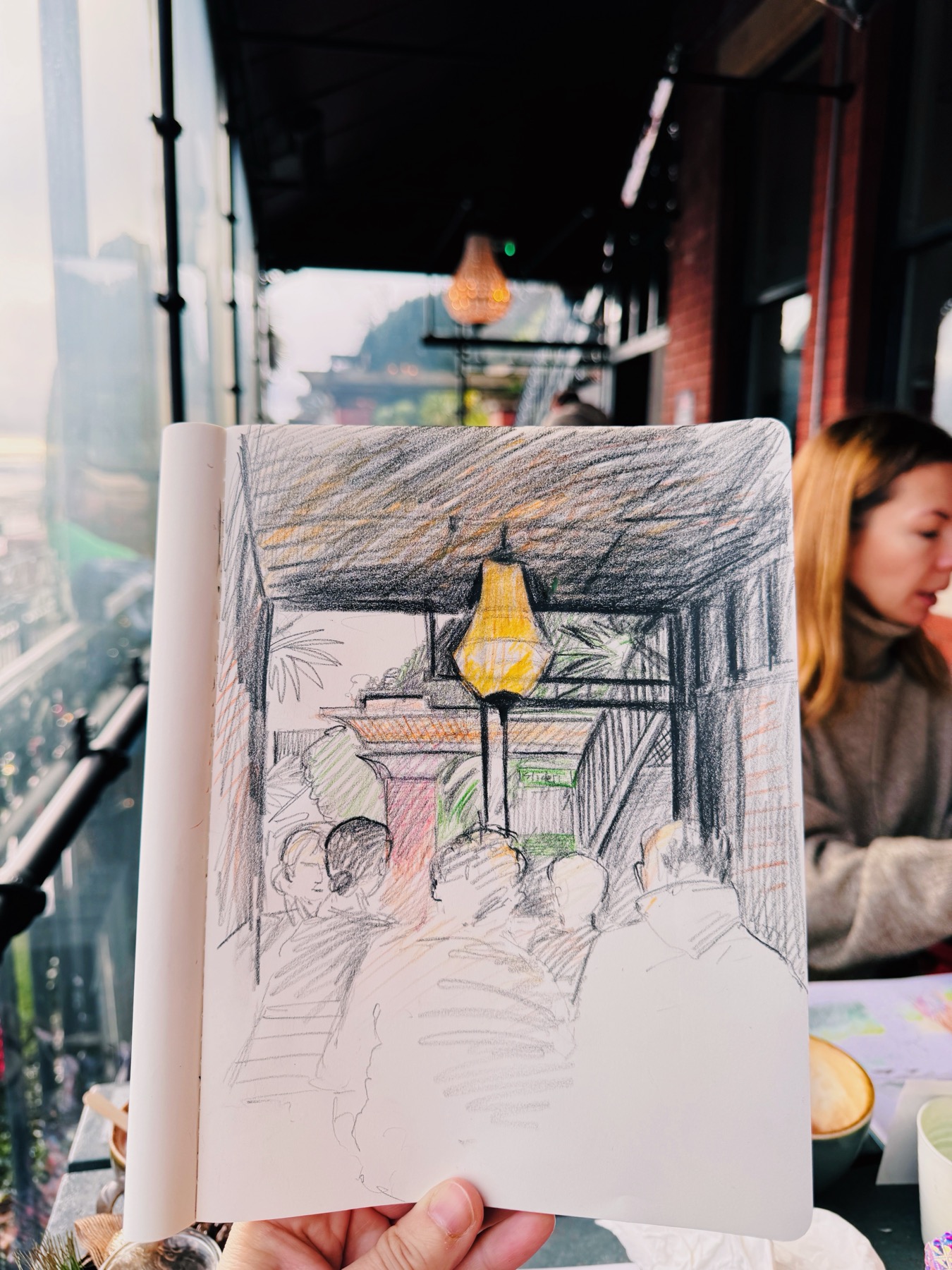
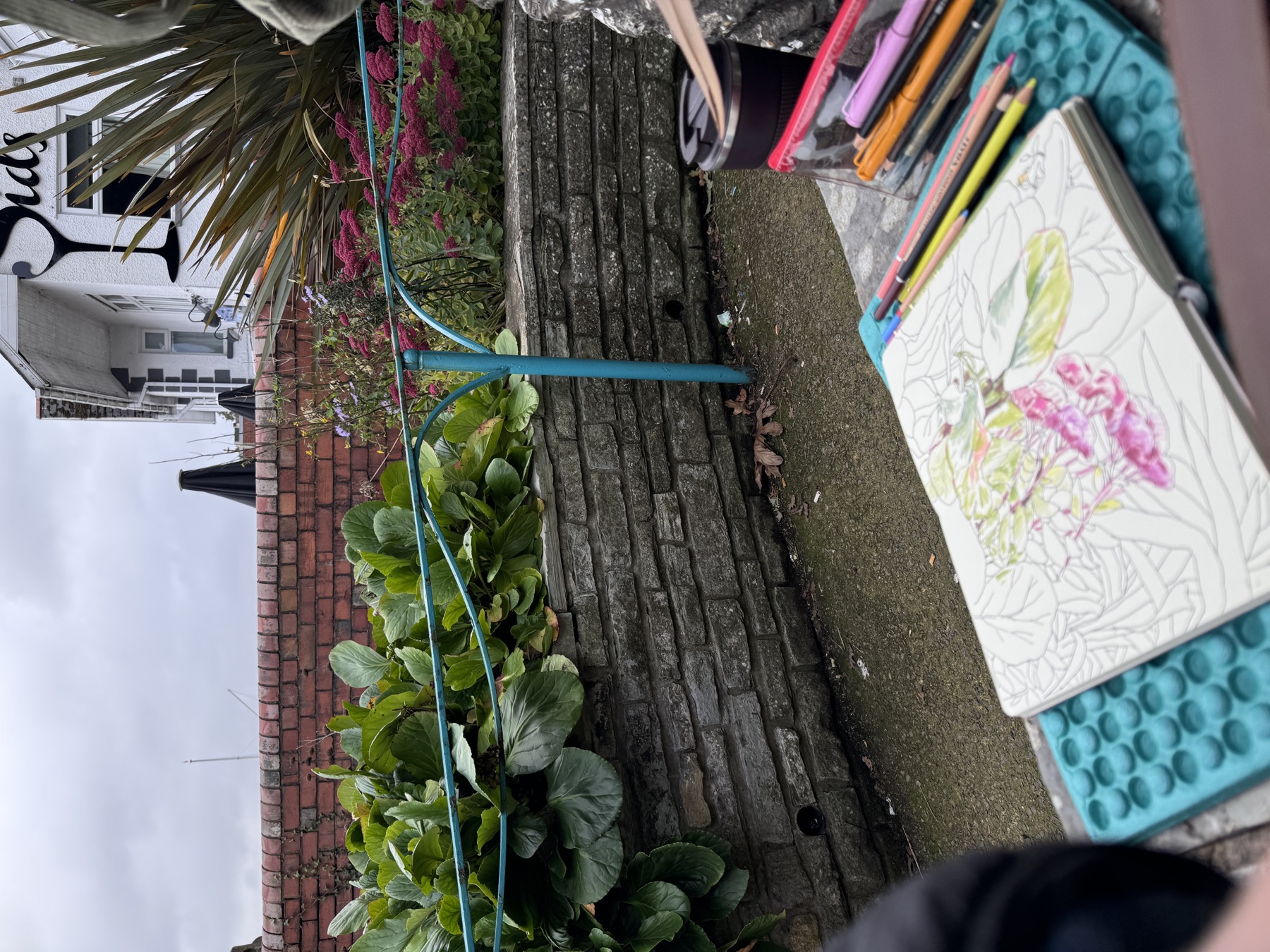
This happens quite often in Penarth. You leave home thinking the weather is fine enough, and then the rain decides to join you anyway. When we meet there, Coffi Co is the easy escape route: coffee, dry tables, windows, and enough things inside to draw while the weather sorts itself out.
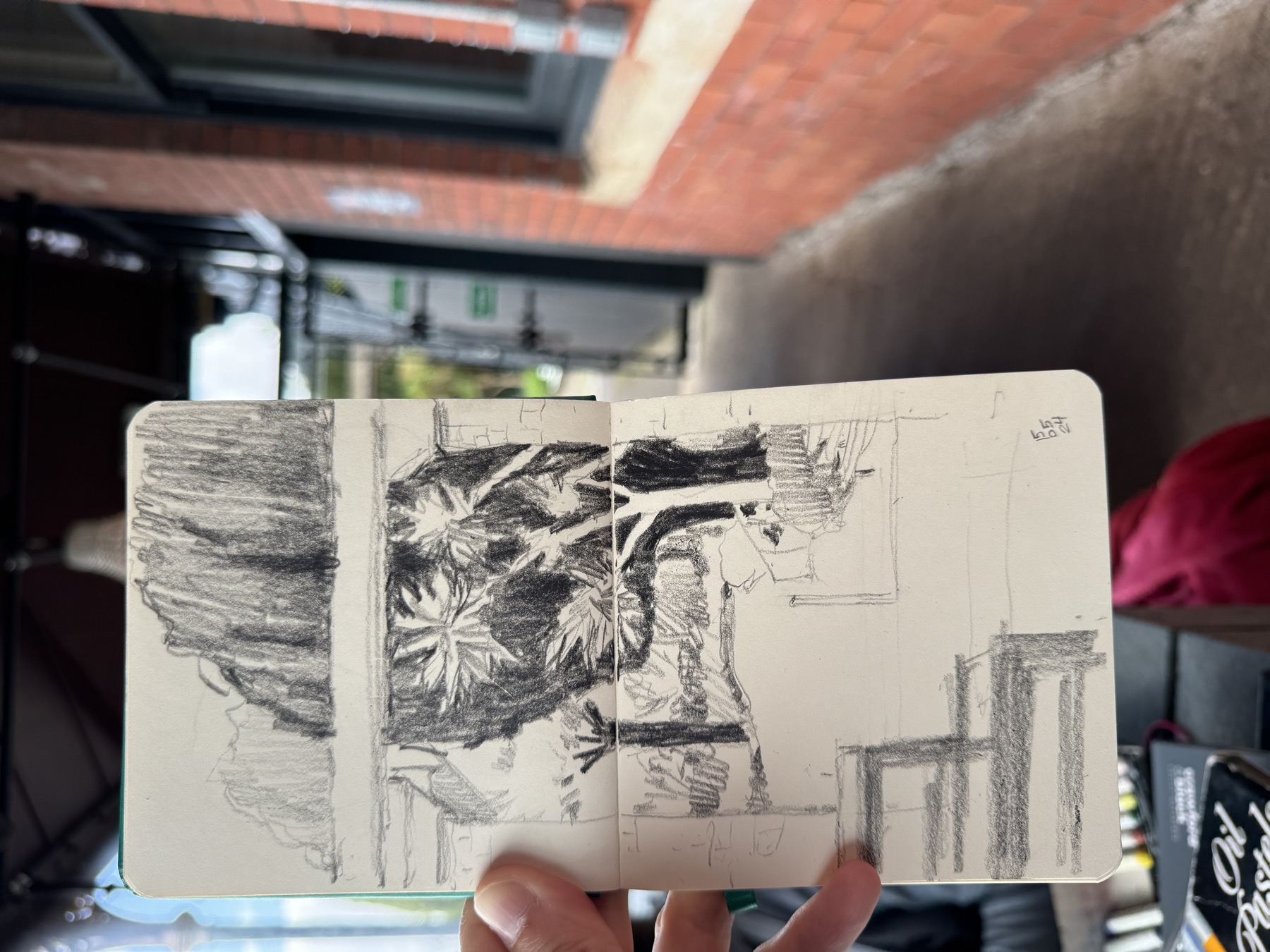
I like that. The official view is one thing; the backup table is part of the place too. Cold hands, pencils spread beside a cup, the corner where you wait for the rain to pass. The coffee is very good too. I also remember liking a salmon bagel there, or at least I think it was a bagel.
We sometimes meet nearby with Espresso Sketches Penarth. It is a good place for a group because nobody has to commit heroically to sitting outside in drizzle.
A little history
Italian Gardens is on the Esplanade in Penarth. The Vale of Glamorgan Council notes that the gardens are also known as Beach Rock Gardens, New Rock Garden, and Promenade Garden. They were built in 1926, later refurbished in 1994, and are Grade II listed. The plans were drawn by Ursula Thompson, the first woman to graduate from Kew Gardens.
Historical notes from the Vale of Glamorgan Council.
Penarth Civic Society adds more of the story, including why the garden has its name. It was laid out on the site of old boathouses, and Constance Maillard, then chair of Penarth Town Council, had the idea after restoring gardens in Italy. So the name is doing real work. It points back to the Italian gardens that inspired her. She consulted Ursula Thompson, and Wilfred Evans later completed the final design.
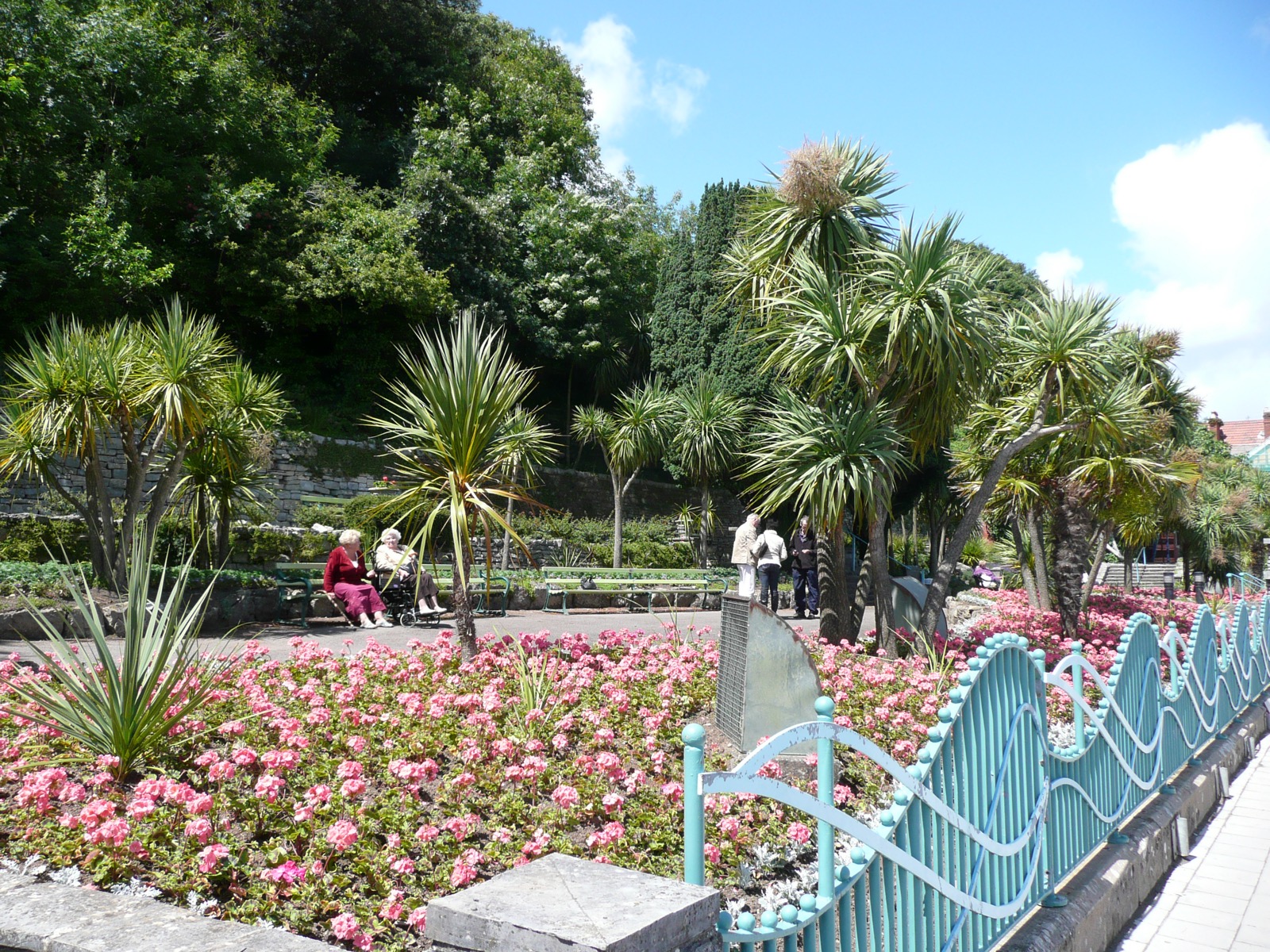
Italian Gardens, Penarth, photographed in 2008 by Jaggery, via Wikimedia Commons, licensed under CC BY-SA 3.0.

Parks & Gardens describes it as a well-preserved Edwardian-style public urban garden, designed mainly as a rock garden, with its original layout and structural planting still visible. It is tiny too: about 0.1 hectares. That feels right. You do not get lost there. It is a narrow, planted strip where every corner has to work quite hard.
More historical notes from Penarth Civic Society and Parks & Gardens.
There are a few older images online too. People’s Collection Wales has a photograph of the opening of the Italian Gardens on 31 March 1926.
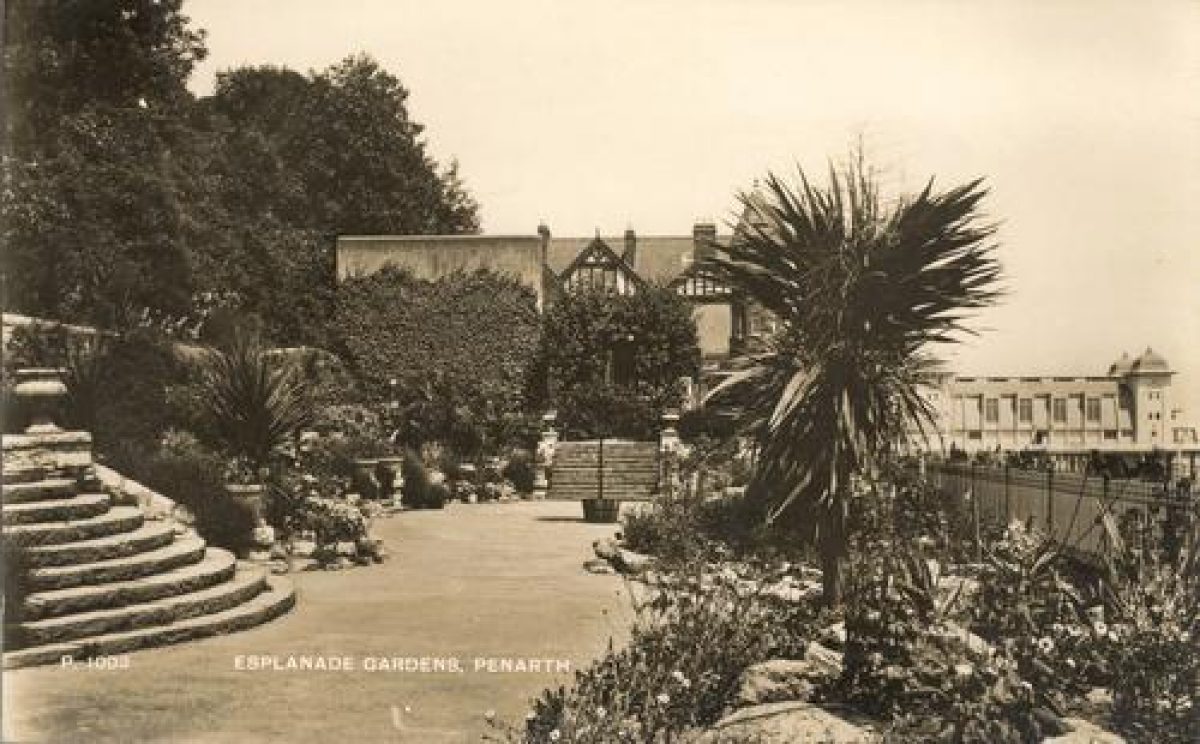
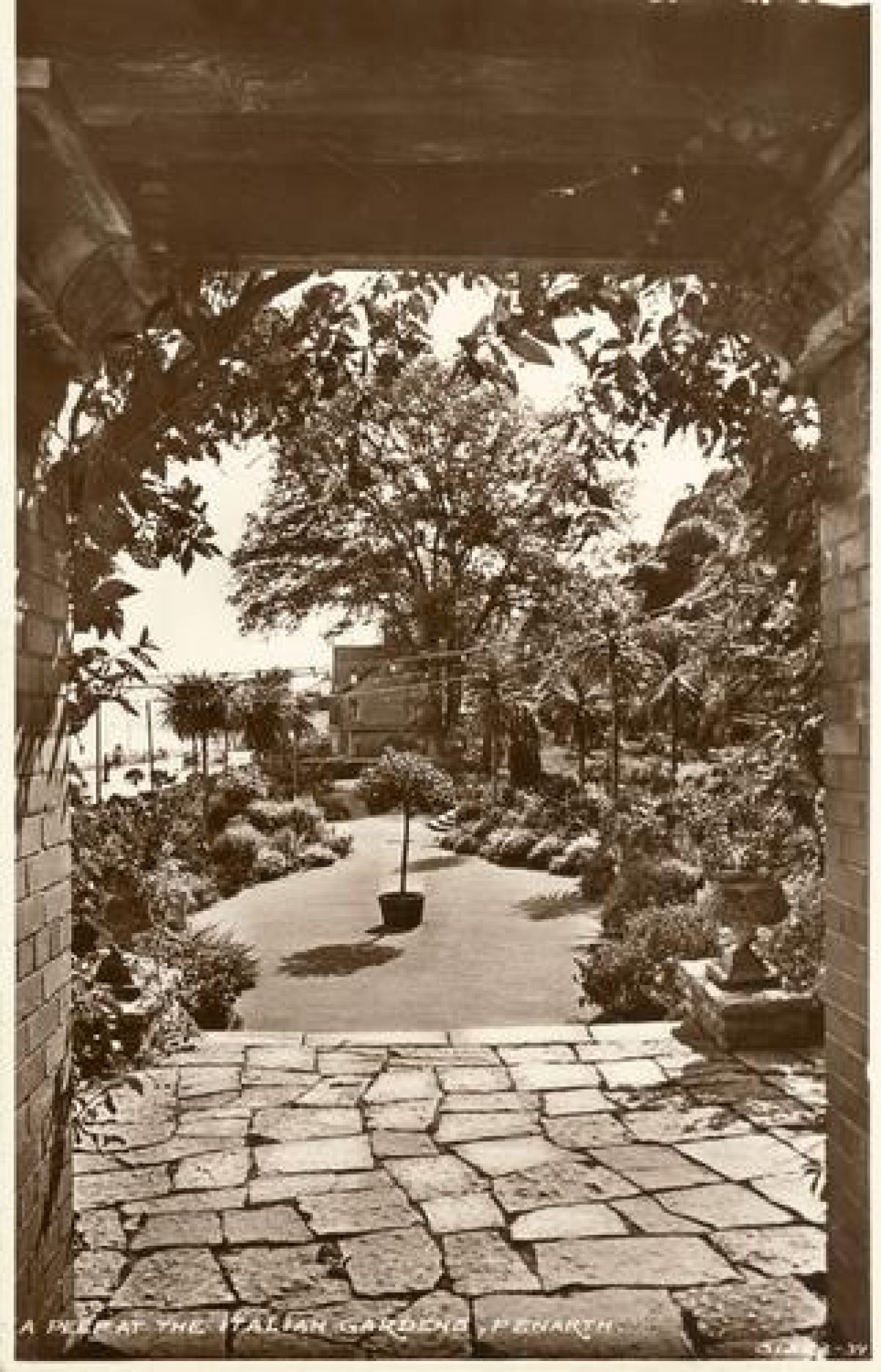
Parks & Gardens shows a lovely old view of the Esplanade Gardens and another glimpse into the Italian Gardens, both photographed by Peter Davis. I also found a Raphael Tuck real photo postcard from around the 1950s listed on eBay, plus another old postcard image from an eBay listing.
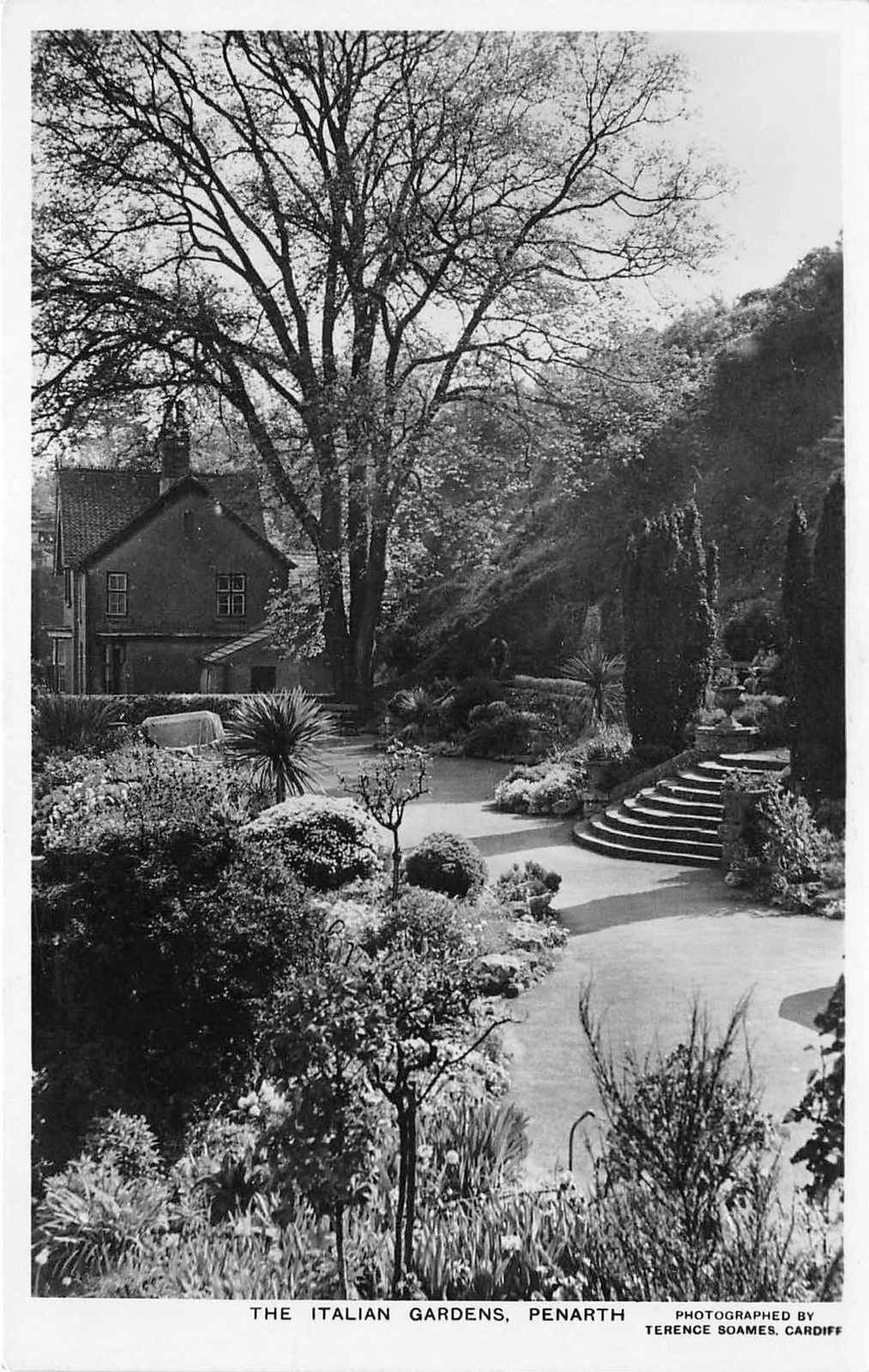
The Penarth Times has a 1971 archive photograph of Italian Gardens, probably in spring. Their note points out two women sitting on a bench, with the words “wet paint” on the ground around it. Very Penarth: someone has painted a bench, someone else has sat near it anyway, and the newspaper noticed.
I am keeping those archive and newspaper images as links rather than reproducing them here, because they have usage restrictions or unclear reuse rights.
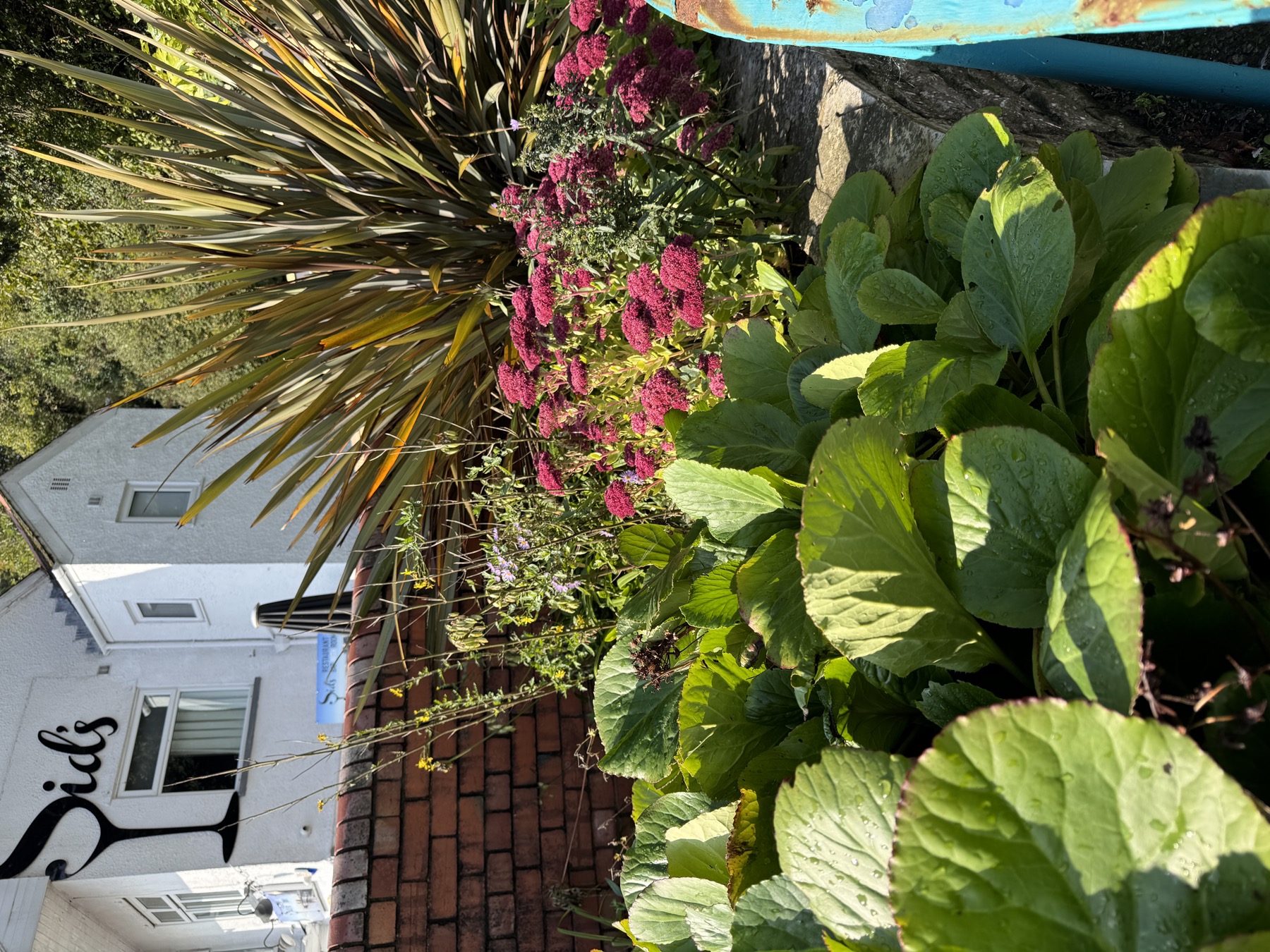
The garden itself is narrow, only a small strip above the seafront, so people usually pass through more than they settle in. That is part of its character. Nobody really spreads out there for the afternoon. You pass through, stop for five minutes, look at the sea, and then carry on up the hill.
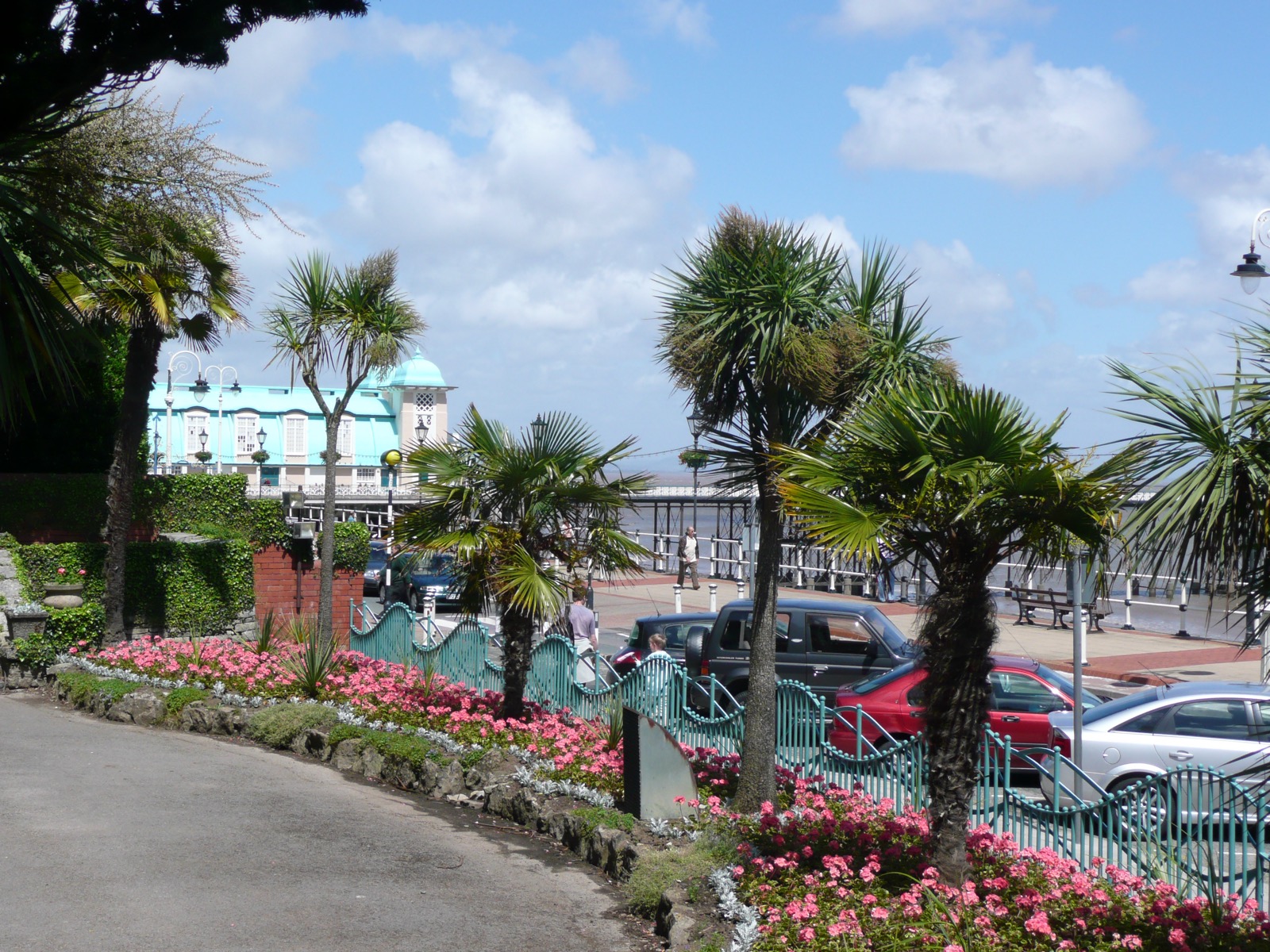
Another 2008 view of Italian Gardens by Jaggery, via Wikimedia Commons, licensed under CC BY-SA 3.0.

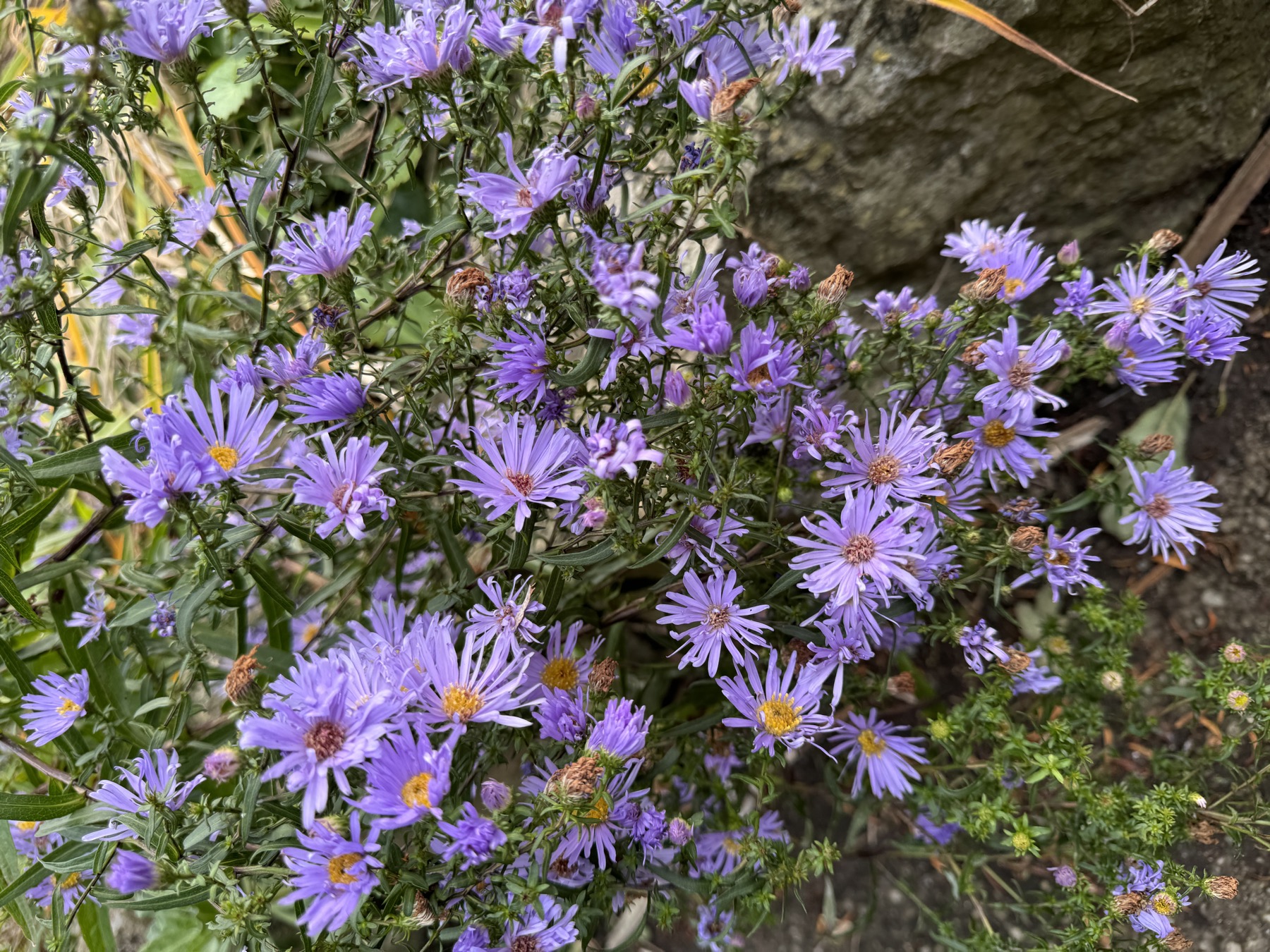
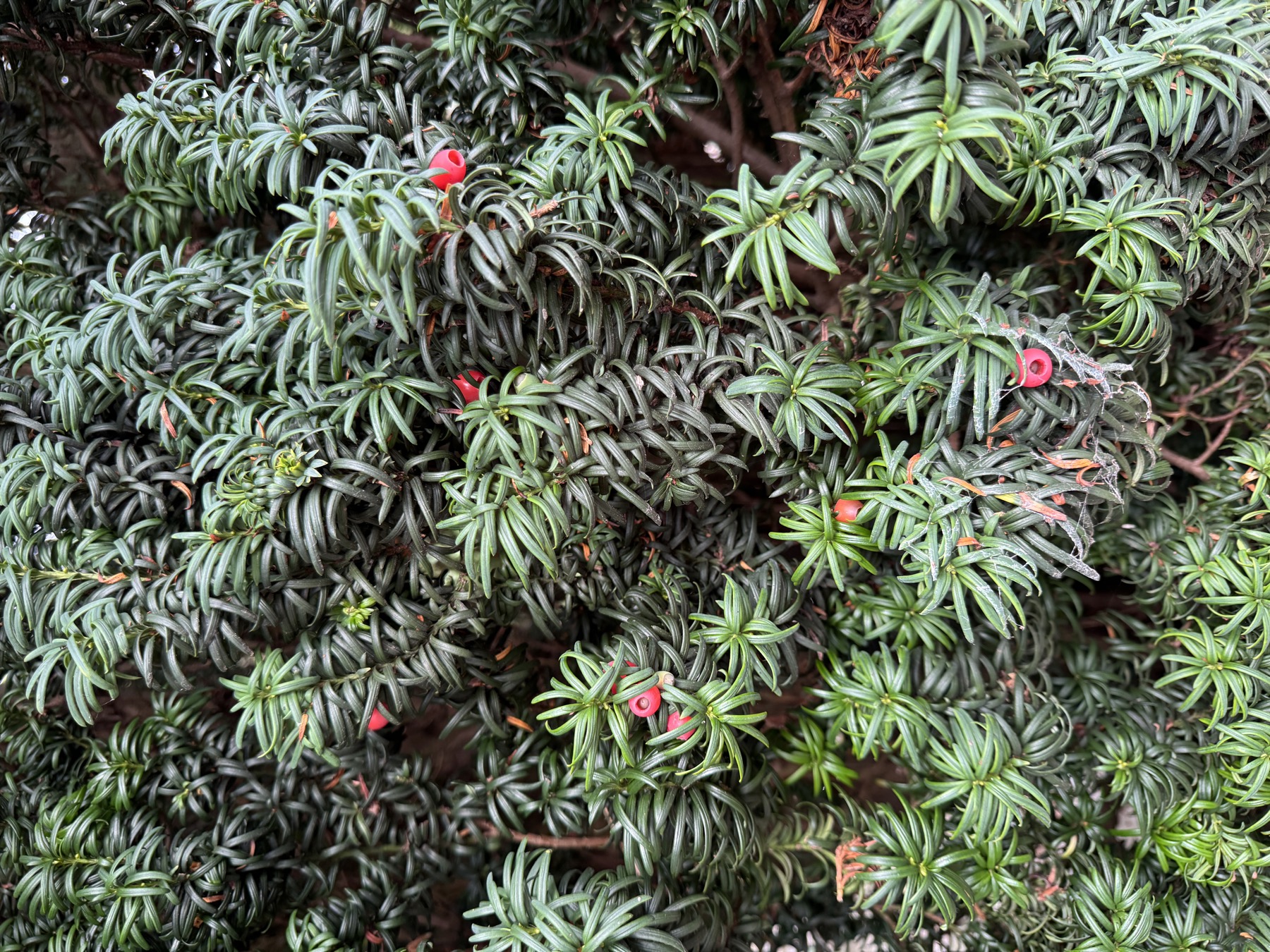
The planting is one of the best things about it. There is a surprising choice of plants in a very small area: palms, yew, big soft leaves, hostas, seasonal flowers, and small details that only appear when you sit still for a while. Parks & Gardens even notes the two yew trees by the entrance steps, which are exactly the kind of dark shapes that make a drawing more interesting.
I am especially drawn to the hostas there. Not so much the flowers, but the leaves: large, bright green, heavy, folded, and full of clear veins. They have the kind of shape that makes you want to stop and draw just one leaf properly.
A lot of that care now comes from Friends of the Italian Gardens, or FIGS, a volunteer group connected with Penarth Civic Society. They help with gardening, planting, litter picking, small repairs, and looking after the space. The garden reached its centenary in 2026, and I imagine the volunteers were part of keeping it ready for that moment.
Volunteer notes from Penarth Civic Society’s Italian Gardens Project.
If you live nearby and want to help, FIGS is worth looking up. Small gardens do not look after themselves. They need gloves, spare mornings, bin bags, secateurs, and the sort of person who notices weeds before everyone else does.
For me, Italian Gardens has become a place for sea views, shelter, plants, sketches, coffee, and several useful excuses to stop before walking home. Not bad for such a small garden.