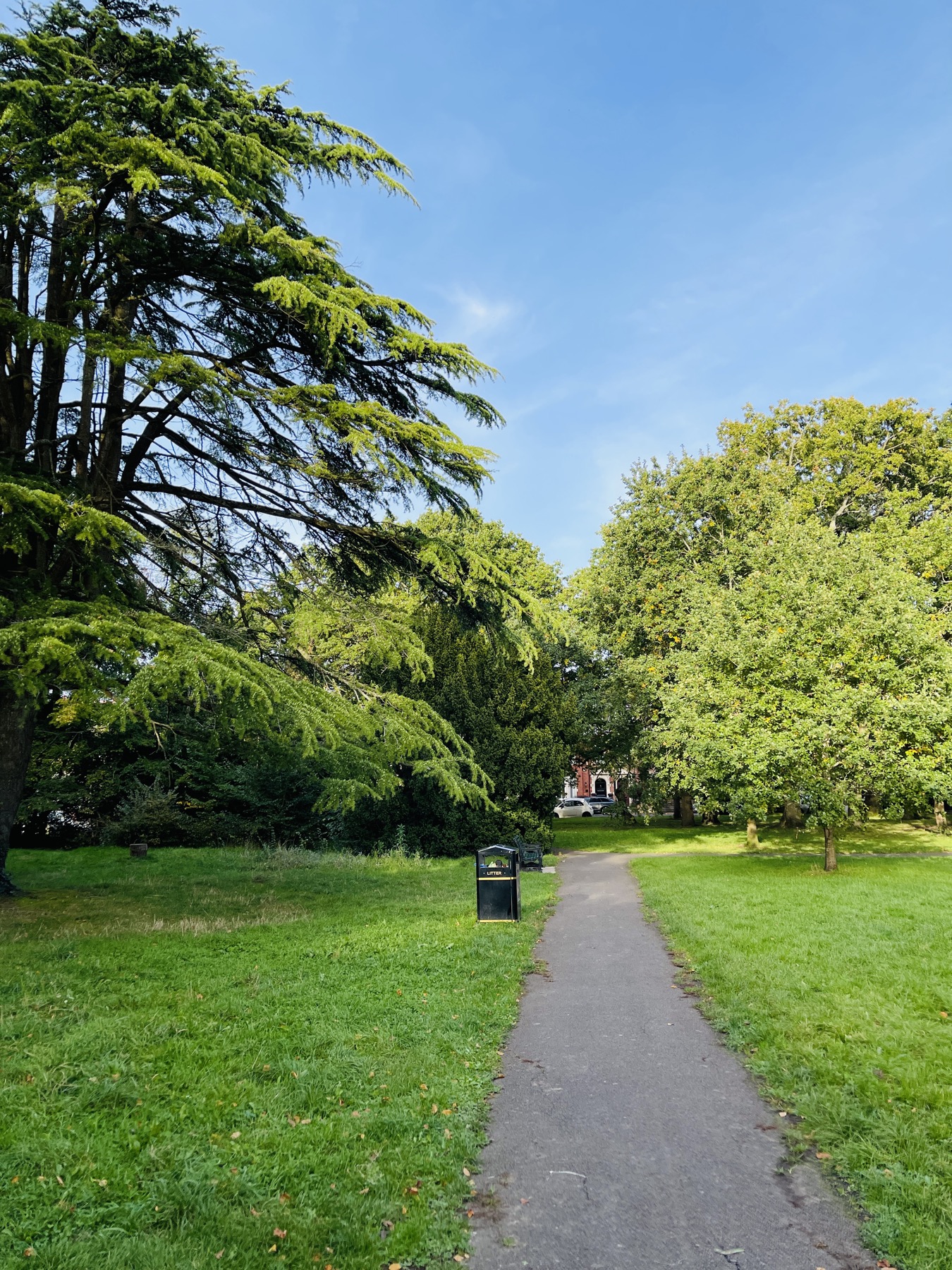
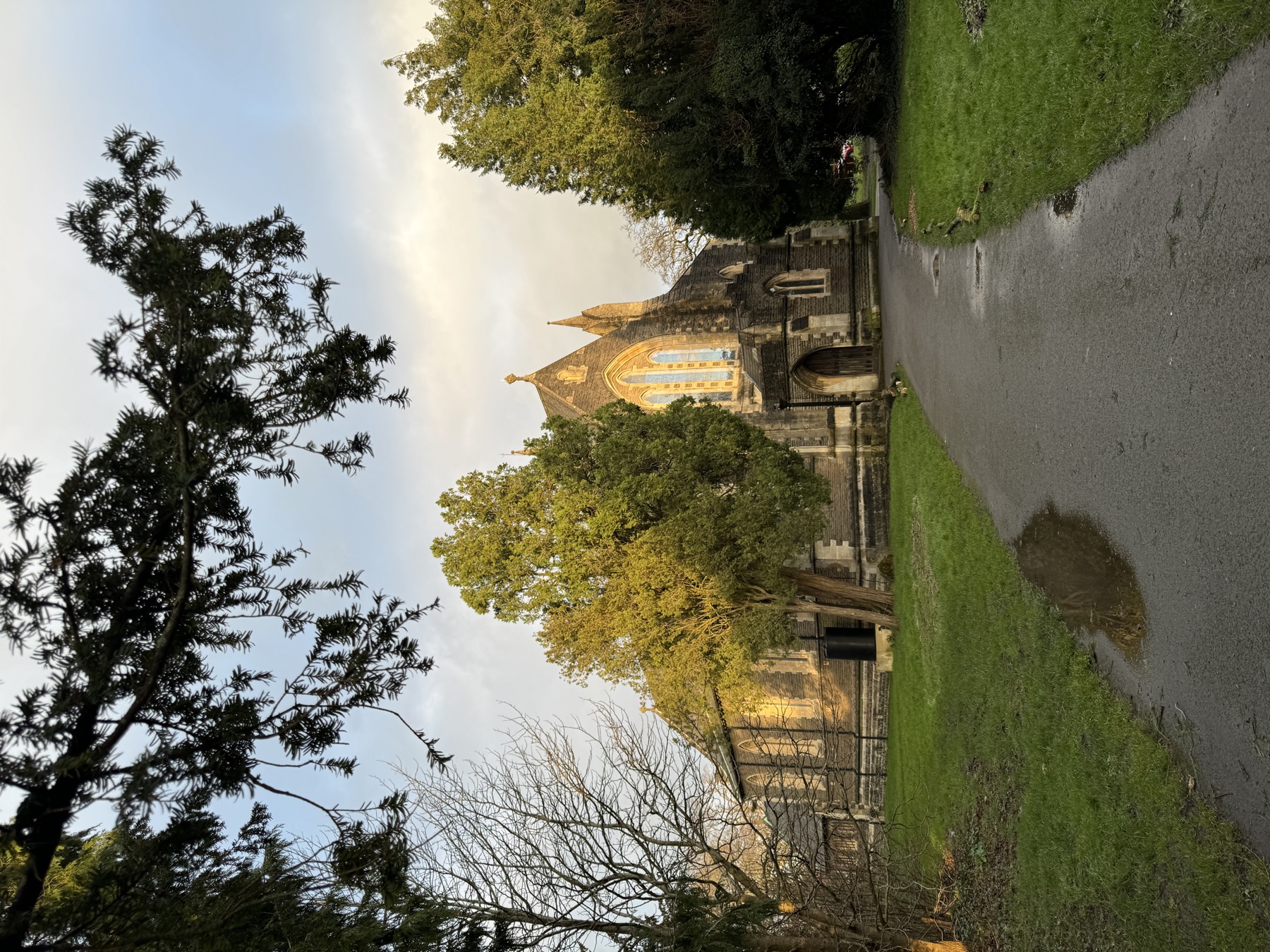
Victoria Square in Penarth is a small square park around All Saints Church, but it does not feel small when you are inside it. The trees do most of the expanding. They lift the whole place up and outwards: oaks, conifers, yews, old trunks, low branches, summer grass, winter silhouettes, and the church appearing and disappearing between them.
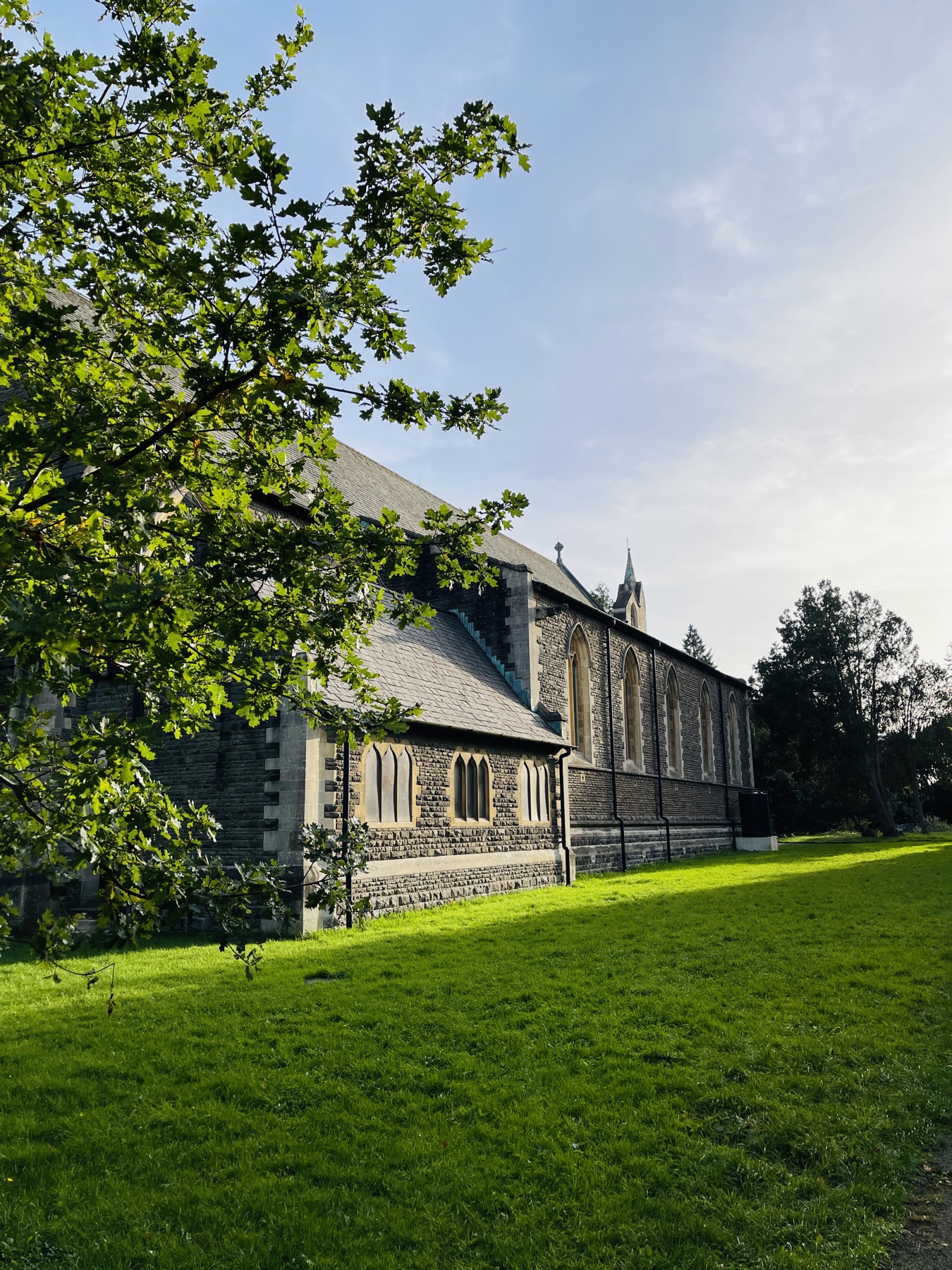
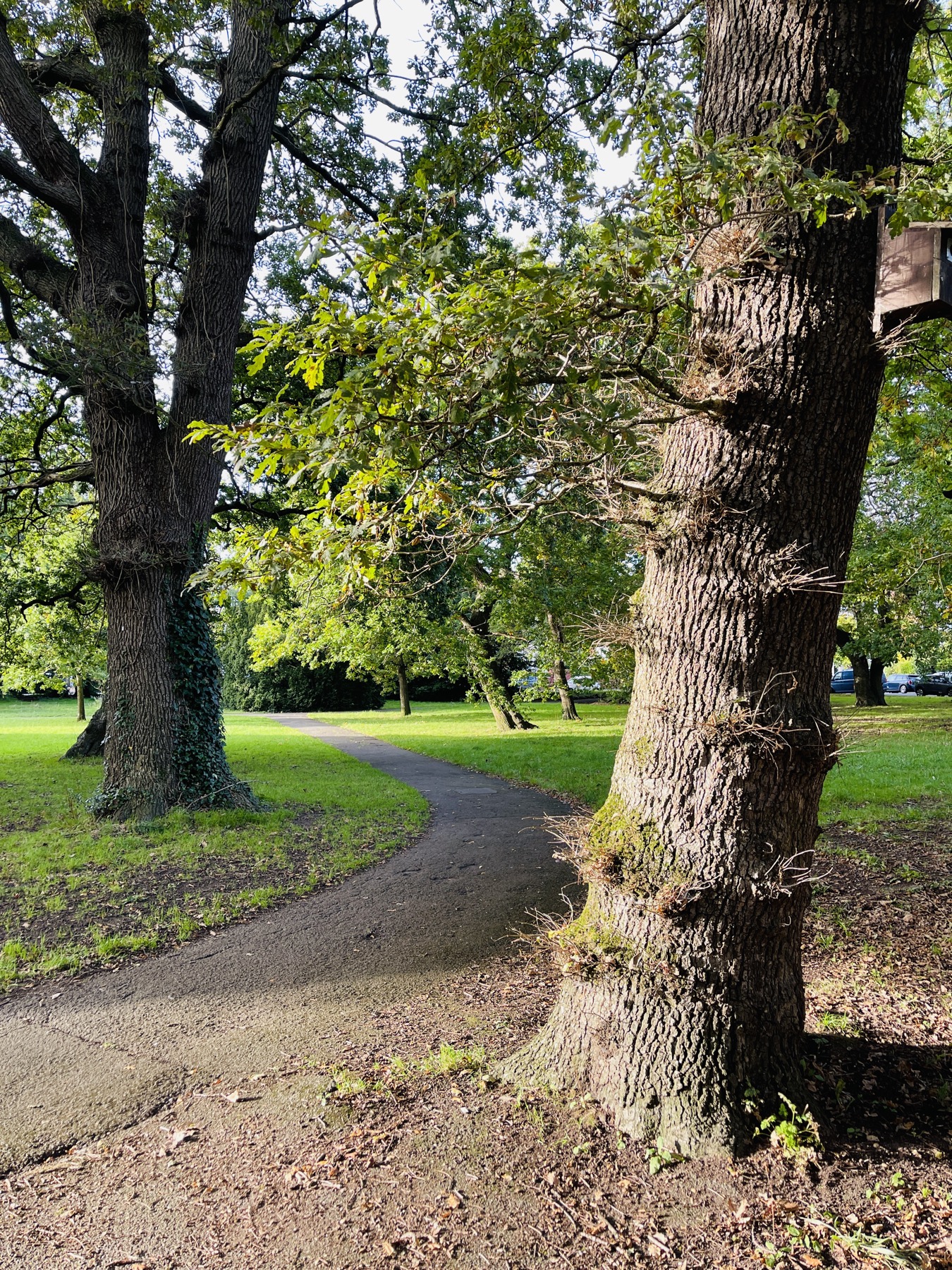
Victoria Square works by small changes of light and distance. You walk in from Victoria Road, or from one of the residential streets, and the church is suddenly half-hidden by leaves. A path turns, a trunk blocks the view, and the square becomes more like a pocket of woodland than a formal town garden.
Before the church
One of my favourite facts about the square is that before All Saints stood here, this was sporting ground. Penarth Rugby Club notes that its early games were played on land owned by David Cornwall, a Glebe Street butcher and early club benefactor, on the field where All Saints Church now stands.
This means the church square has had a much noisier life. Before the stained glass, before the painted ceiling, before the lunchtime concerts, there were rugby players on the grass. Penarth RFC even records the old local nickname, the “Donkey Island Butcher Boys”, which is almost too good to leave out. It makes the square feel less like a fixed Victorian picture and more like a place that has kept changing costume.
Historical note from Penarth Rugby Club.
All Saints Church
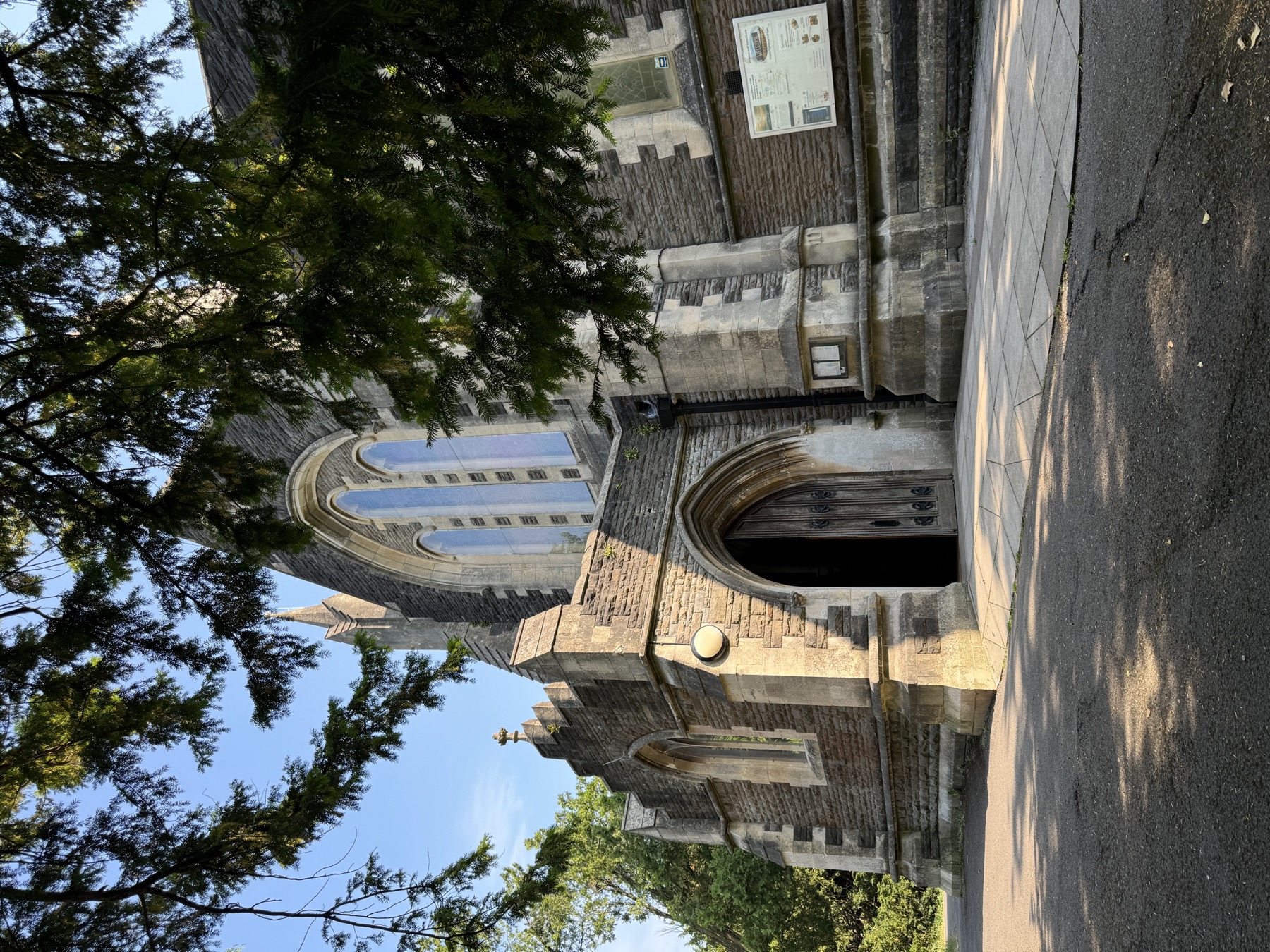
All Saints Church was built in 1889-91 by J. P. Seddon and John Coates Carter. Carter lived locally in Penarth for a time, which I like to imagine mattered. There is a difference between designing a church for a place you only know on paper and designing one for a town you actually walk through.
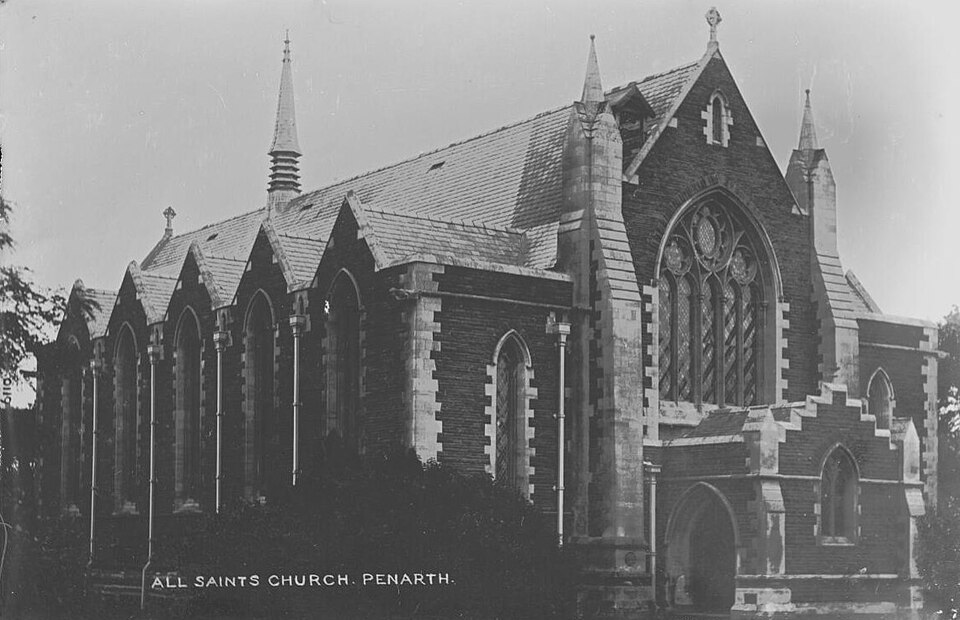
Historic image: All Saints Church; Penarth, circa 1905, photographed by Martin Ridley. Martin Ridley Collection, National Library of Wales, via Wikimedia Commons. Public Domain Mark.
.jpg)
The original church did not survive untouched. It was burnt out in 1926 and then damaged again during the Second World War. The exact wording and dates vary a little between local summaries and archives, but the broad story is clear enough: fire, wartime destruction, long recovery, rebuilding, reopening in the 1950s. People often talk about old churches as if they have simply stood there being old. All Saints has had to be put back together.
There is a stark archive photograph of All Saints Church after bomb damage, dated 4 March 1941, in the People’s Collection Wales. I am linking to it rather than reproducing it here because the reuse licence is not the same as the public-domain postcard above, but it is worth opening. The image makes the present green square feel suddenly less settled.
Stained Glass in Wales records another layer of the rebuilding: the later windows. The church has glass by several artists, including John Petts, whose St Francis window was made in 1978. Petts is an important Welsh artist, and knowing that one of his windows sits inside this local church changes the way I look at the building. Now I notice colour there too: later art, new glass, people adding beauty after damage.
There is also a more recent window by Helen Whittaker of Barley Studio, made in memory of Welsh architect Dale Owen and his son Jason. The window is connected with architecture itself, including Owen’s work, which feels very right for a church that has been built, burnt, rebuilt, and kept in use.
Historical notes from Stained Glass in Wales, The Victorian Web, Barley Studio, and People’s Collection Wales.
The church inside
The inside of All Saints is a surprise if you have only seen the dark stone exterior through trees. The ceiling is patterned and colourful, the arches are pale, and the windows bring in that blue church light that makes everything feel a little suspended.
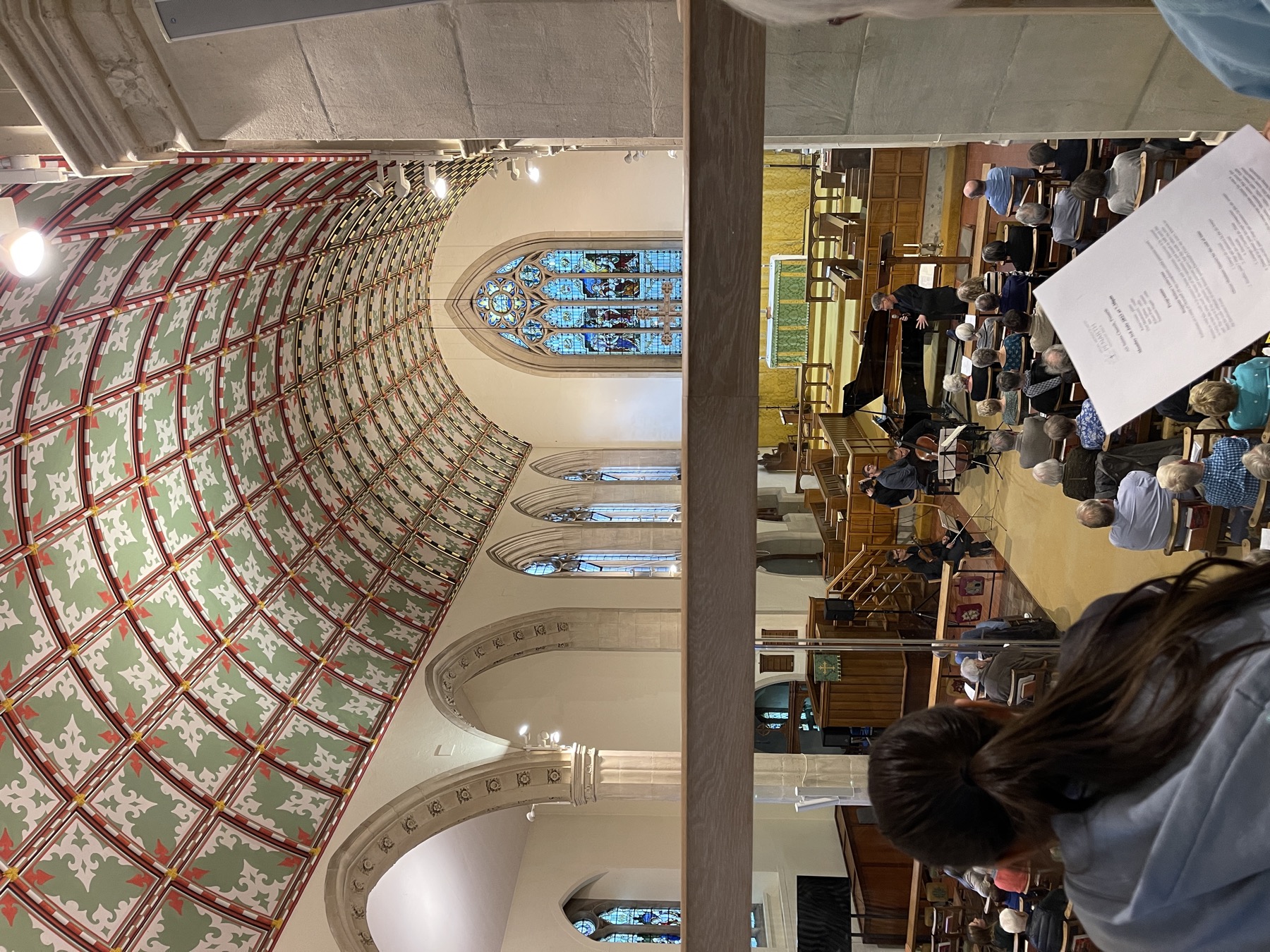
The church is still in use, which matters. There are services, concerts, community events, open church weekends, chamber music, organ recitals, and the kind of local gatherings that make a building alive rather than merely preserved.
All Saints also has a small brush with television geography. The Doctor Who Locations Guide lists All Saints Church Hall as a filming location for Torchwood and The Sarah Jane Adventures, and Visit Wales notes that in Sex Education, the community centre in Victoria Square is actually All Saints Church Hall. So if the square ever feels strangely familiar, that may not be entirely your imagination.
This is probably the closest Victoria Square gets to celebrity culture, which is honestly more charming than a red carpet. Film crews arrive, actors pass through, a church hall becomes a fictional community centre, and then the square goes back to leaves and benches.
Filming notes from The Doctor Who Locations Guide, Torchwood Series Two locations, and Visit Wales.
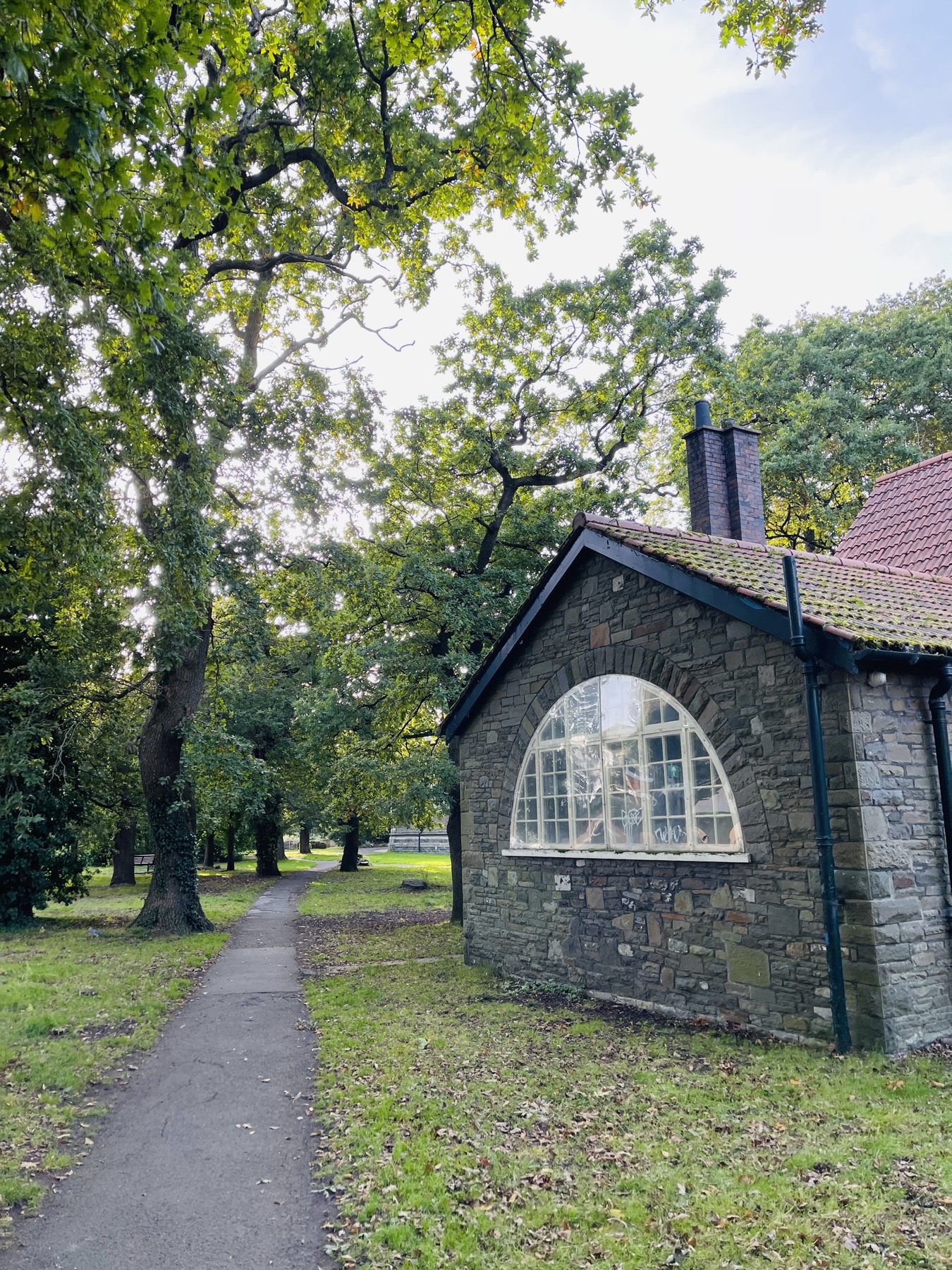
The parish hall has its own architectural story too. It was designed by John Coates Carter, with the foundation stone laid in 1906, and is Grade II listed. Victorian Web describes it as Arts and Crafts in spirit, with a touch of whimsy. That sounds about right. It does not behave like a plain hall. It looks as if someone allowed a useful building to keep a private sense of humour.
Architectural note from The Victorian Web.
The square as a garden
Victoria Square is now looked after with help from Friends of Victoria Square. The group began after a public meeting at All Saints Church in October 2018, with its official start dated from the first AGM in April 2019. Since then, the square has become a very active community green space, with work around planting, trees, wildlife, paths, events, and keeping the place cared for without flattening its character.
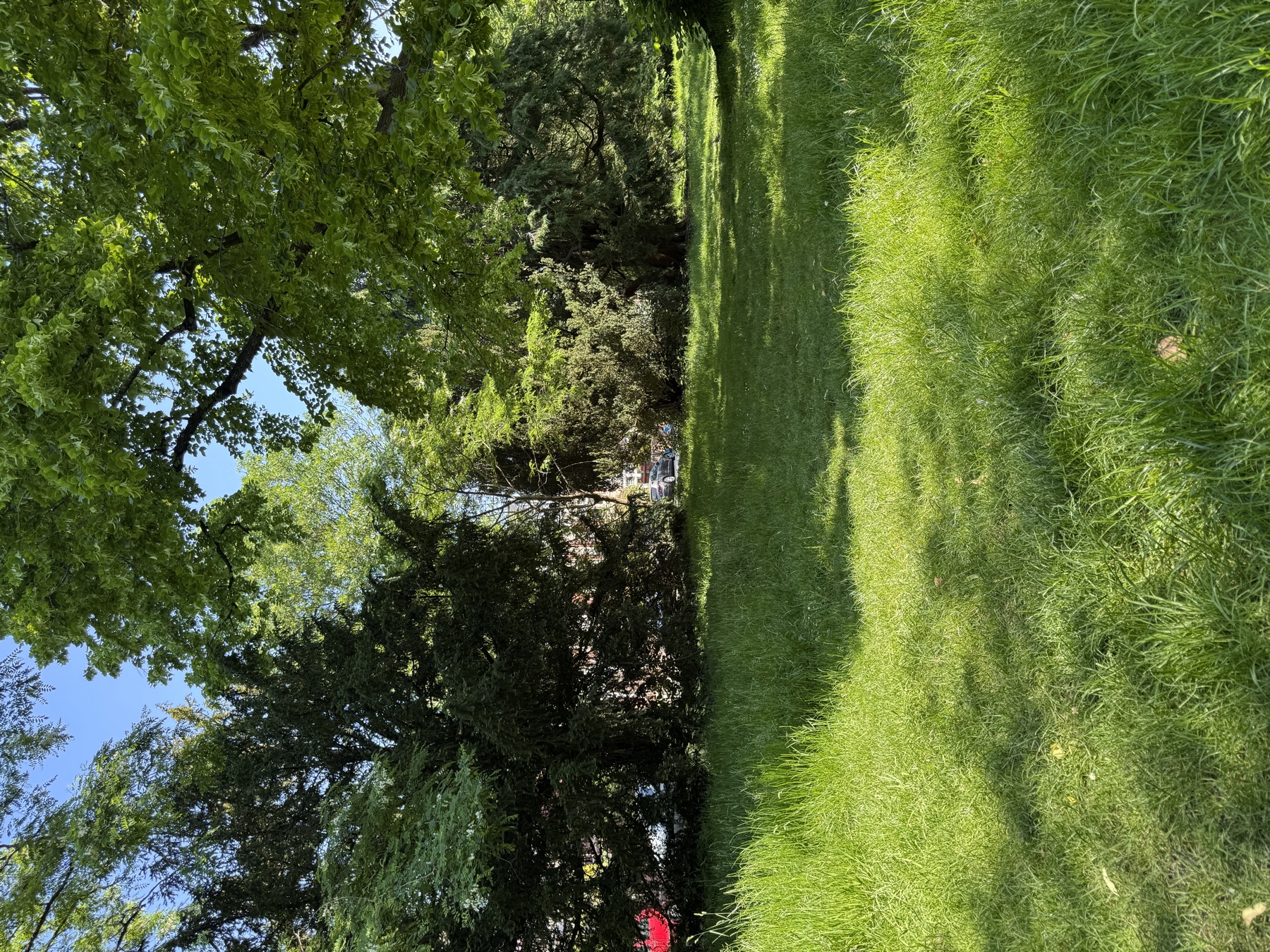
The square has also received the Green Flag Community Award for several years. That matters because Victoria Square does not feel over-managed. It still has long grass, wildflowers, uneven light, and slightly secret corners. It feels tended, not sterilised.
Community notes from Friends of Victoria Square, Penarth Civic Society, and Friends of Victoria Square awards.
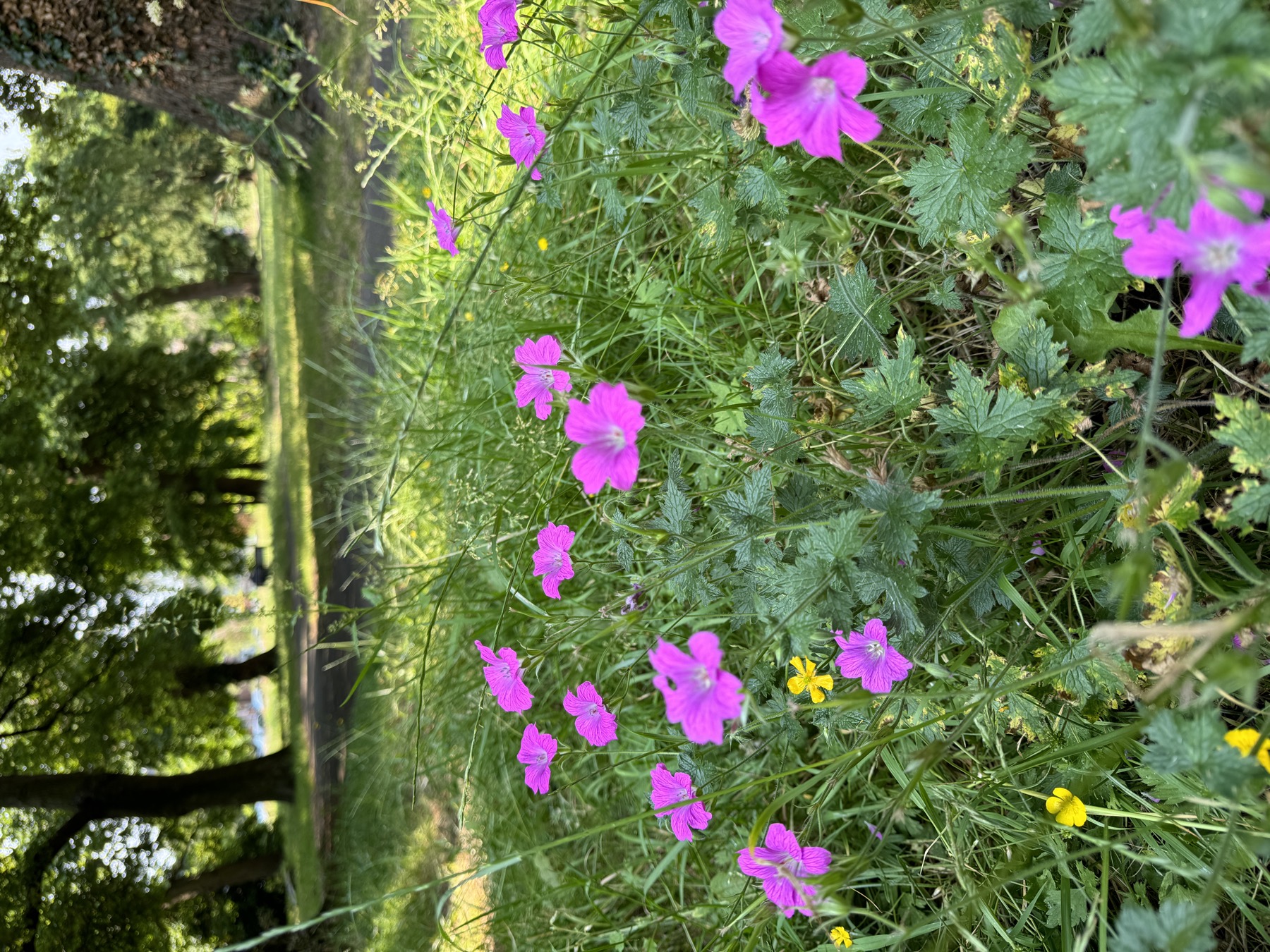
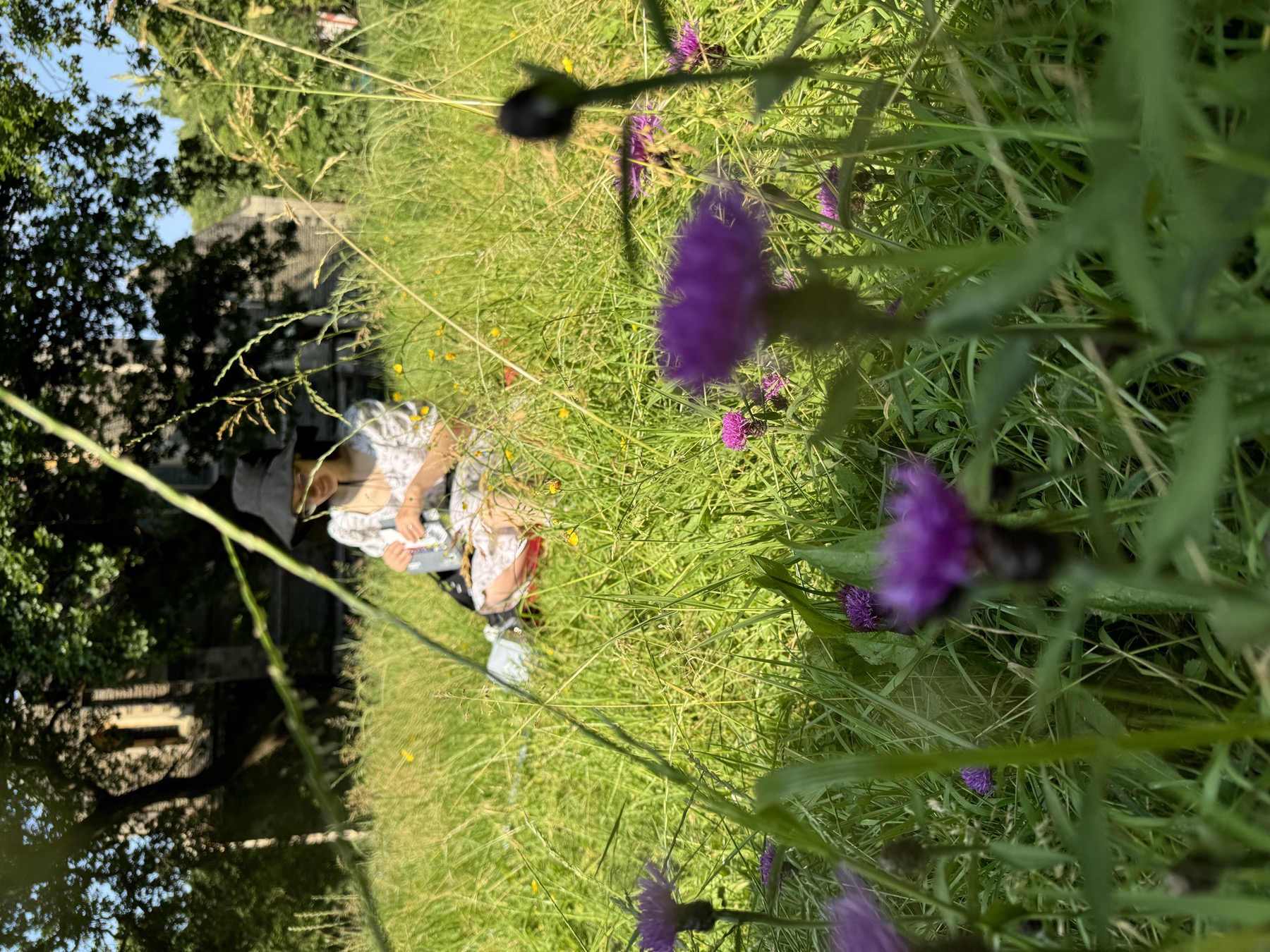
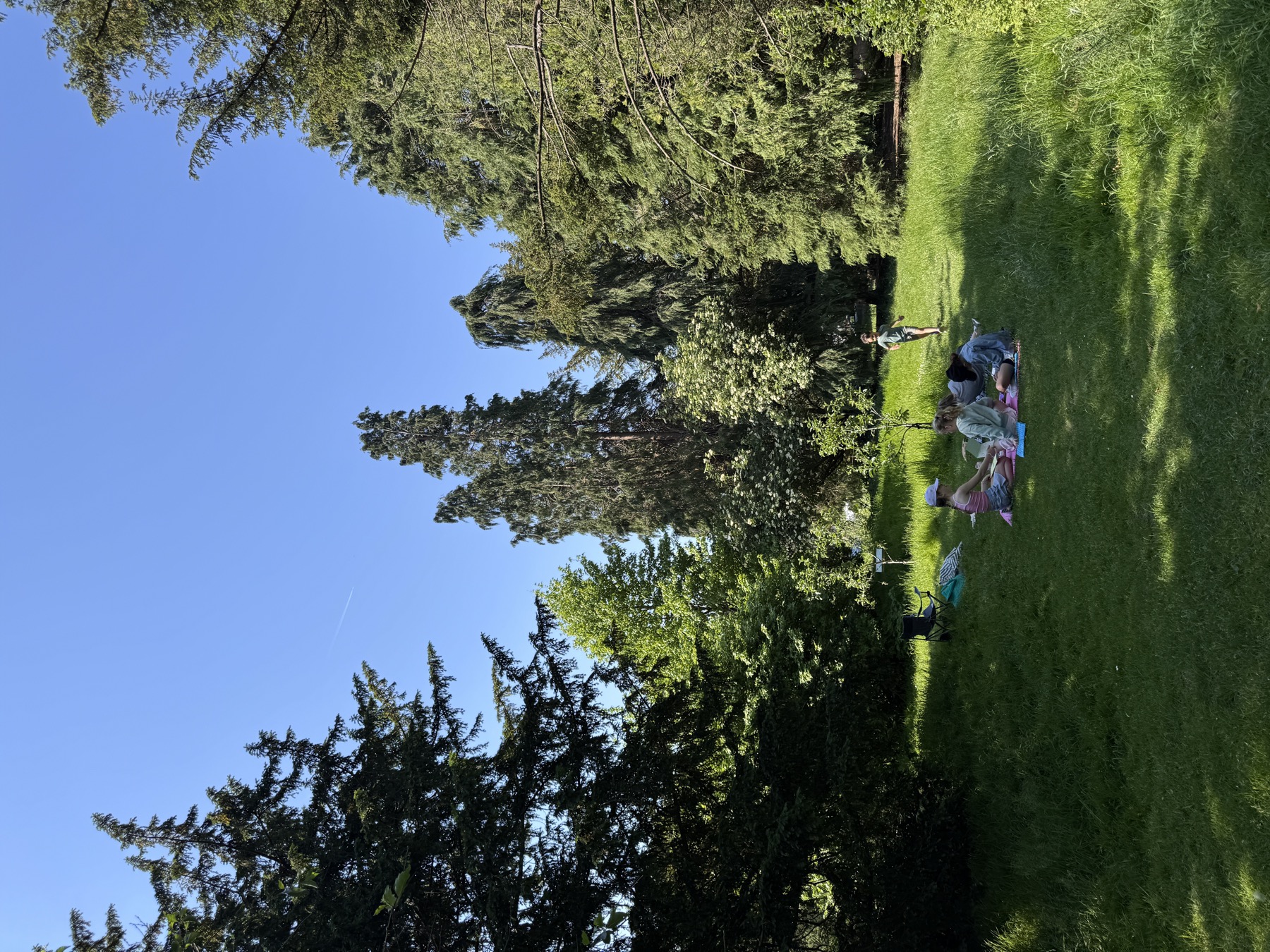
In summer, the grass becomes a subject in itself: yellow, silver, blue shadow, pink flowers, and the dark marks of trunks crossing it. If you sit low enough, the park becomes enormous.
Drawing there
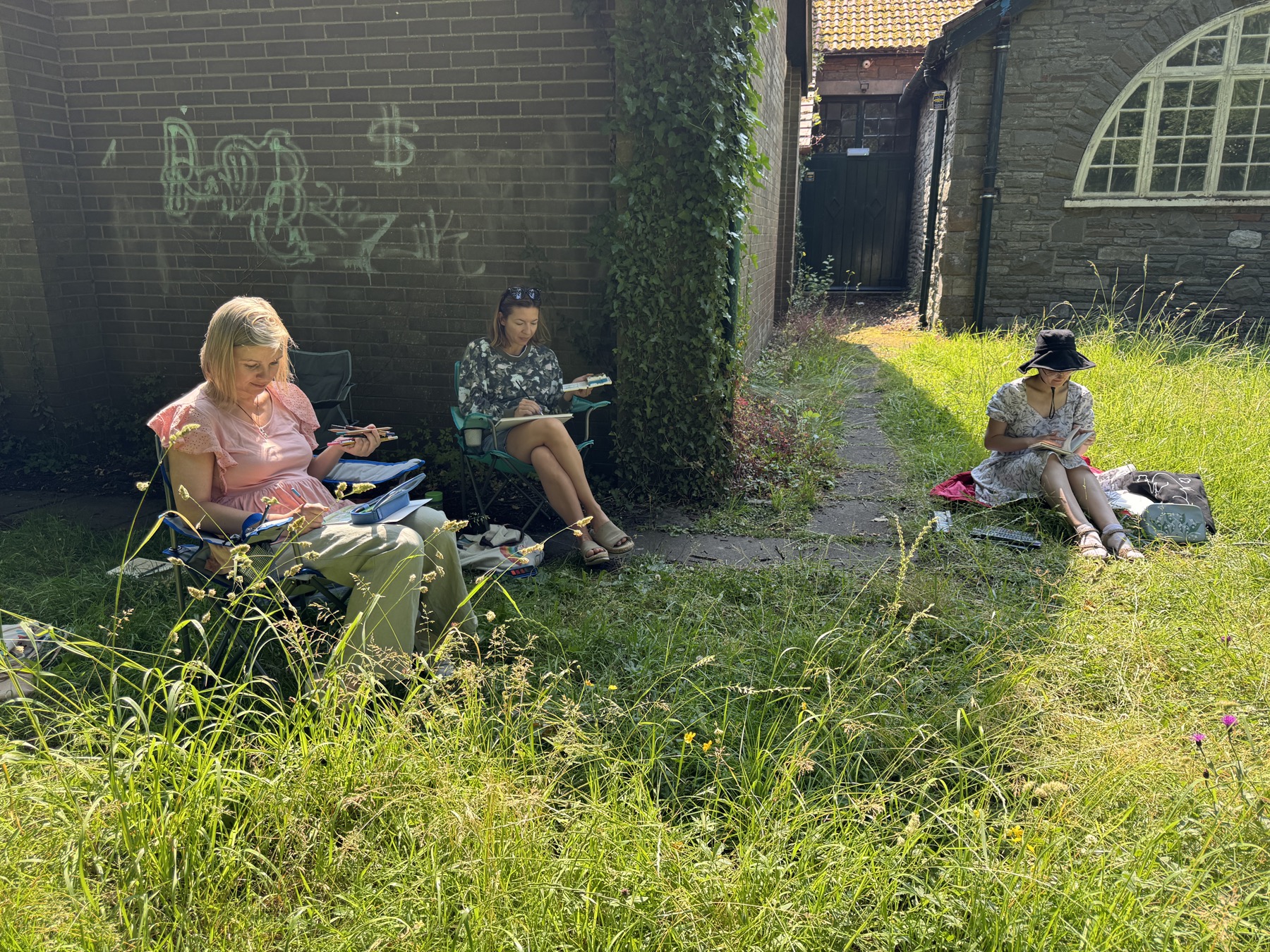
We have drawn in Victoria Square with Espresso Sketches Penarth. It is a very good place for a group because everyone can find a different subject without moving far. One person can draw the church. Someone else can draw a tree. Someone else can disappear into the grass and come back with something that looks much more dramatic than the polite square you thought you were sitting in.
The trees are the real reason I keep returning. They are complicated in a useful way. You cannot draw them politely. They have awkward joints, old scars, bark like folded cloth, branches going in directions that make no sense until your hand starts following them.
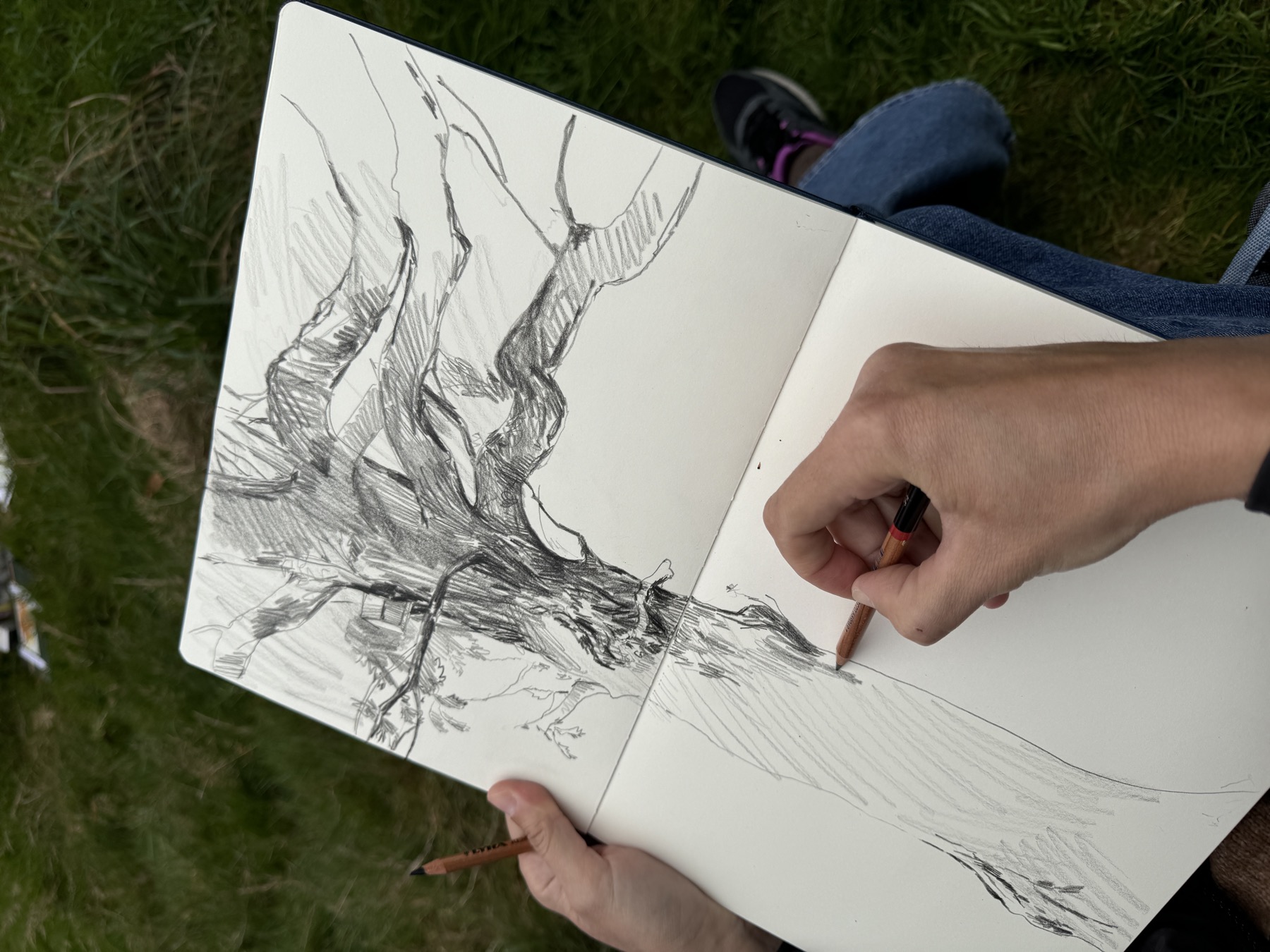
One of those drawing sessions became this A4 tree sketch. It is not a tidy portrait of a tree. It is more like an argument with a branch that I enjoyed having.
 Victoria Square Penarth Tree sketch
View artwork
Victoria Square Penarth Tree sketch
View artwork
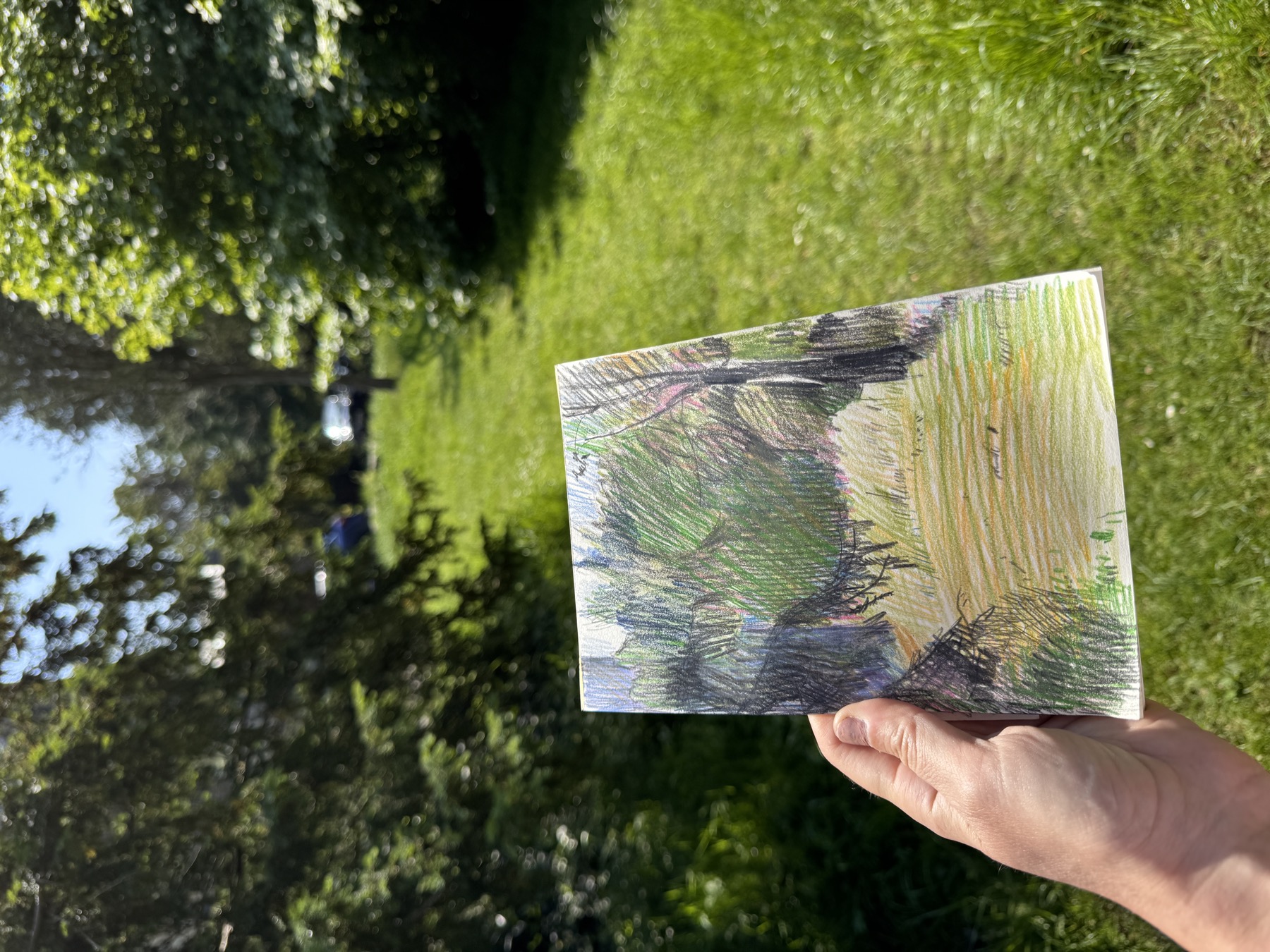
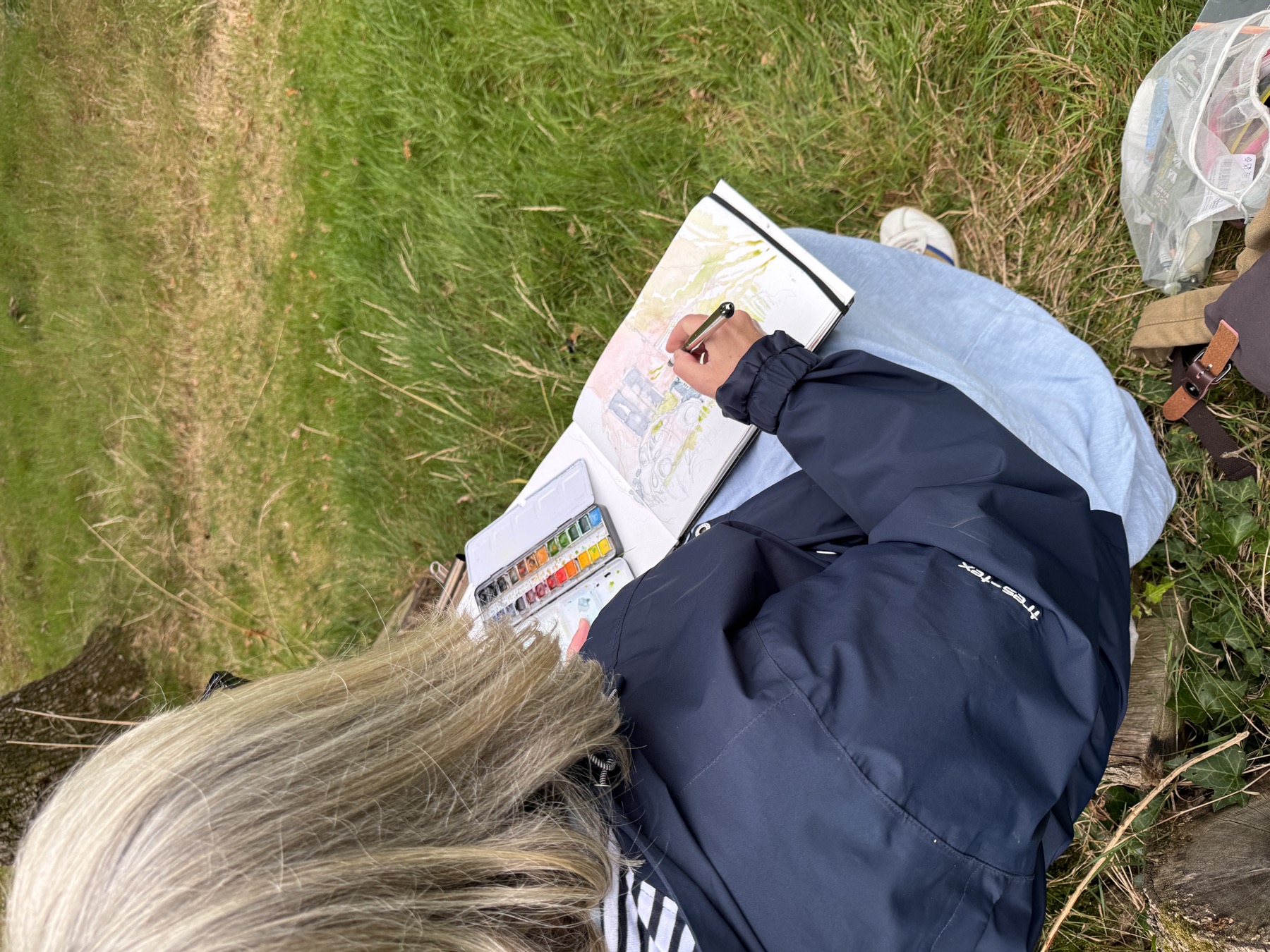
Some places are too open for drawing. You sit down and everything is equally available, which is another way of saying nothing is. Victoria Square is different. It gives you frames: a branch around the church, a path between trunks, a patch of sun in grass, a hall window, a bench, a red-barked tree, a dark gap under a yew.
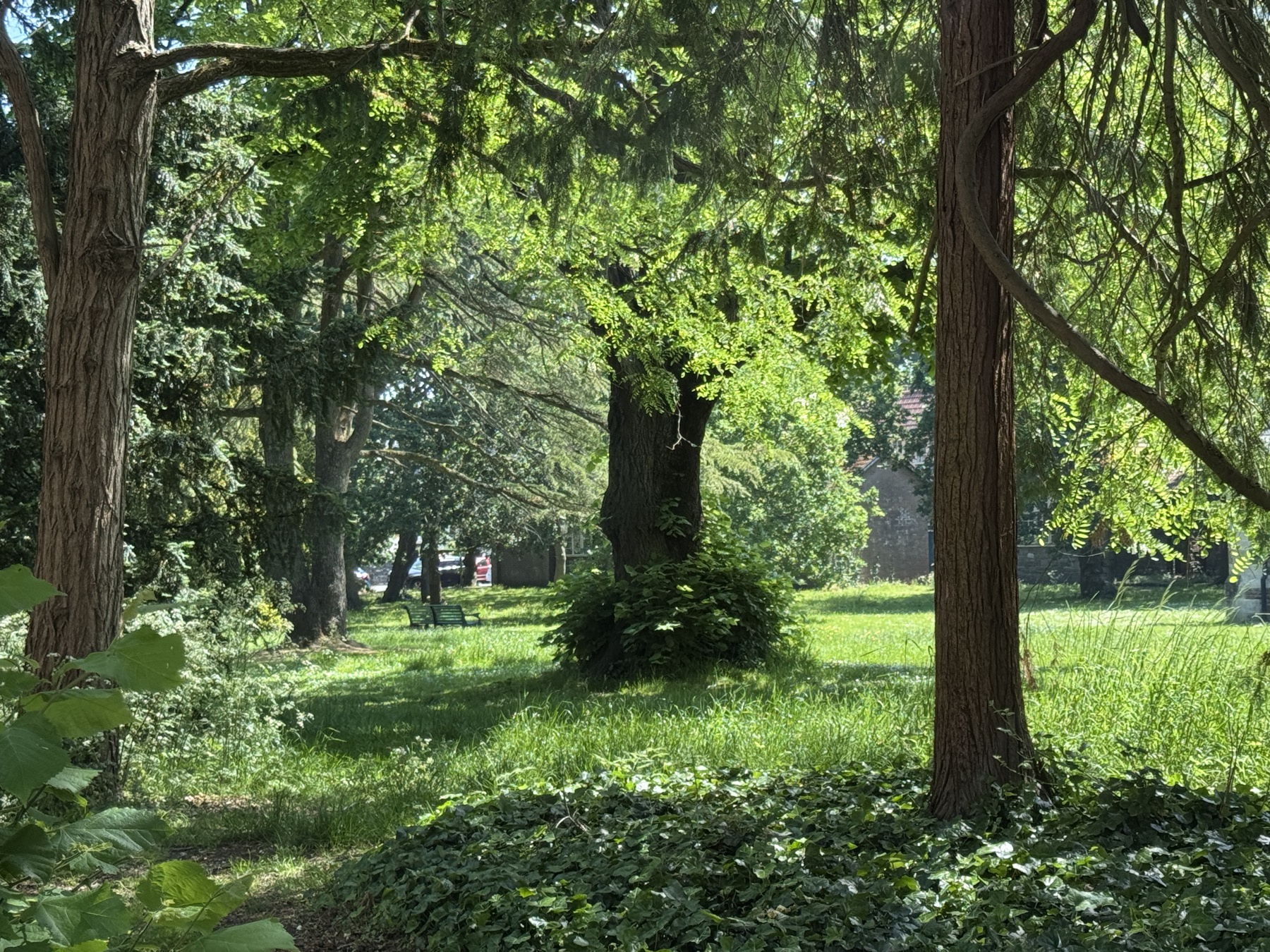
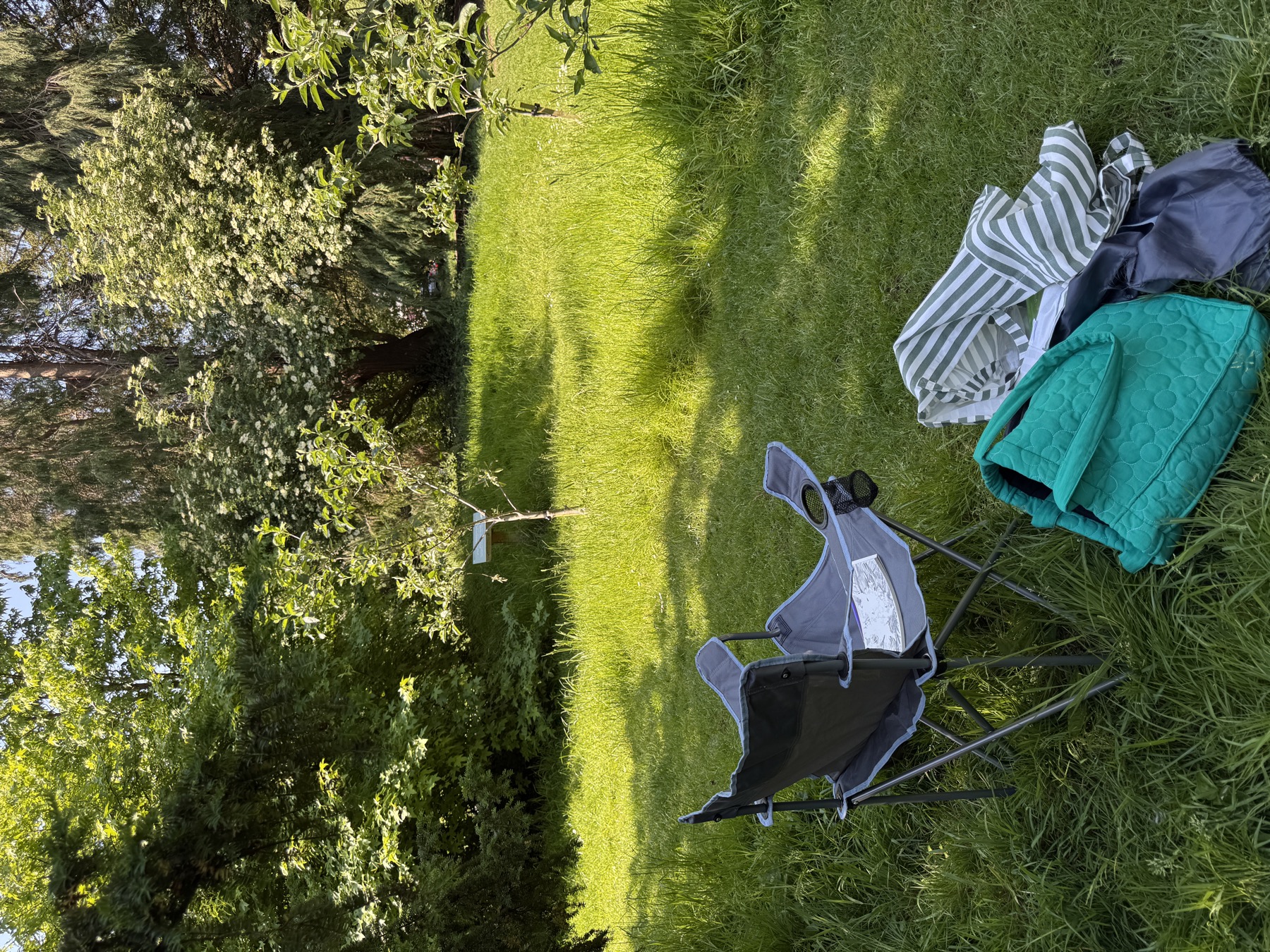
We still sometimes meet with Espresso Sketches Penarth, usually announcing the place on Instagram. Victoria Square is one of the places that makes those meetings feel less like a class and more like permission: bring a pencil, sit somewhere odd, look properly.
Trees I keep looking at
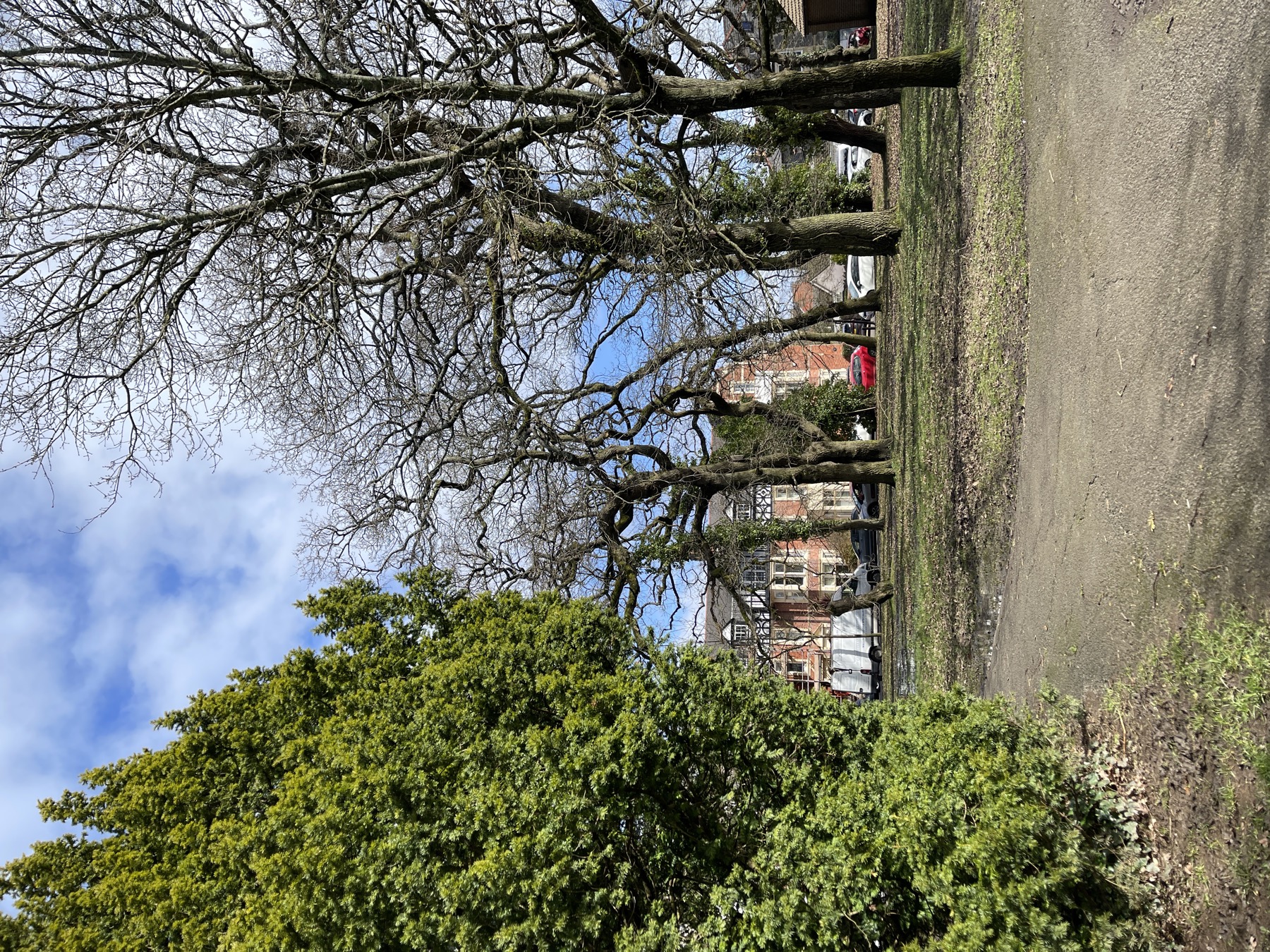
The red-barked conifers are hard to ignore. They twist, split, and lean as if they have been rehearsing poses for decades. They are exactly the sort of tree that makes a sketchbook useful, because a photograph gives you the shape, but drawing makes you understand the weight.
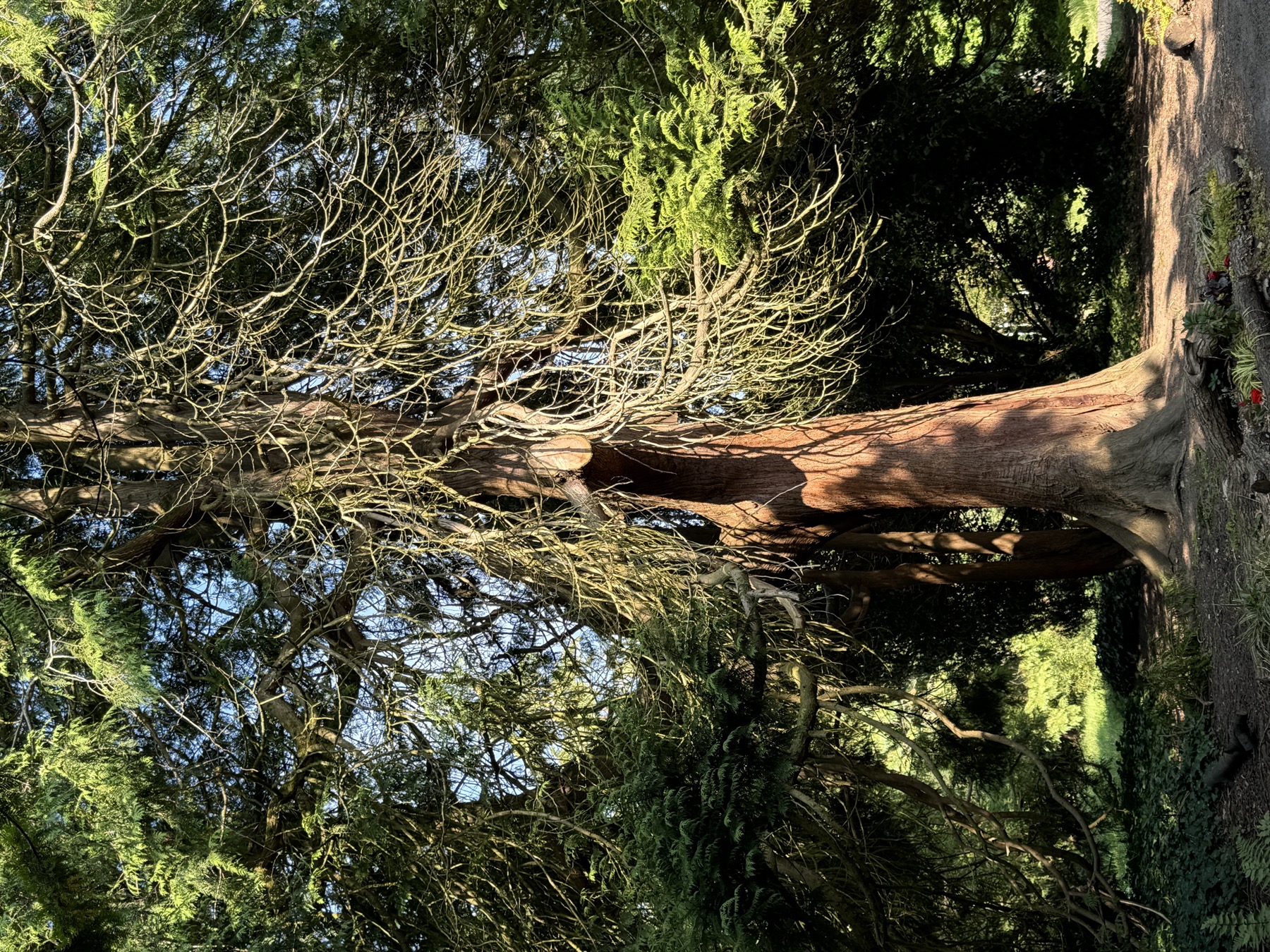
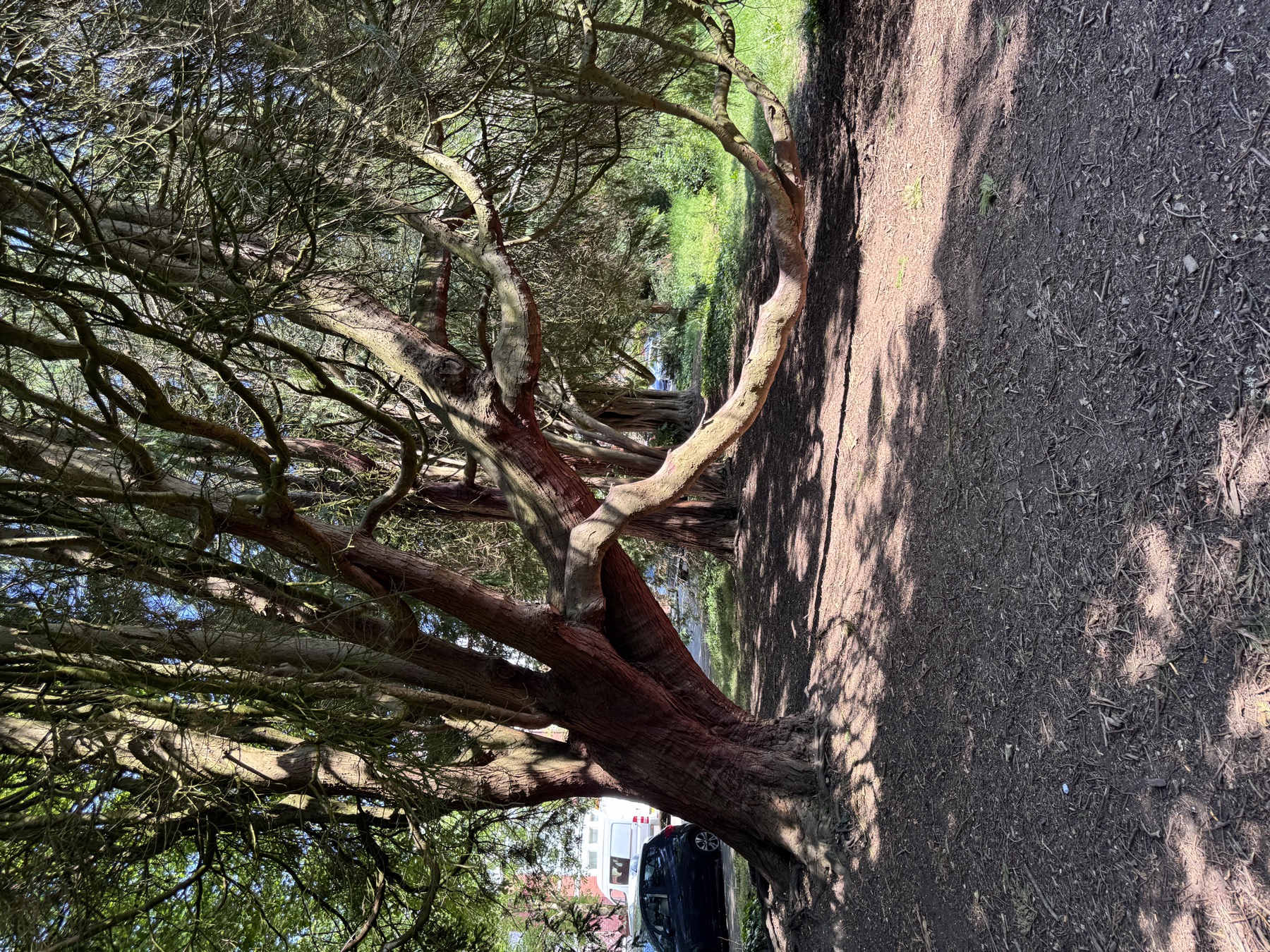
The oaks are different. Heavier. Less decorative. They make the park feel older than the church, even when they are not. Their branches make dark calligraphy over the sky.
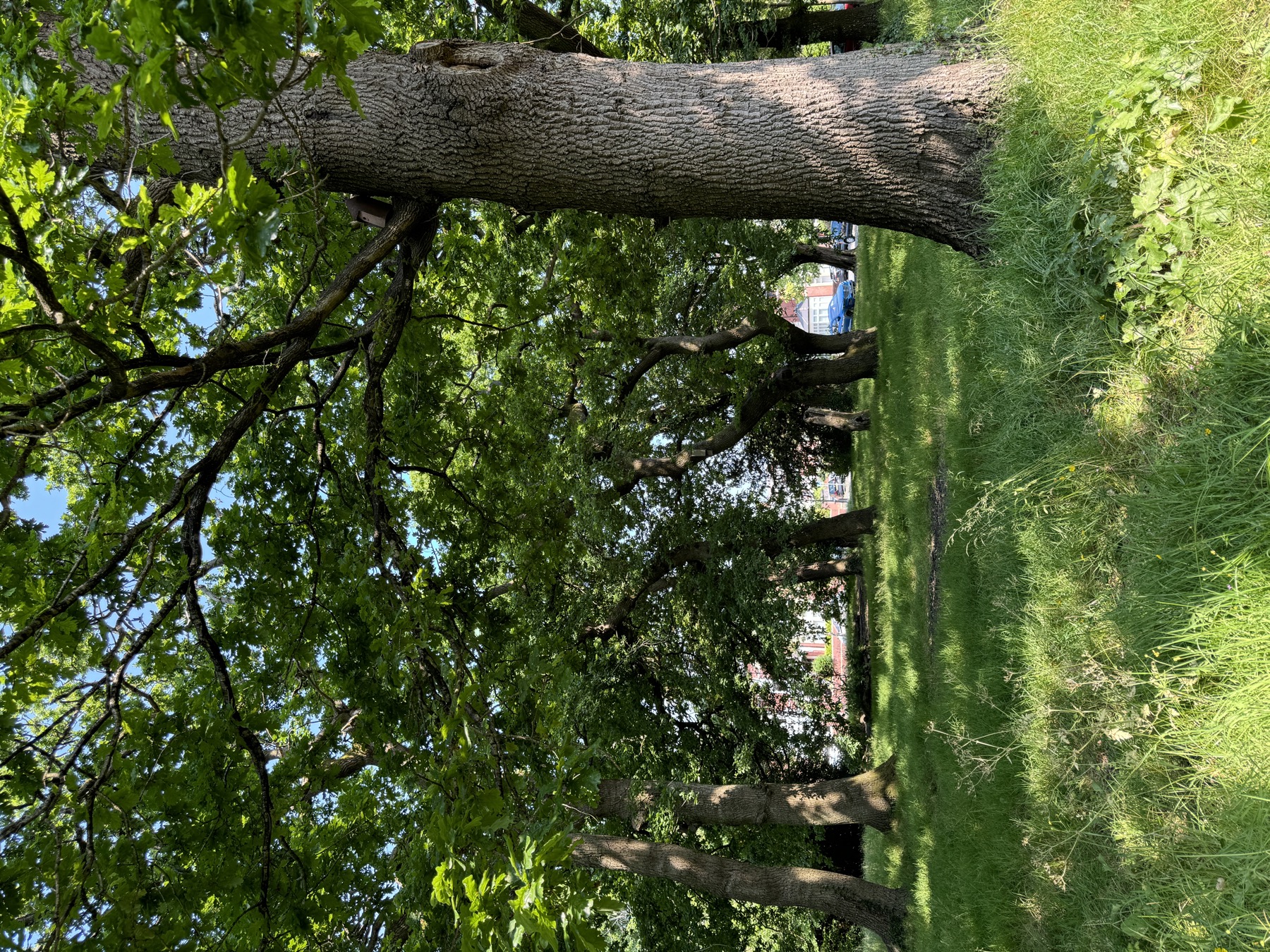
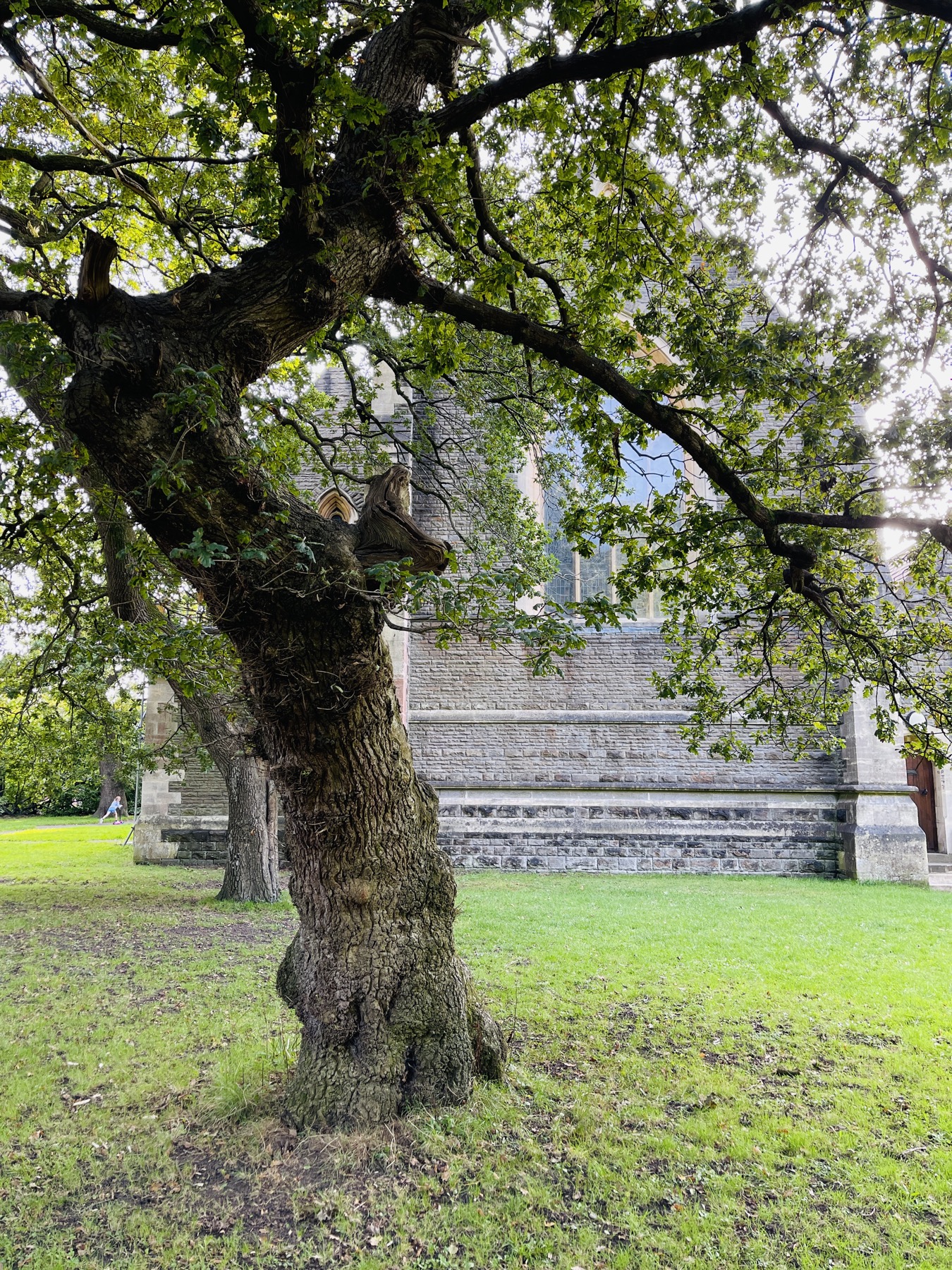
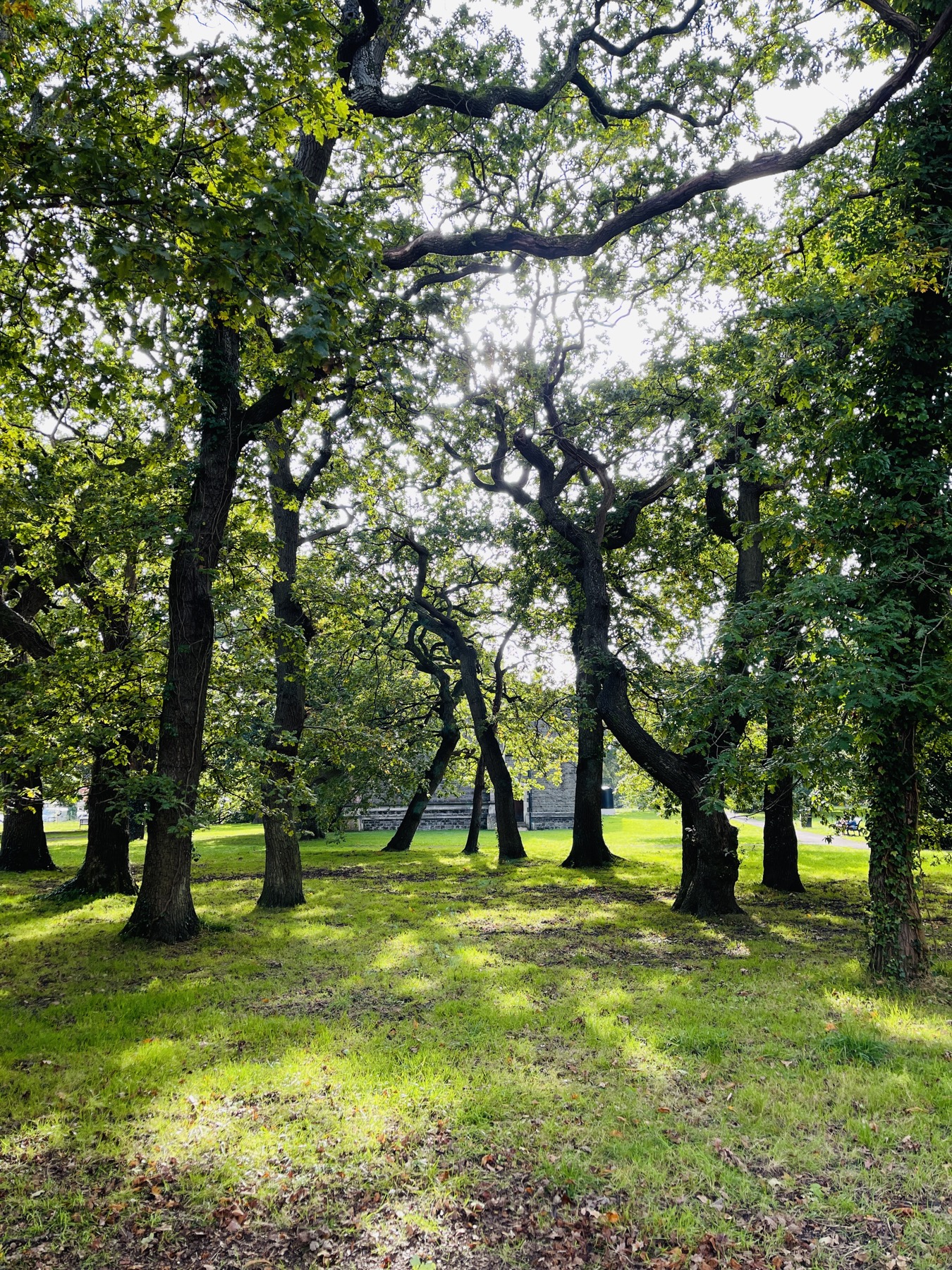
This is what I like most about Victoria Square: it holds several versions of itself at once. A Victorian church square. A former sports field. A wartime ruin rebuilt. A community garden. A filming location. A concert space. A place where children run in the grass, and where a sketching group can spread out under the trees without needing much more than pencils, folding chairs, and a dry patch of ground.
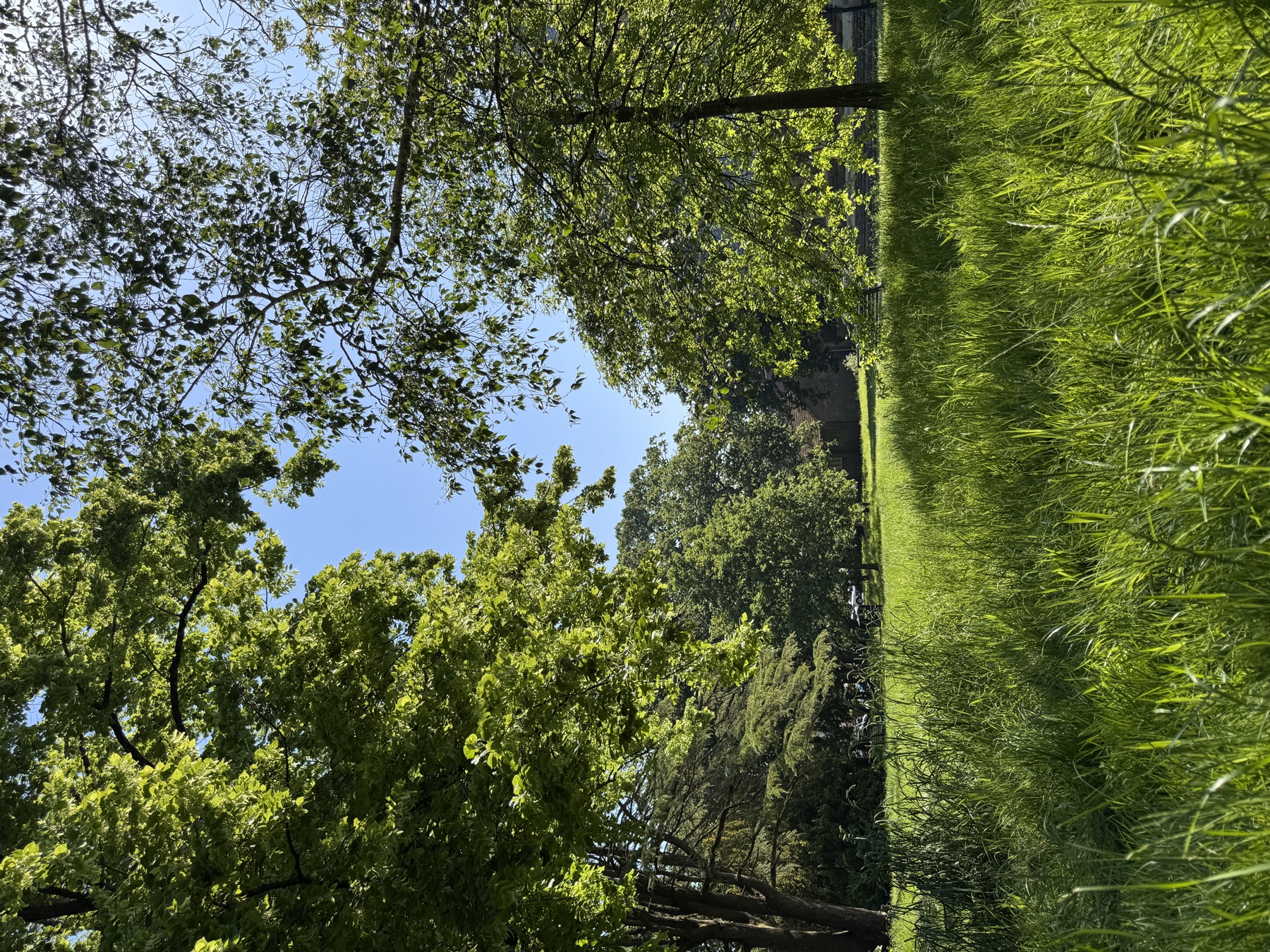
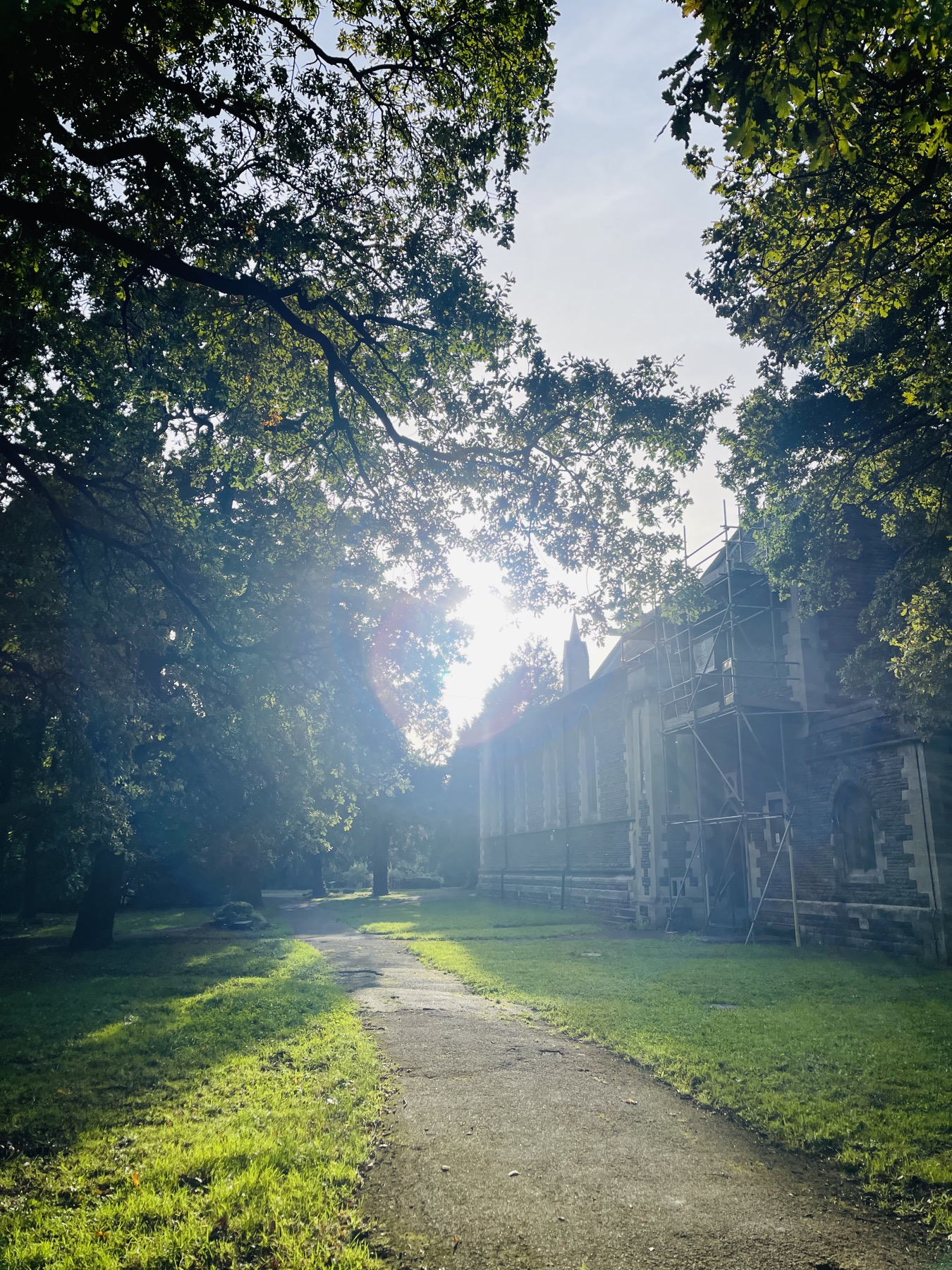
The square is easy to love for the greenery, but the history gives that greenery more weight. The church has been burnt, bombed, restored, used for services, concerts, filming, and ordinary local life. Around it, the park has kept its older trees and its slightly wild character. For drawing, that combination is useful: architecture, shade, long grass, people passing through, and a sense that the place has already lived several lives before you open the sketchbook.
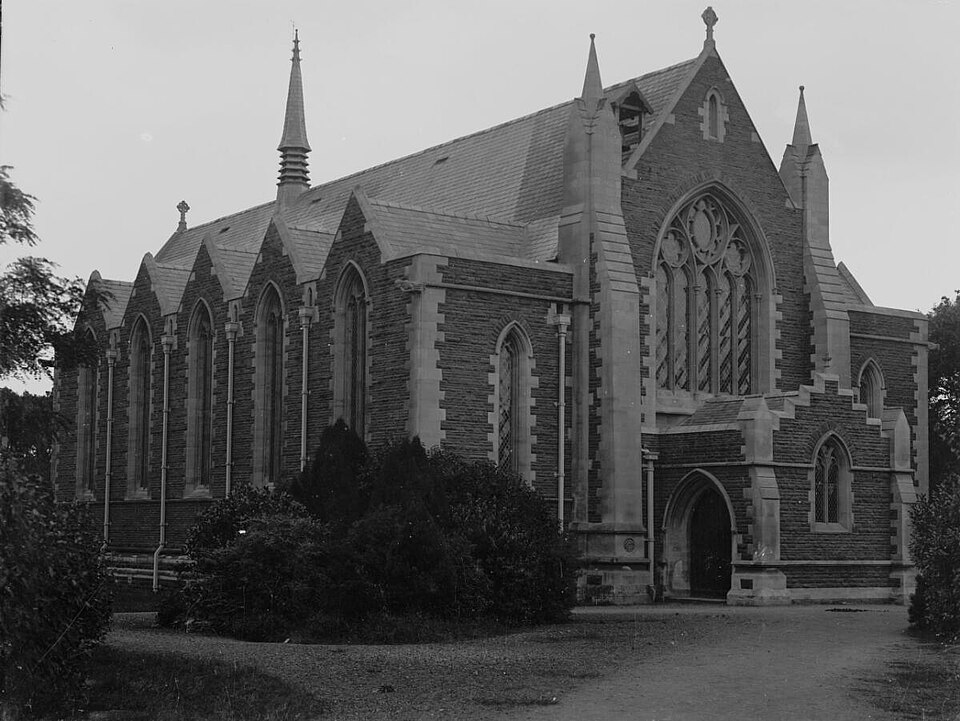
Historic image: All Saints Church, Penarth, photographed by Martin Ridley. Martin Ridley Collection, National Library of Wales, via Wikimedia Commons. Public Domain Mark.
.jpg)
Do you have a story about Victoria Square, or have you drawn it too? I would love to see your sketches or hear what you remember about the park. You can message me on Instagram.