Someone asked me what to bring to a sketching meetup, and I realised I usually answer this in the most unhelpful way: “anything”.
For a relaxed outdoor sketching meetup in Penarth, the useful answer is much smaller. A sketchbook or loose paper, one pencil or pen, a warm layer, and maybe something to sit on are enough for the first time.
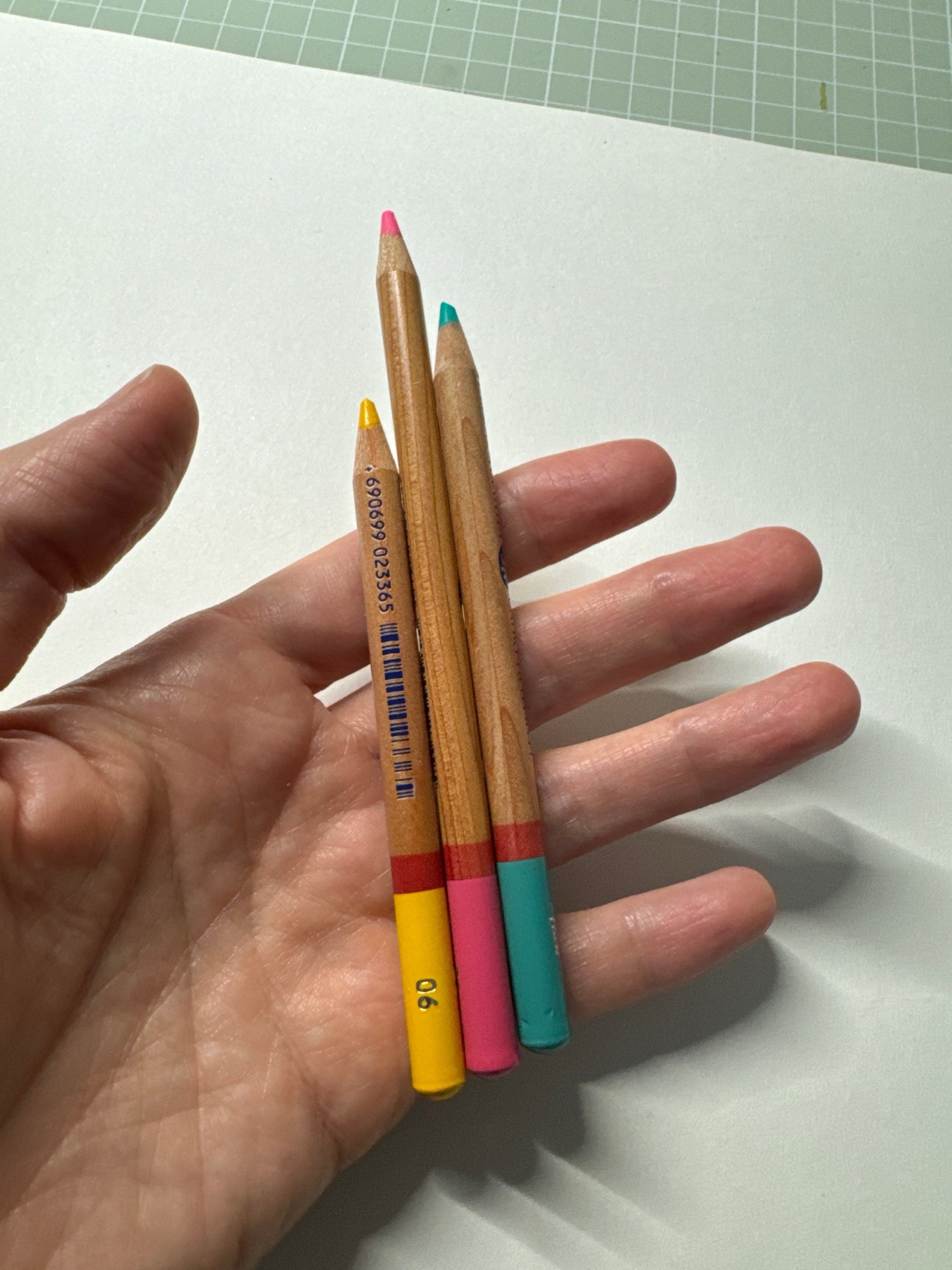
If you bring coloured pencils, you do not need the whole box. A few colours are enough, but choose them on purpose. One can be cooler, one warmer, and one should be dark. They need to be different in value, not only in name. A dark brown pencil is probably the most common dark colour.
Basic Sketching Materials
A sketchbook is the most universal option. If you do not have one, any notebook will do. Printer paper is also fine, especially if you bring something firm underneath it. A sharpener and an eraser are useful too.
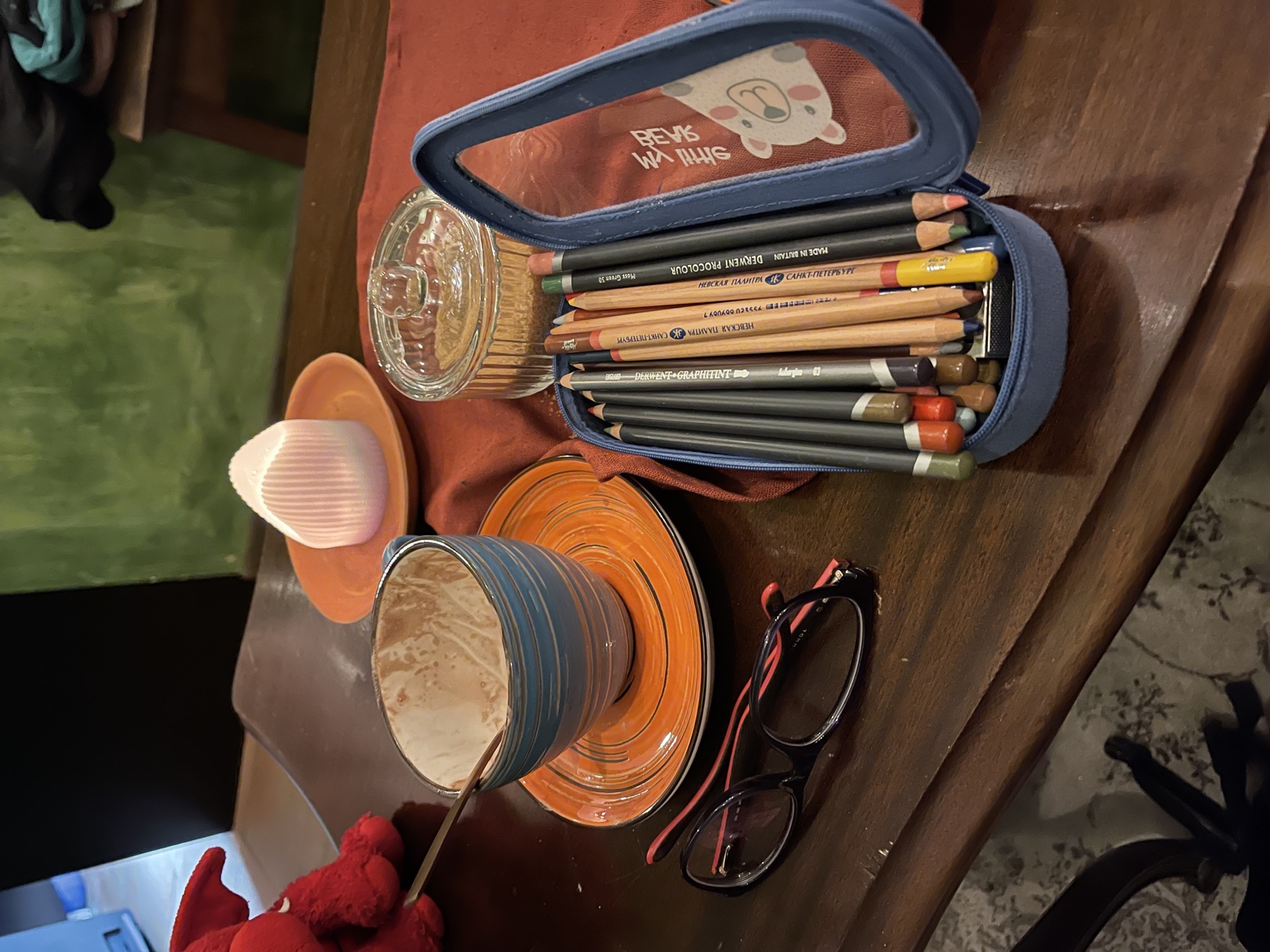
I often bring far more than I use. Coloured pencils, graphite pencils, pens, a rubber, a sharpener, sometimes watercolours.
The useful thing is having something you are willing to start with.
I would not use a plein air meetup as the place to test a completely unfamiliar material. I know the temptation: new pencils, new paints, a clever box. But outside, time goes quickly. If the material fights you, you spend the meeting solving the material instead of looking, choosing, drawing.
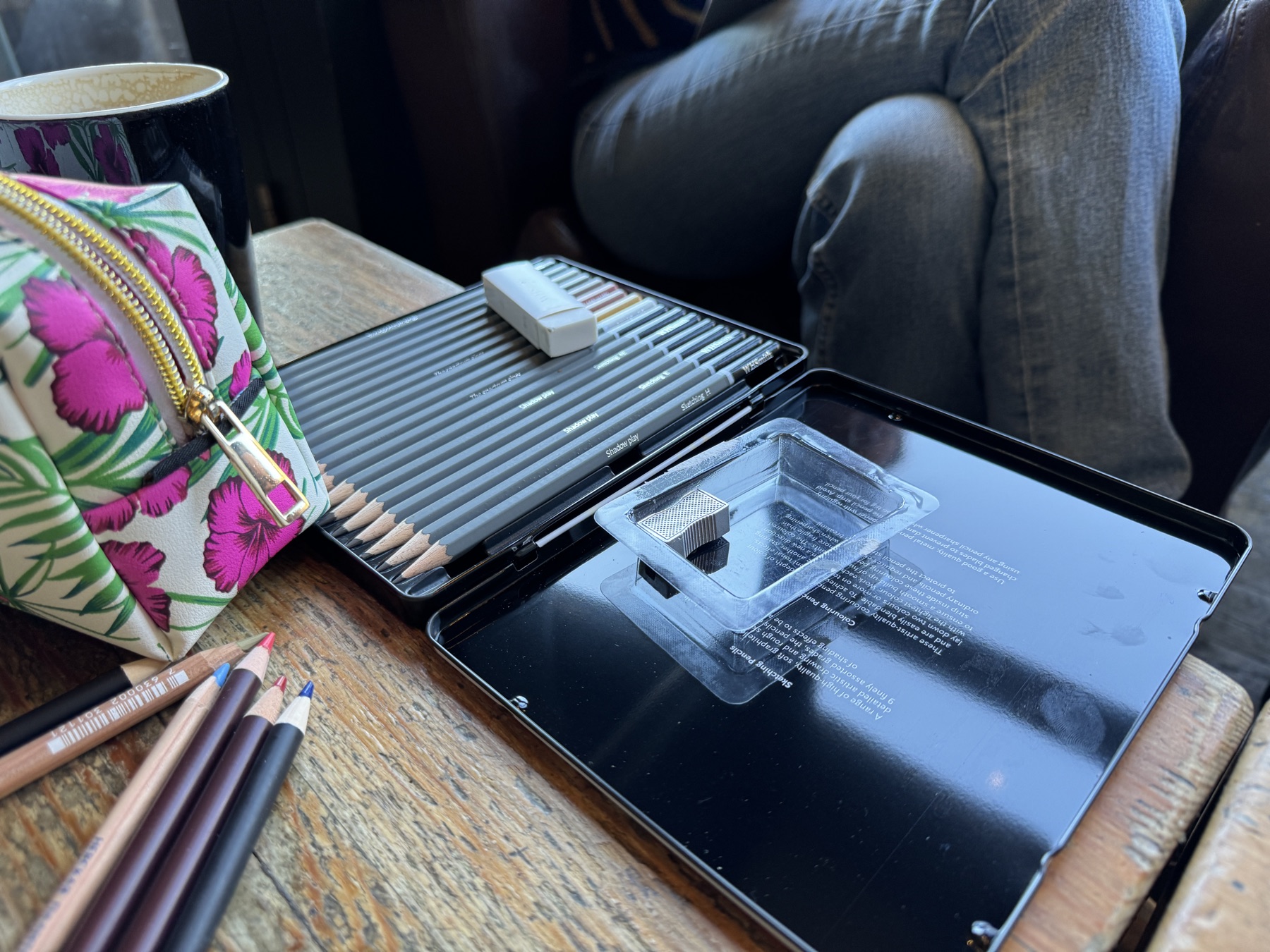
Graphite is good if you feel nervous. A soft pencil is useful for putting in big areas of value. A medium-soft pencil is good for expressive lines. A very hard pencil is only really useful if you are drawing underneath watercolour.
If you like colour
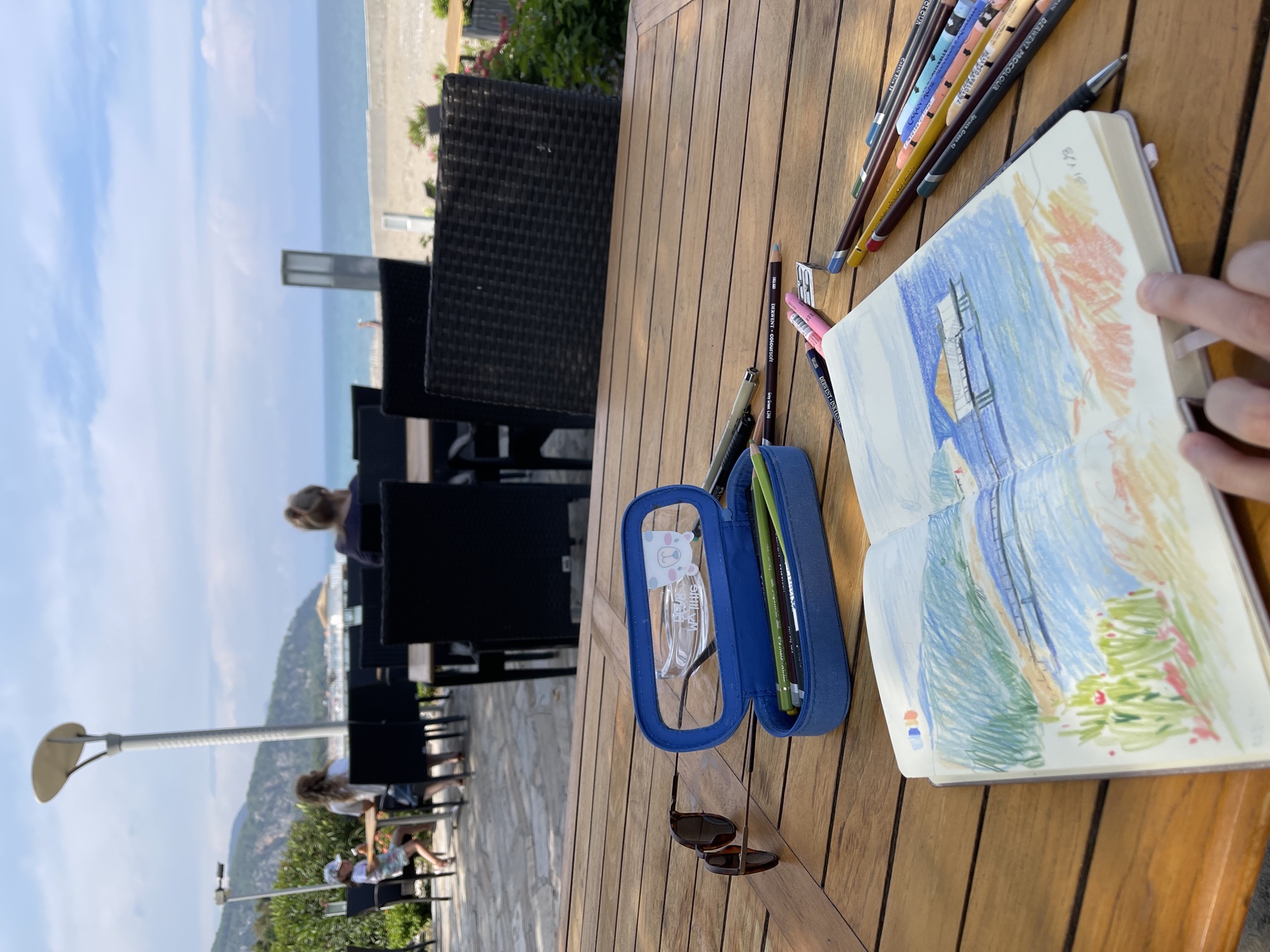
Coloured pencils are easy for meetups because they do not need water or much space. They are slow, which can be annoying, but that also makes them good for sitting with other people and talking.
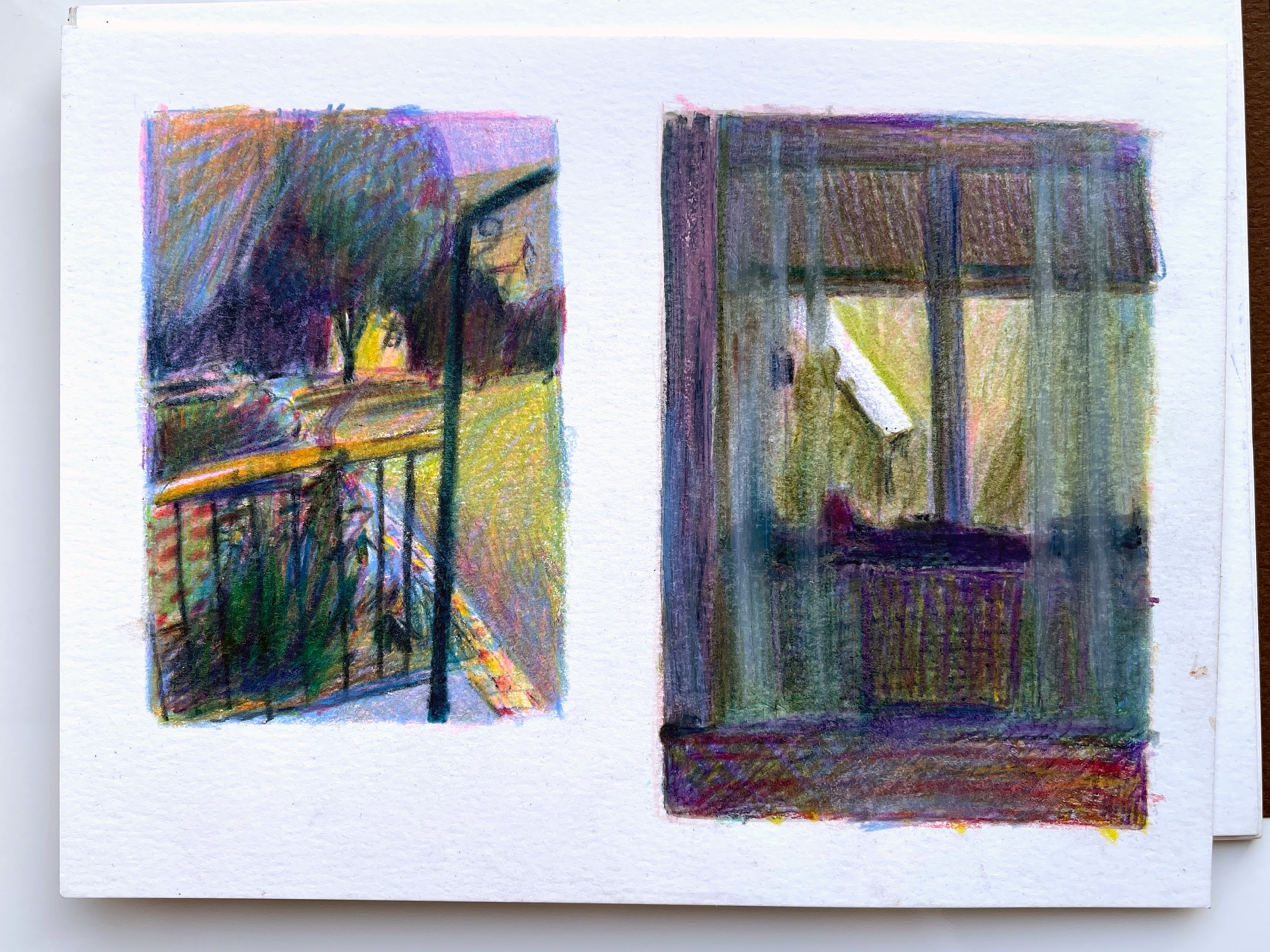
This is where value matters more than the colour names. The dark pencil holds the drawing together; the warmer and cooler colours can argue a little around it.
I like them for cafes especially. Coffee, cake, a small view through the window, someone else’s sleeve, a plant in the corner. Nothing has to become a finished drawing.
Watercolour is lovely, but it asks for more small decisions: water, brush, cloth, where to put the palette, whether the paper can take it, whether the wind is about to fold your page into your paint.
I usually wash my palette before I go out, or before I sit down to paint. It is boring, but it is much better to do it at home than to waste the first minutes of outdoor drawing scraping old paint and dried mud from the mixing area.
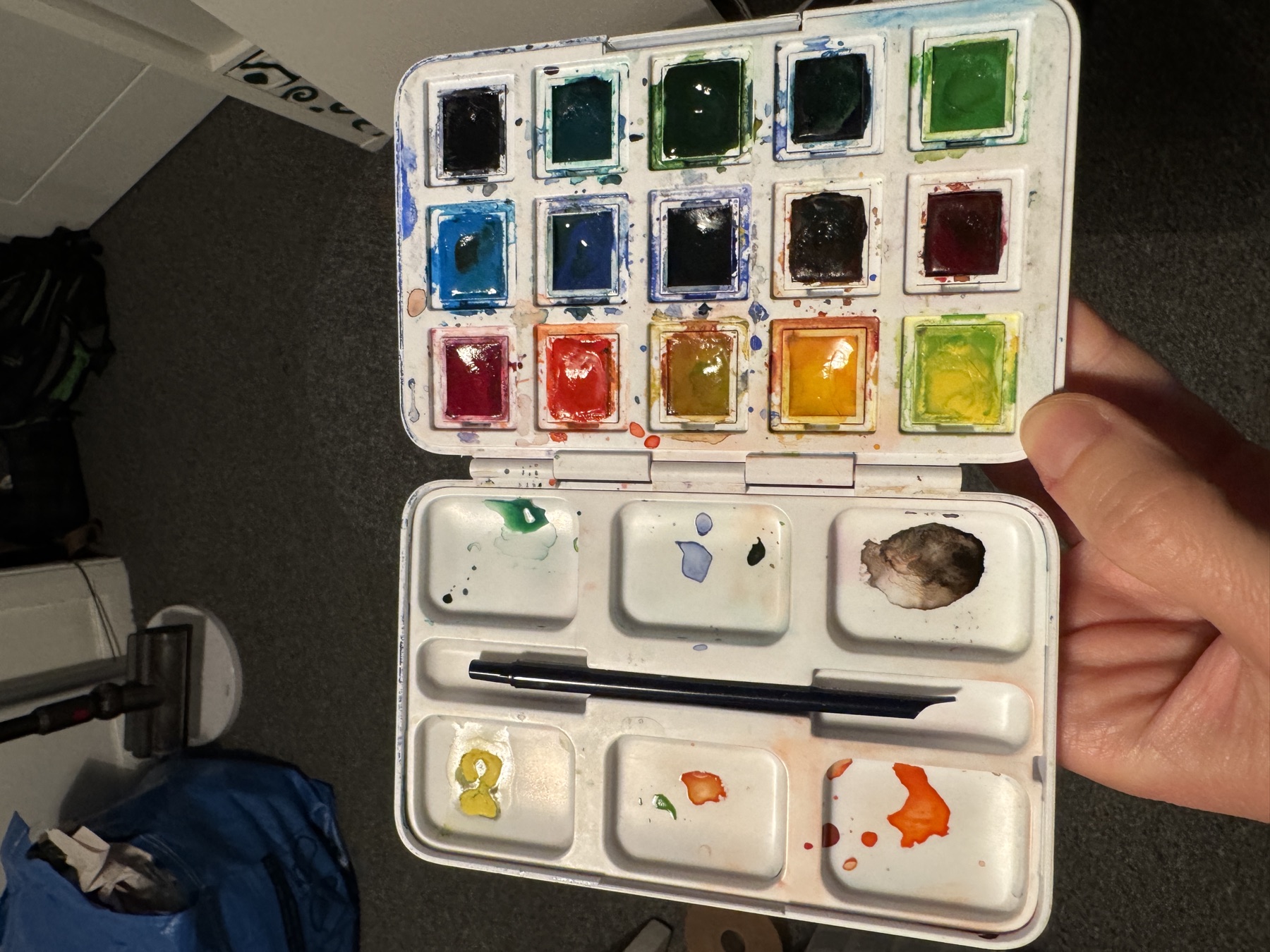
With watercolour, think about water before you leave home. I have painted with water from a fountain, from a river, from a lake, and from whatever else was nearby at the time. It works in an emergency, but it is not a very good idea. Dirty water gives you dirty colour. Sometimes that is interesting. Usually it is just mud arriving early.
And if you have coffee and a water pot on the same table, keep them far apart. The brush has a sense of humour and will choose the coffee at the worst possible moment.
Oil pastels have their own weather problem. In heat they soften, and in strong sun they can almost melt. The drawing stays smudgy too, so you need to know how you will carry it home. A spare sheet of paper, a folder, baking parchment, something. Otherwise your finished sketch will decorate the inside of your bag.
Markers are the opposite: immediate, bright, slightly bossy. They are excellent when you do not want to be careful.
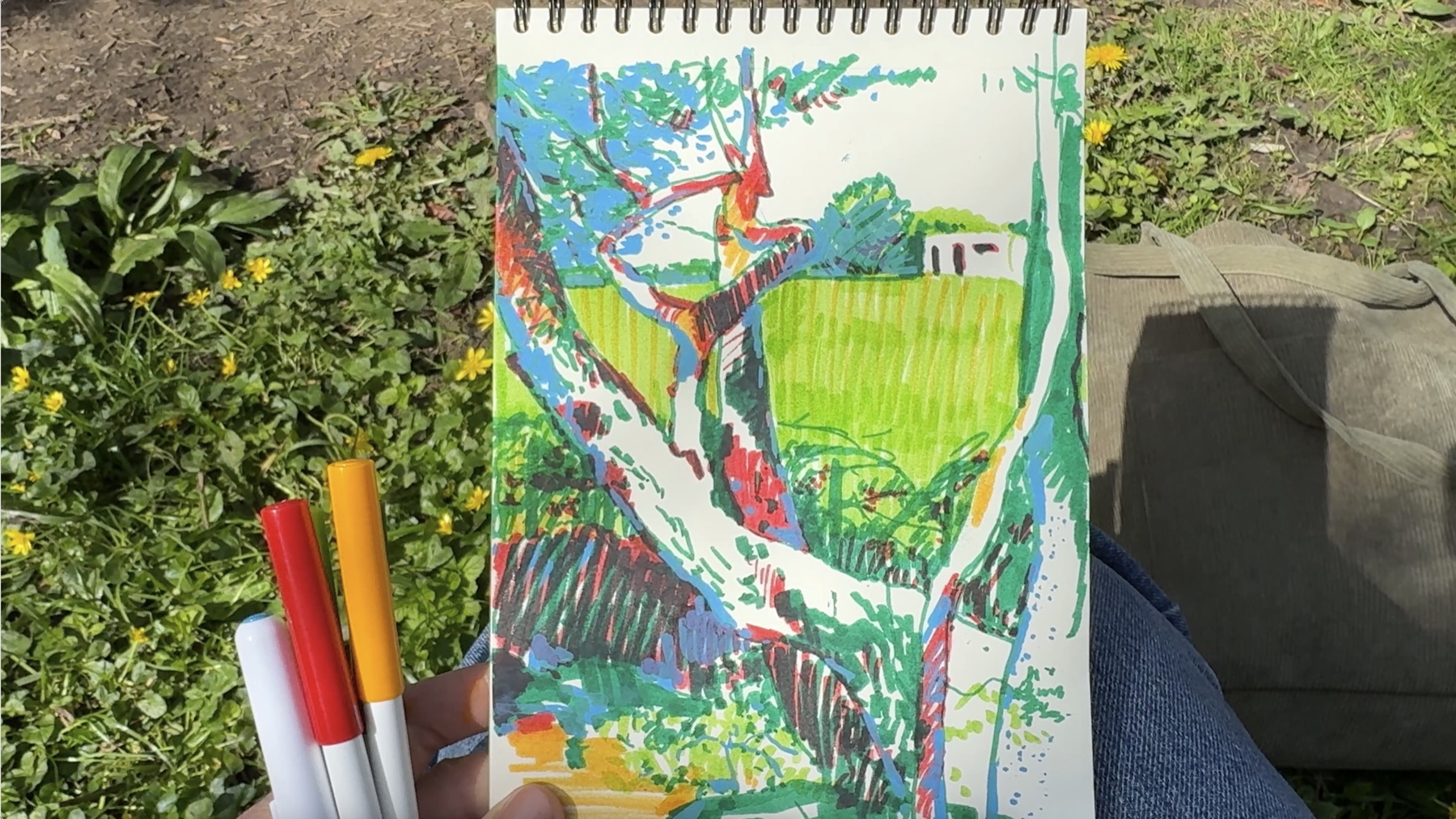
Children’s markers count too, by the way. Crayola, whatever is in the house, the pens from the bottom of a drawer. If they make a mark, they are materials.
For cafes and rain plans
Because this is South Wales, a sketching plan often includes a backup plan. Sometimes we start outside and end up in a cafe.
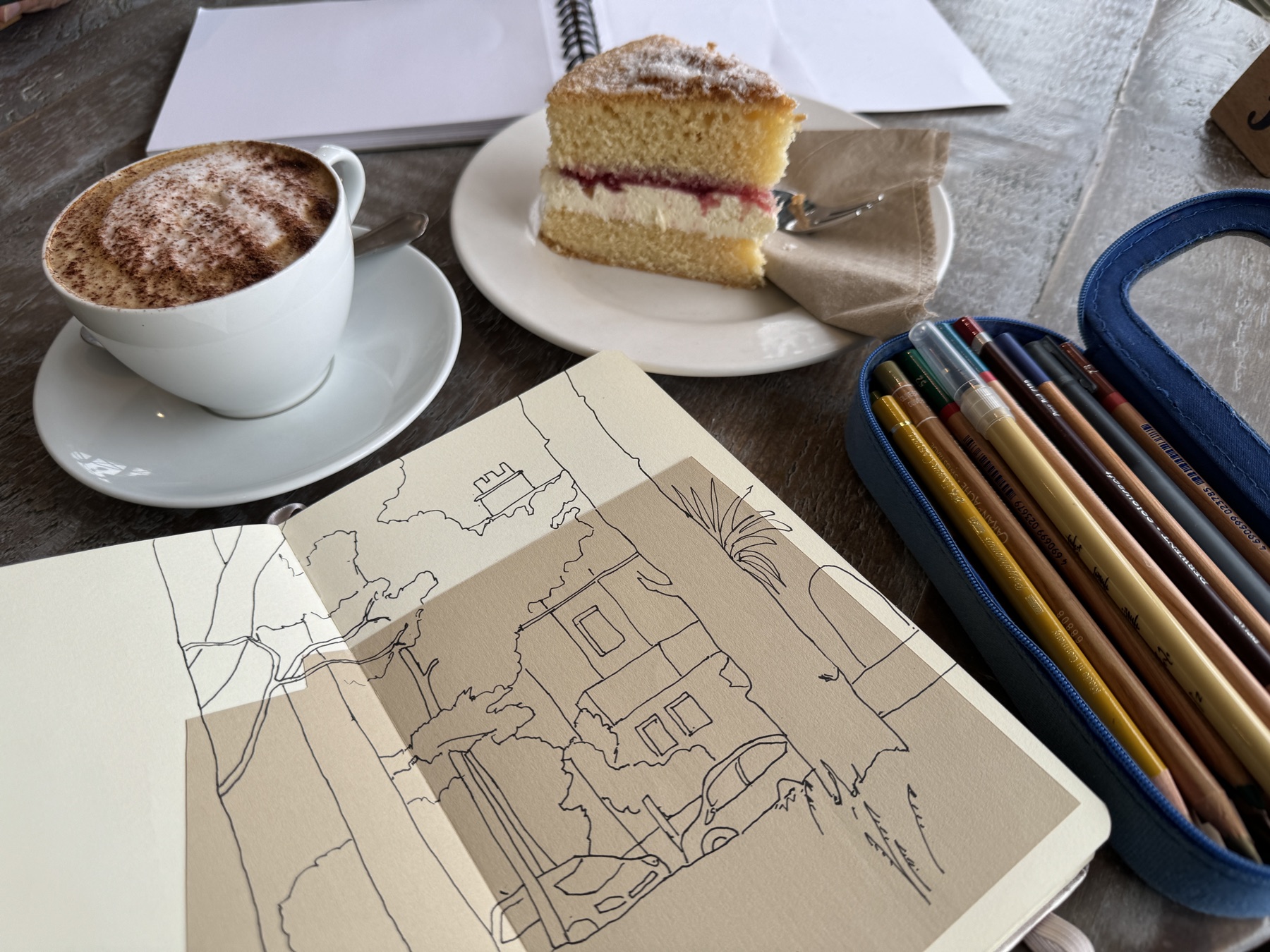
For cafe sketching, I would bring a smaller kit. Not the huge box. Not every tube of paint you own. A sketchbook, a pen or pencil, a few colours, maybe a water brush if you use one. You need space for the cup.
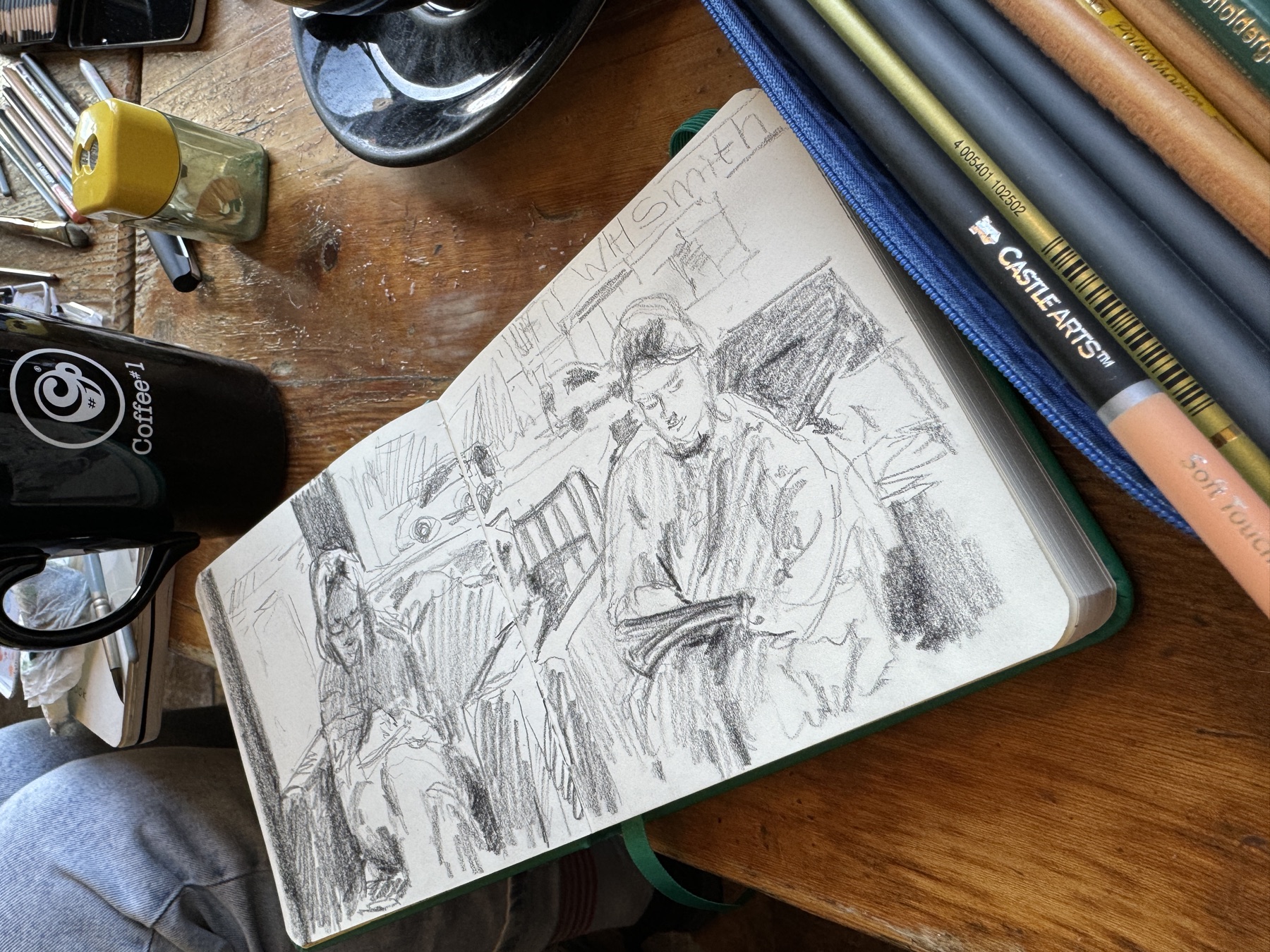
Cafes are good for drawing people because nobody holds still properly. That sounds like a problem, but it helps. You stop trying to make a portrait and start catching posture: the angle of a shoulder, a head bent over a phone, someone holding a mug with both hands.
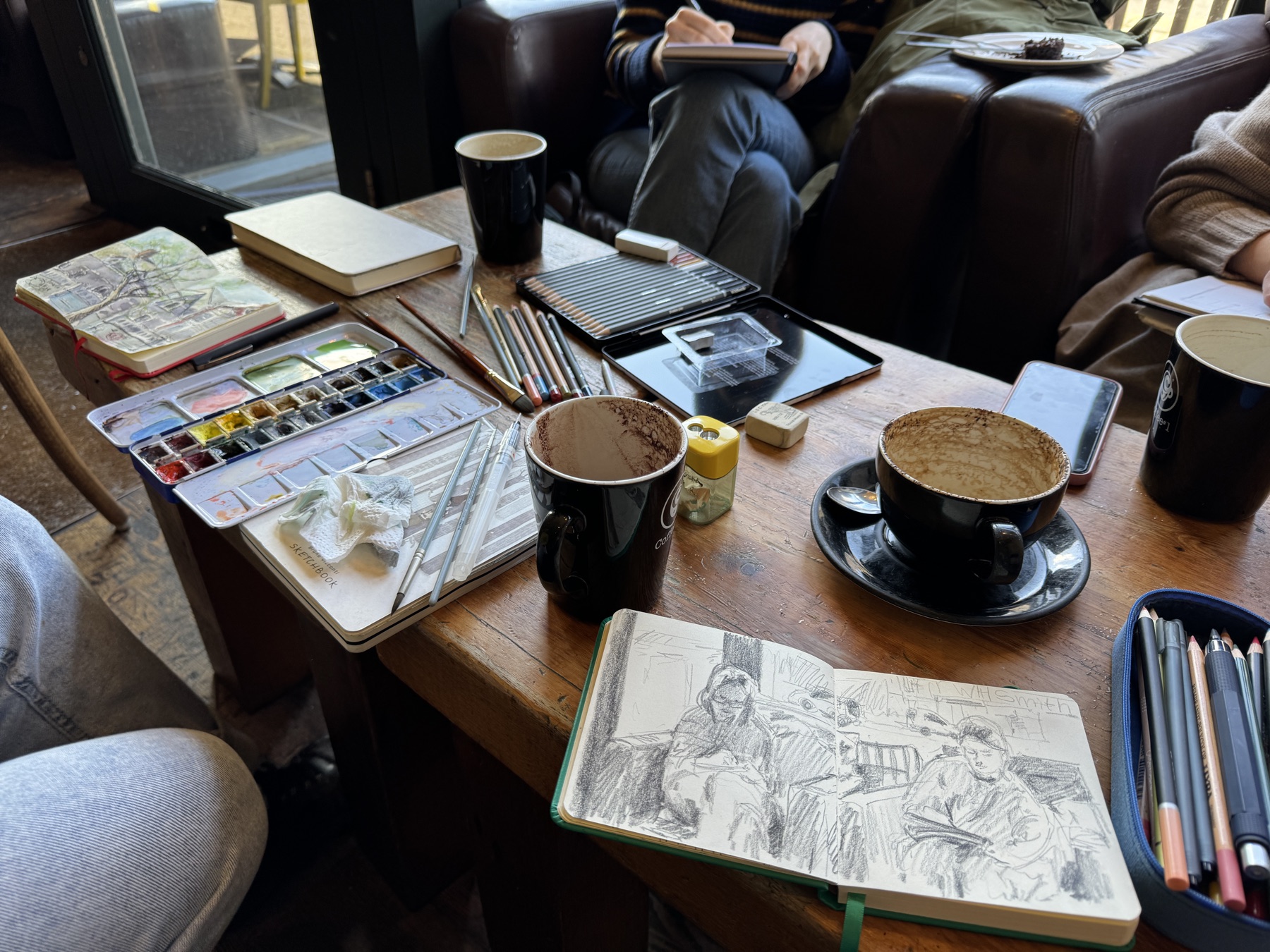
If you are new, drawing other people can feel too exposed. Draw the table instead. Cups, pencil cases, erasers, bags, chair legs, someone’s hand. The table is usually full of subjects and nobody minds. Drawing the people you came with is also fine. Sketching friends are usually pleased, as long as nobody is asked to sit perfectly still.
Outdoor Sketching Clothes and Weather
Outside is different. You sit still, so you get colder than you expect. I dress as if the weather app is being overconfident by about ten degrees. If it says 20°C, I still dress for something closer to 10°C.
This sounds dramatic until you have tried sketching in a light breeze with cold fingers.
Useful things outside:
- a warm layer, even in summer
- something waterproof-ish in case it starts to drizzle
- a hat or sunglasses
- clips for paper
- a small mat, folding chair, or cushion
- water, especially if you bring paints
I am serious about the warm layer. Drawing is colder than walking because you stop moving. I once got badly chilled sitting outside; only later I realised it was my feet that had got cold first. Since then I trust socks more than optimism.
For seaside sketching, I also think about wind. Loose paper is brave in a way I do not personally enjoy. A sketchbook is easier. If I bring separate sheets, I need clips, tape, or a board.
Oil Painting Outside
For oil painting outside, the list gets longer: paints, brushes, palette, rags, painting surface, solvent or solvent-free medium if you use it, a way to carry wet work home. It is more commitment. Fun commitment, but still commitment.
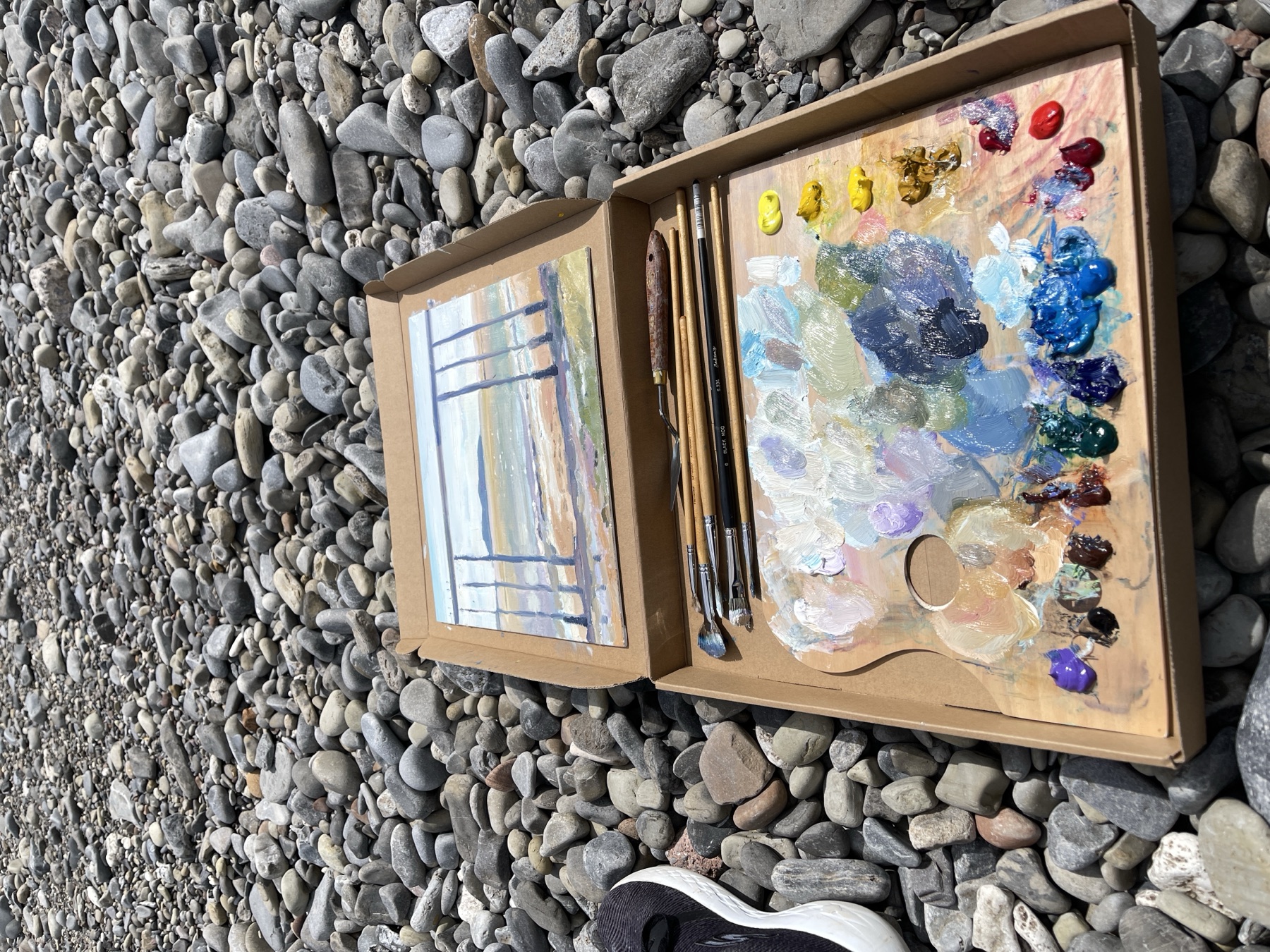
This was oil painting on the beach, with the palette inside a pizza box, sitting on stones with the box on my knees. Very elegant. Completely normal if you have thought it through.
With oil, the question is not only how to carry the palette back. It is the wet painting too. It needs a way home without touching your clothes, your bag, your sketchbook, or the nearest innocent person on the pavement.
For a relaxed group meeting, I would not start there unless you already know your setup. If the box makes you happy, bring it. If it makes you feel like you need three extra hands and a weather assistant, leave it at home.
What if you do not draw?
You can still come.
This is the bit I want to say clearly, because people often assume a sketching group means everyone is being observed, corrected, or judged like they are back in art school.
No.
At our meetings people draw different things, or write, or work on a laptop, or drink coffee, or talk. Someone might come with children.
We announce the next Espresso Sketches Penarth meetup on Instagram, because the place and time can change with weather, school holidays, and ordinary life. If you have been looking for a sketching group in Penarth, or something like urban sketching near Cardiff without the formal class feeling, this is probably the right door.