I found out about this the way you find out most good things about your own town: sideways, while looking for something else. In the summer of 1897, Alfred Sisley — one of the founders of Impressionism — packed his paints, crossed the Channel, and came to Penarth.
He took lodgings at 4 Clive Place. For a few weeks that summer, he painted the same cliffs I still draw today.
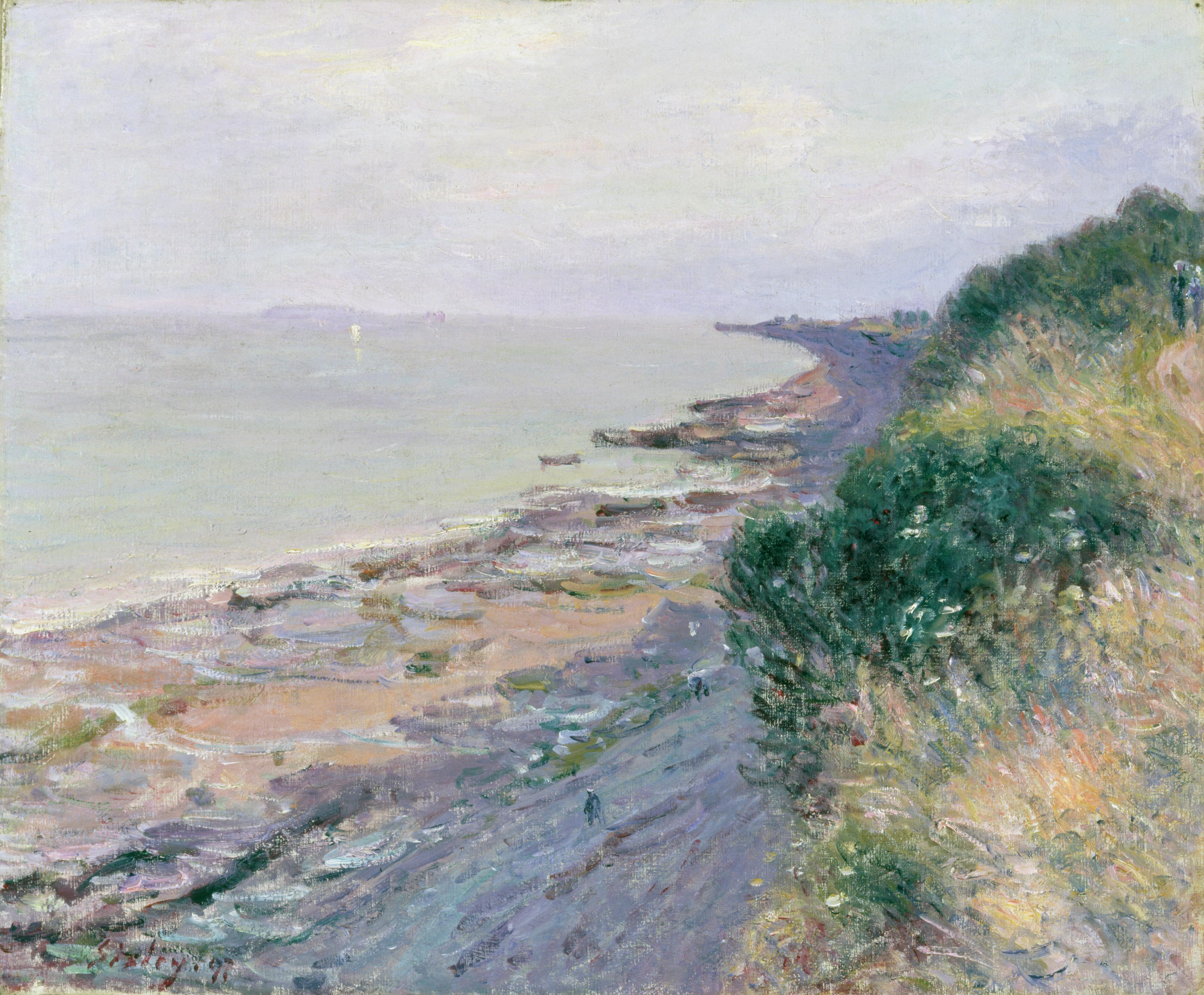
Alfred Sisley, The Cliff at Penarth, evening, low tide, 1897. Collection of Amgueddfa Cymru — Museum Wales.
The quiet one
Sisley is often described as the quiet one among the Impressionists. While Monet, Renoir and Degas moved between figures, cities and landscapes, Sisley remained devoted above all to the open air: rivers, roads, snow, trees and changing skies. He painted landscapes, sold them badly for much of his life, and kept going.
His story has an odd fold in it. He was born in Paris to English parents — his father ran an export business there, silk and other fine goods — so Alfred grew up French in everything but paperwork. He spoke French, studied painting in Paris alongside Monet and Renoir, and spent his whole life painting French rivers and French skies. But he stayed a British subject to the end. He applied for French citizenship and never received it.
For years the family business kept him comfortable. Then the war of 1870 ruined his father, and from his early thirties Sisley was a poor man with a family, living off paintings that would not sell. That is the man who, at fifty-seven, turned up in Penarth with an easel.
Getting here
The trip was not a sudden whim. Sisley left France in the spring of 1897, and he did not travel alone or at his own expense. With him came his patron François Depeaux — a coal magnate from Rouen, a passionate collector who owned hundreds of Impressionist paintings and, usefully for this story, a coal mine near Swansea. Welsh coal was Depeaux’s business; south Wales was a coast he knew. If you ever wondered how a hard-up French painter ended up on the Bristol Channel, the answer is the same as for most things here in 1897: coal.
There were short stops in London and Cornwall first. By early July, Sisley and Eugénie — more about her in a moment — were settled in Penarth. He liked his lodgings; he wrote that he was staying “with some very decent folk”. On 16 July he sent a letter that I think about every time I am on the cliff:
“I have been here for a week… The countryside is very pretty, and the Roads, with the big ships sailing into and out of Cardiff, is superb.”
He also reported that the climate was very mild, and that it had lately been too hot. Some things about Welsh summers do not change: a French visitor complaining about a heatwave in Penarth could be writing this year.
The accommodation made a stronger impression. Somewhere on this Welsh trip he complained: “The beds have to be seen and felt to be believed — a mattress in two pieces stretched over a sort of coat of armour.” It is the most vivid domestic detail in the surviving letters: an Impressionist defeated, briefly, by a Welsh mattress. The passage is quoted in the Sotheby’s catalogue for one of the Welsh paintings.
The Roads — the water off Penarth where ships anchored to wait for the tide and their turn in the docks — were crowded then. This was the peak of the coal years, and the channel in front of the town was full of masts and steam. Sisley had spent thirty years painting quiet rivers, the Seine and the Loing. Now he had the busiest kind of sea in front of him, with one of the biggest tides in the world, and wet sand shining twice a day.
A wedding in Cardiff
In the middle of all this, on 5 August 1897, Sisley and Eugénie went into Cardiff and got married at the Town Hall.
Eugénie Lescouezec had been with him for about thirty years. They met in Paris in the 1860s, when he was a young painter and she was making her living there; their son Pierre and daughter Jeanne were born soon after, long before the wedding. By 1897 they were both around sixty and both seriously ill — she with the cancer that would take her the following year, he with the throat cancer that would take him a few months after her.
The National Gallery, which showed the Welsh paintings together in 2008, puts it simply: Sisley came to Britain to marry his long-term partner. Why Britain? He was a British subject, and marrying at “home”, under British law, is usually explained as his way of putting the family’s affairs in order while there was still time — making sure Eugénie and the children would be provided for.
All of that is true, and none of it is the whole picture. After thirty years together, two grown children, and a lifetime of debts, a quiet painter married the woman who had stayed through all of it — in a Welsh town hall, in a hot August, with the ships in the Roads outside. Then they went back to the seaside and he kept painting.
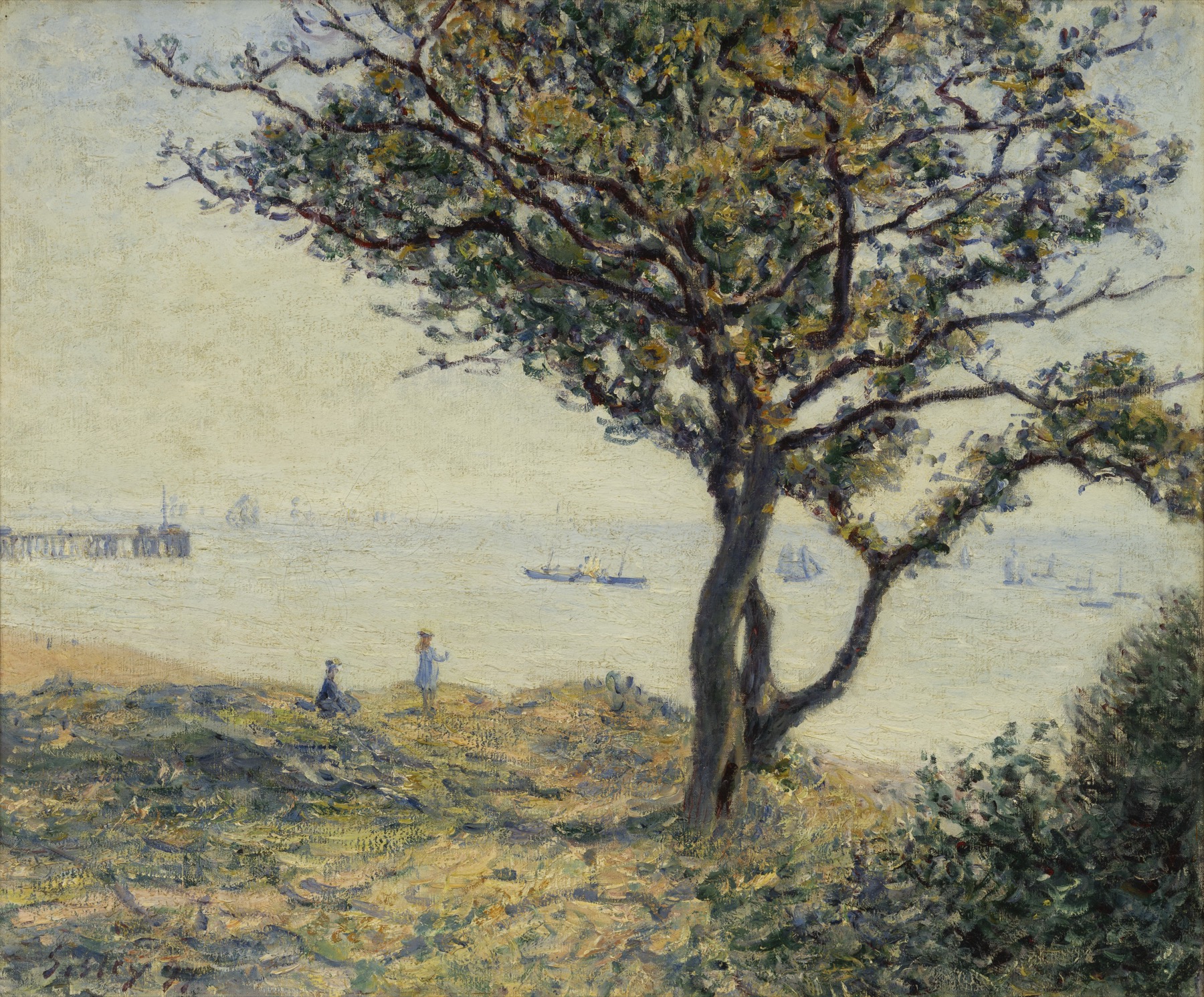
Alfred Sisley, A Cardiff Shipping Lane (La Rade de Cardiff), 1897. Collection of the Musée des Beaux-Arts de Reims. Photograph: Corentin Le Goff, CC BY 2.0.
The Penarth paintings
Around nineteen oils came out of the Welsh trip, and six of them are views of Penarth: trees at the edge of the cliff with the pier and the shipping beyond, views north up the channel towards Cardiff, and three views looking south along the coast — towards Lavernock. They are, as far as anyone can tell, the only paintings of Wales ever made by a leading Impressionist. They were also the first real seascapes of his life. He had painted rivers for thirty years; the sea he left almost to the end.
The paintings made an impression as soon as they reached France. Félix Pissarro, Camille’s son, wrote that Sisley had made “some splendid paintings by the sea” in a remote corner of the world. A review in Le Journal likewise admired the Penarth and Langland Bay seascapes for capturing the strange character of a landscape that painters had rarely visited. Both responses are quoted in the Sotheby’s catalogue.
The one that lives closest to us is the museum’s The Cliff at Penarth, evening, low tide: the beach with its rocks uncovered, the cliff in shadow, the water gone quiet and far away. It is not a dramatic picture. It is exactly what this coast does on an ordinary evening. He did not improve the view. He trusted it.
Langland, and after
On 15 August, ten days after the wedding, the couple moved west to Langland Bay on Gower — Depeaux’s corner of Wales — and stayed until the start of October. The Langland pictures are the more famous ones now: waves breaking around Storr Rock, bathing huts on the sand, the strong light of that late summer. One of them also hangs in Cardiff: Storr Rock, Lady’s Cove, le soir.
Five days after arriving, Sisley wrote to Adolphe Tavernier that the country was hillier than Penarth and grander in scale. The attraction came with a practical enemy: “The sea is magnificent and the subjects are interesting. But you have to fight hard against the wind, which reigns supreme here.” Yes, I know that kind of wind. The letter is quoted by Stephen Ongpin Fine Art.
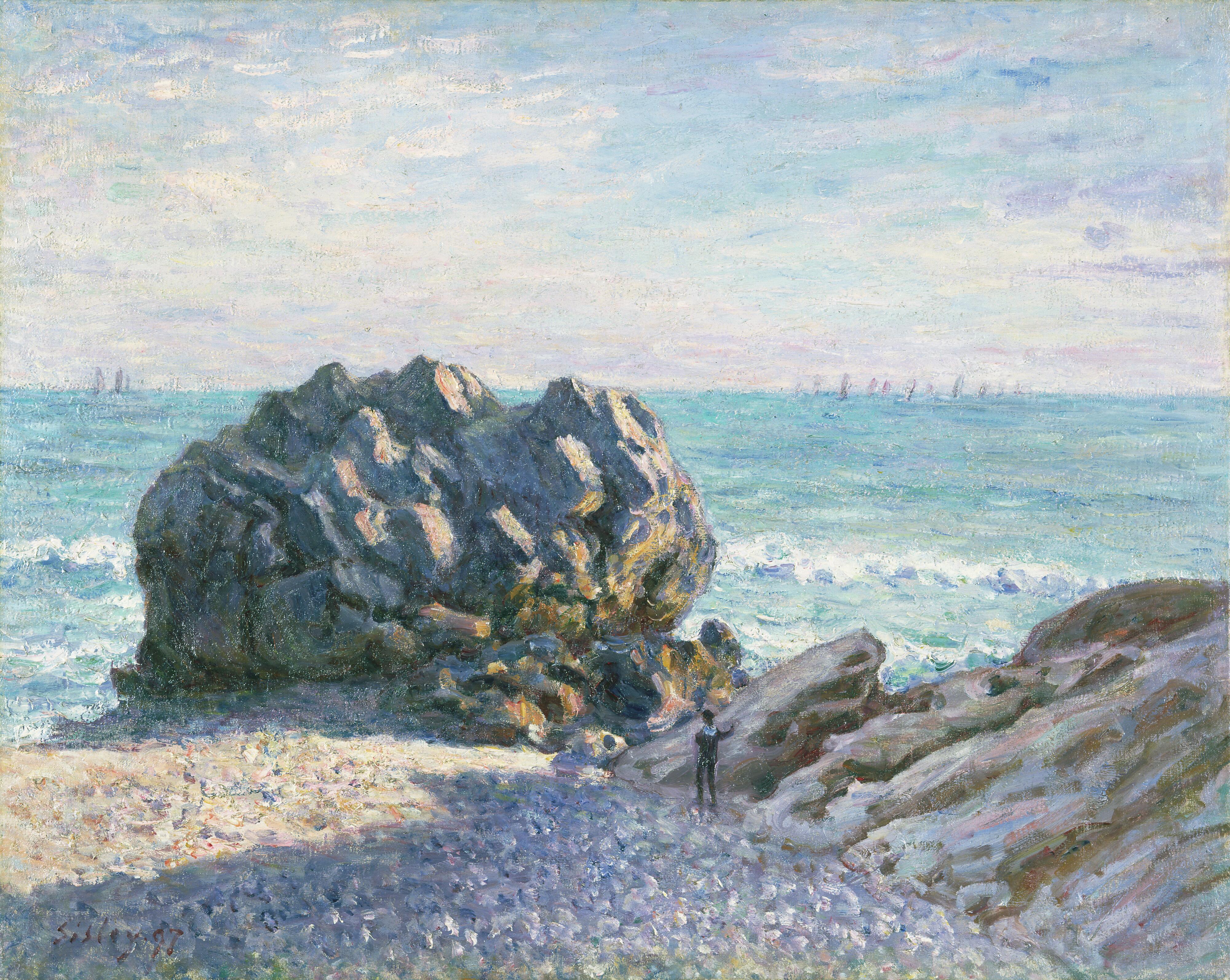
Alfred Sisley, Storr Rock, Lady’s Cove, le soir, 1897. Collection of Amgueddfa Cymru — Museum Wales, CC0.
Depeaux, the patron who had brought them over, ended up buying five of the Welsh paintings. On 1 October Sisley and Eugénie went home to Moret-sur-Loing. She died the following year. He died in January 1899, a few months after her. The Welsh pictures — the pier, the Roads, the cliff at low tide, Storr Rock in the evening — turned out to be the last big series of his life.
Walking his views
Once you know the paintings, you start meeting them on ordinary walks.
The cliff top where he set up his easel is the same cliff top the town still walks every day — the stretch above the beach, past the end of the Esplanade, where the path heads south out of town. I have written about that path in Penarth Clifftop Walk to Lavernock, and it is strange and pleasant to add Sisley to it: the same summer Marconi was on that headland sending the first radio signals across the water to Flat Holm, an ageing Impressionist was a mile up the coast, painting the tide going out.
Some things in his views are gone. The Roads are no longer full of coal ships waiting, and the water in front of the town is quieter than it has been for two hundred years. But the shapes he painted are all still here: the pier, the low dark line of Lavernock, the islands, the big sky, and the low-tide rocks that come out in the evening exactly the way he caught them.
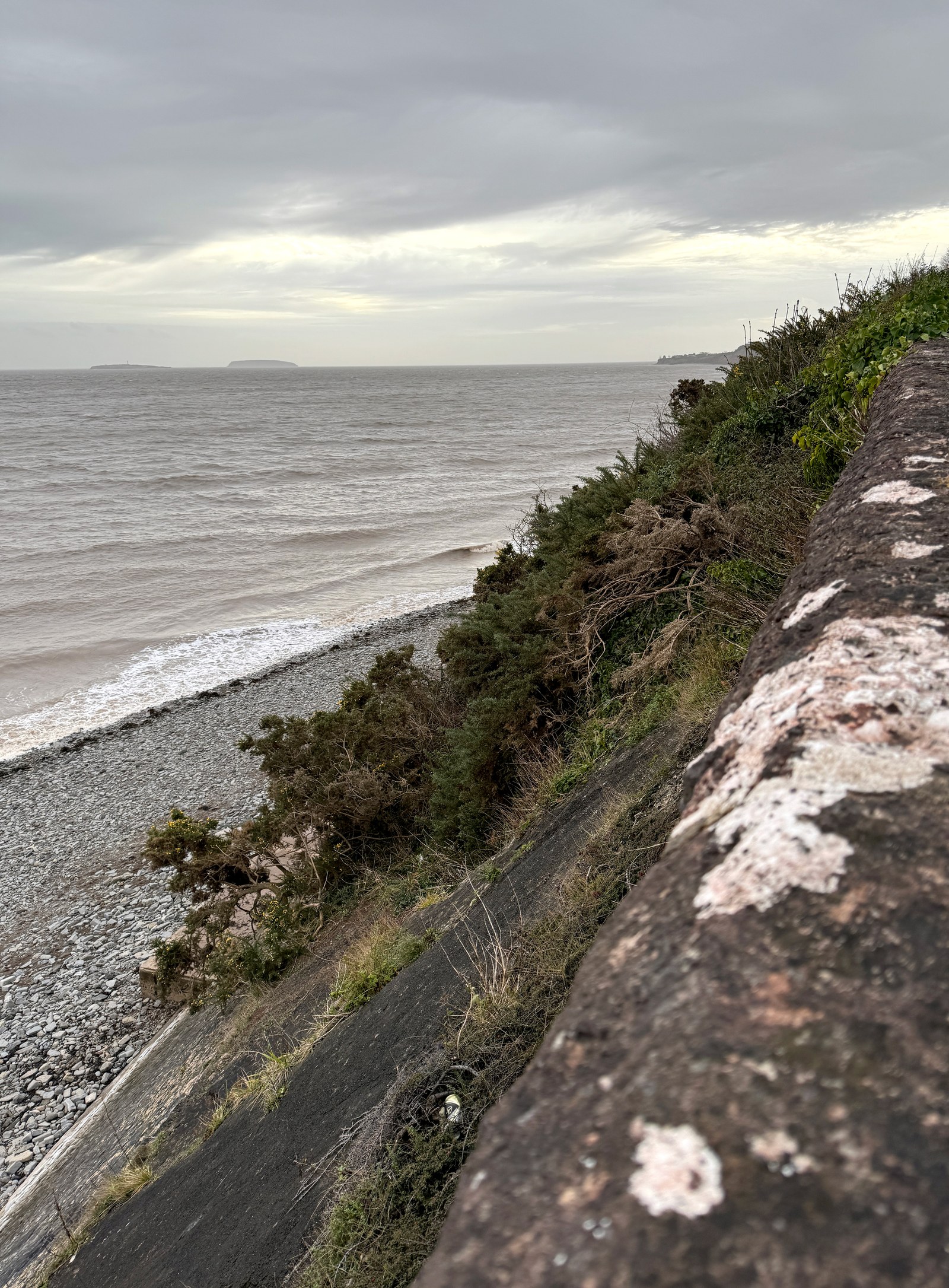
Flat Holm and Steep Holm from the Penarth cliffs.
For me this changed how I draw here. Not the technique — the company. Sketching on the cliff top is a solitary habit, and it turns out it has never been solitary. Someone stood in this wind before me, with better brushes and worse health, and thought the view was worth the trouble. When my page goes wrong now, I think of him selling almost nothing for thirty years and setting up the easel anyway.
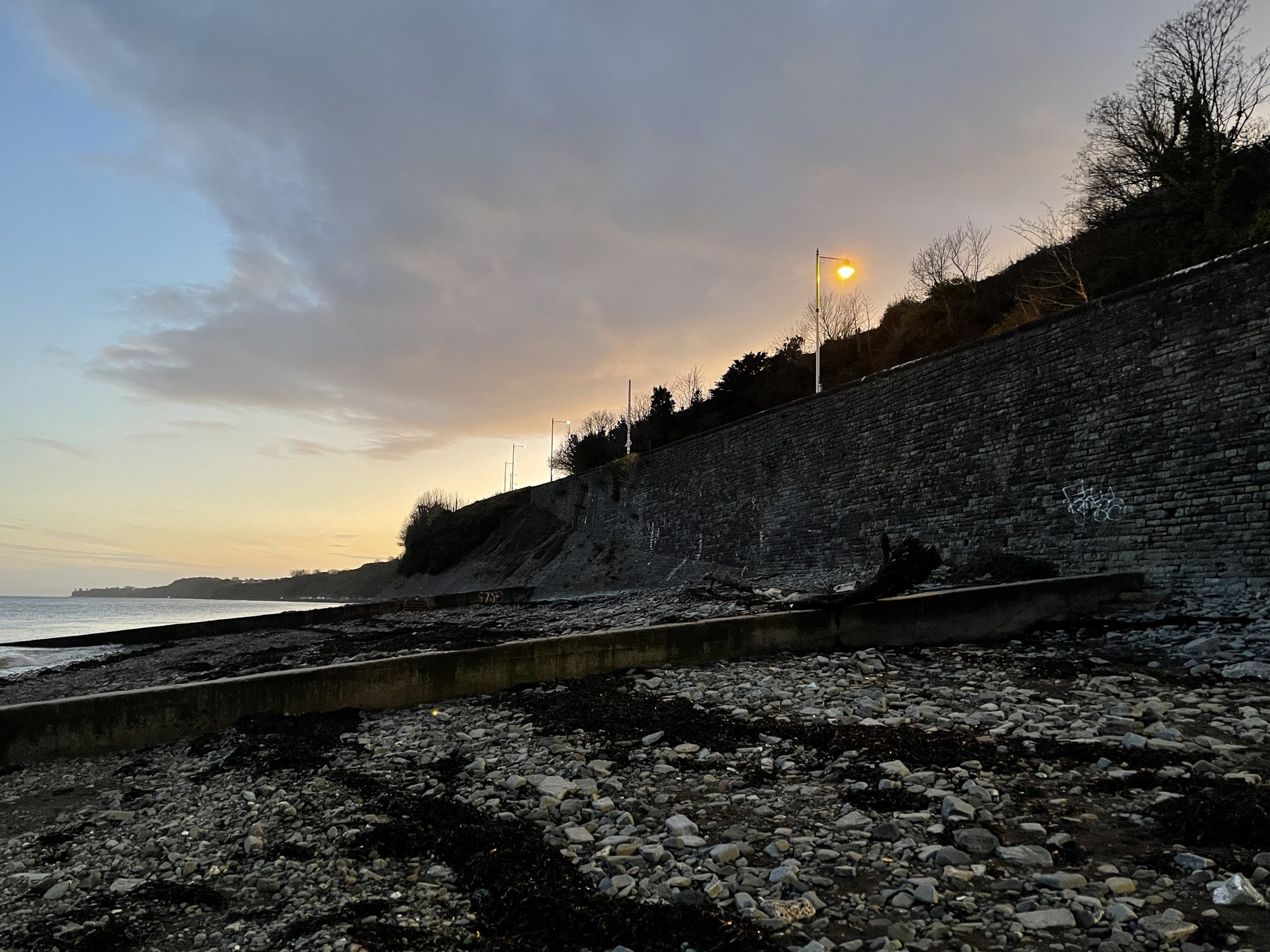
Penarth beach below the cliffs at dusk.
Where to see the paintings
The Cliff at Penarth, evening, low tide and Storr Rock, Lady’s Cove, le soir both belong to Amgueddfa Cymru — National Museum Cardiff, where they can be seen for free. The museum has written about the Penarth painting in a short piece on its blog. In 2008 the National Gallery brought the English and Welsh pictures together in the exhibition Sisley in England and Wales, and the Severn Estuary Art Atlas has notes on the Penarth views. The rest of the series is scattered through collections around the world.
More: Penarth Esplanade and the Pier · best places to sketch in Penarth.