Penarth Esplanade is the sort of walk many of us do without making a big plan of it. You might come down from Alexandra Park with a dog lead in one hand, or after cutting through town for a coffee, or just because the sun has come out and it feels wrong to stay indoors. By the time you reach the seafront, the railings, the cafes, the smell of fish and chips, Penarth Pier and the Bristol Channel are already pulling you along.
On a bright weekend it can feel busy in the nicest way, with families, swimmers, dogs, people queueing for ice cream, and someone always stopping to take a photo of Penarth Pier. On a grey weekday it belongs more to local routines: a quick walk before work, a slow walk after lunch, a few minutes by the water before going back up the hill. Either way, the same things keep catching your eye: the Pavilion, the beach, the islands in the distance, and the long line of the promenade holding it all together.
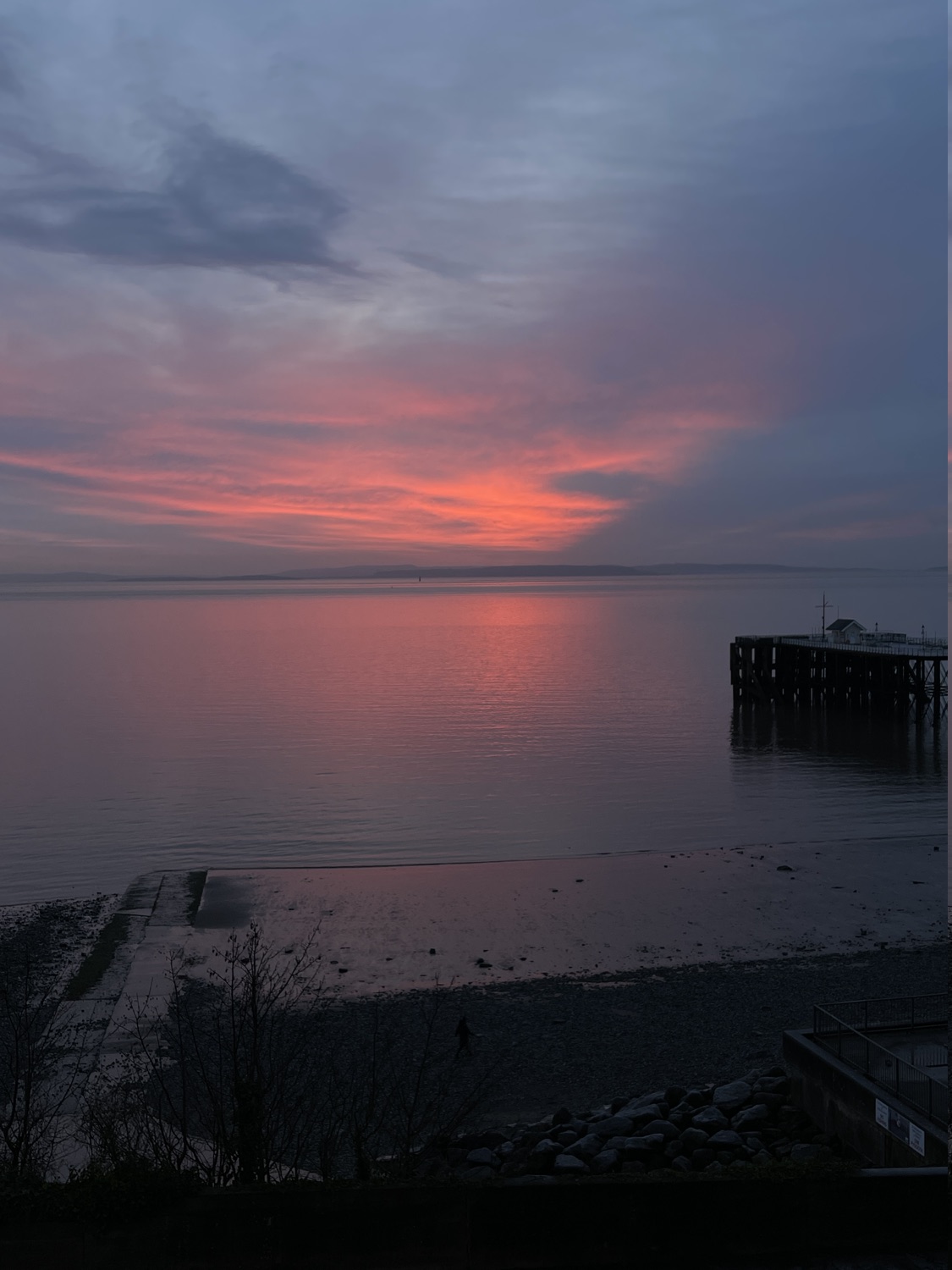
A walk along Penarth Esplanade
For me, a walk along Penarth Esplanade often begins higher up, around Alexandra Park and the cliff top, before dropping down towards the seafront. From there the town gives way to the water quite quickly: houses, trees, a turn in the road, and then the pier and the Pavilion come into view.
From the pier, you can carry on along the promenade towards Italian Gardens, with the sea on one side and the cafes, shelters and houses on the other. The gardens come later on this walk, and it is worth pausing there for the palms, steps and sea view before turning back or continuing along the Esplanade.
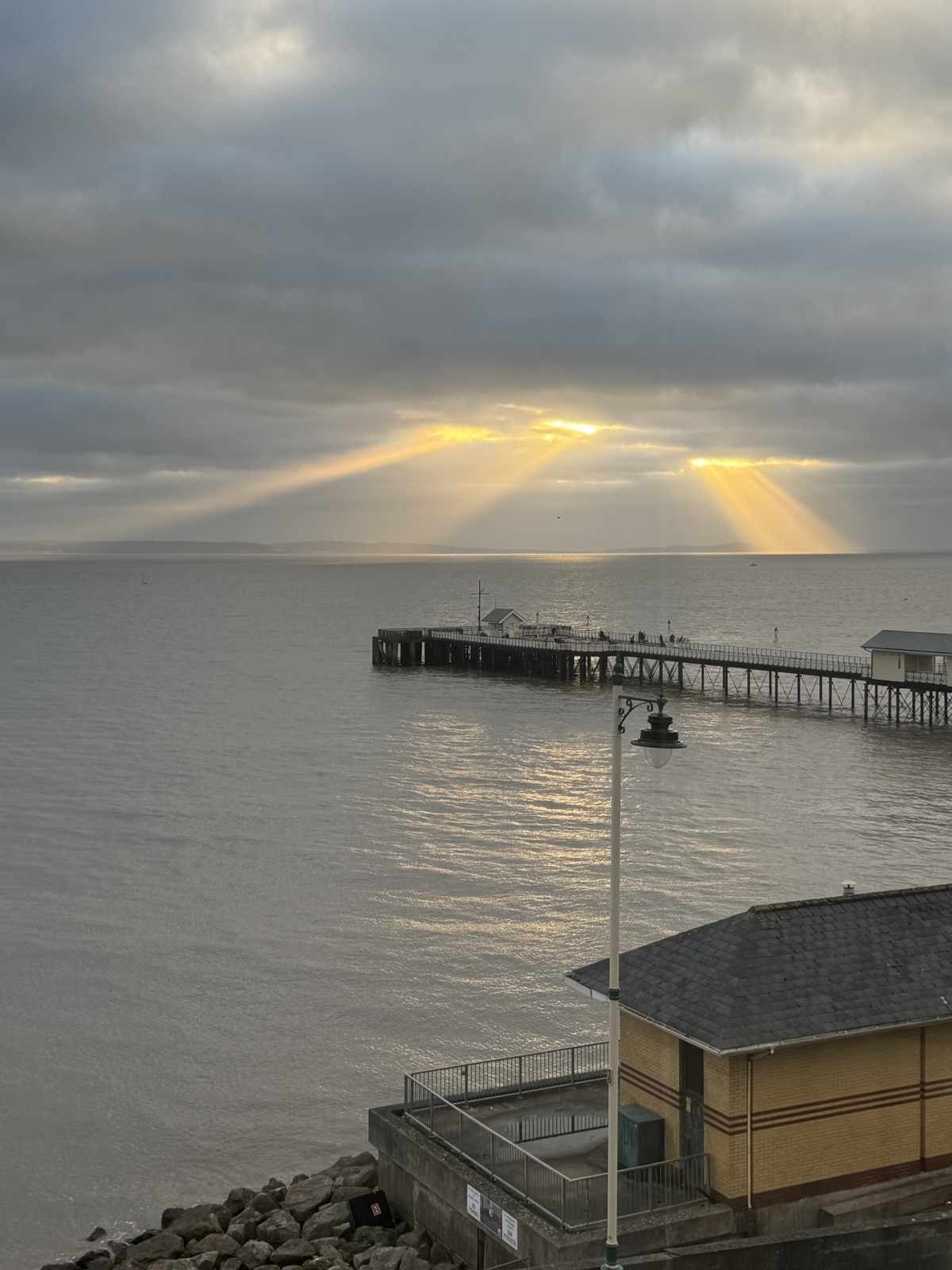
On clear days you can see Flat Holm and Steep Holm from the pier and from parts of the seafront. They are the two small islands in the Bristol Channel, lying between the South Wales coast and Somerset, and they often look like low, dark shapes on the horizon. Flat Holm is the Welsh island: Marconi sent early wireless signals from there to Lavernock Point in 1897, and it later held a cholera isolation hospital and wartime defences. Steep Holm, the steeper island towards Somerset, has its own monastic ruins, Victorian gun batteries and a quieter, wilder feel. The Flat Holm island history and the Steep Holm Trust history notes are worth reading if those shapes on the horizon start to feel less distant.
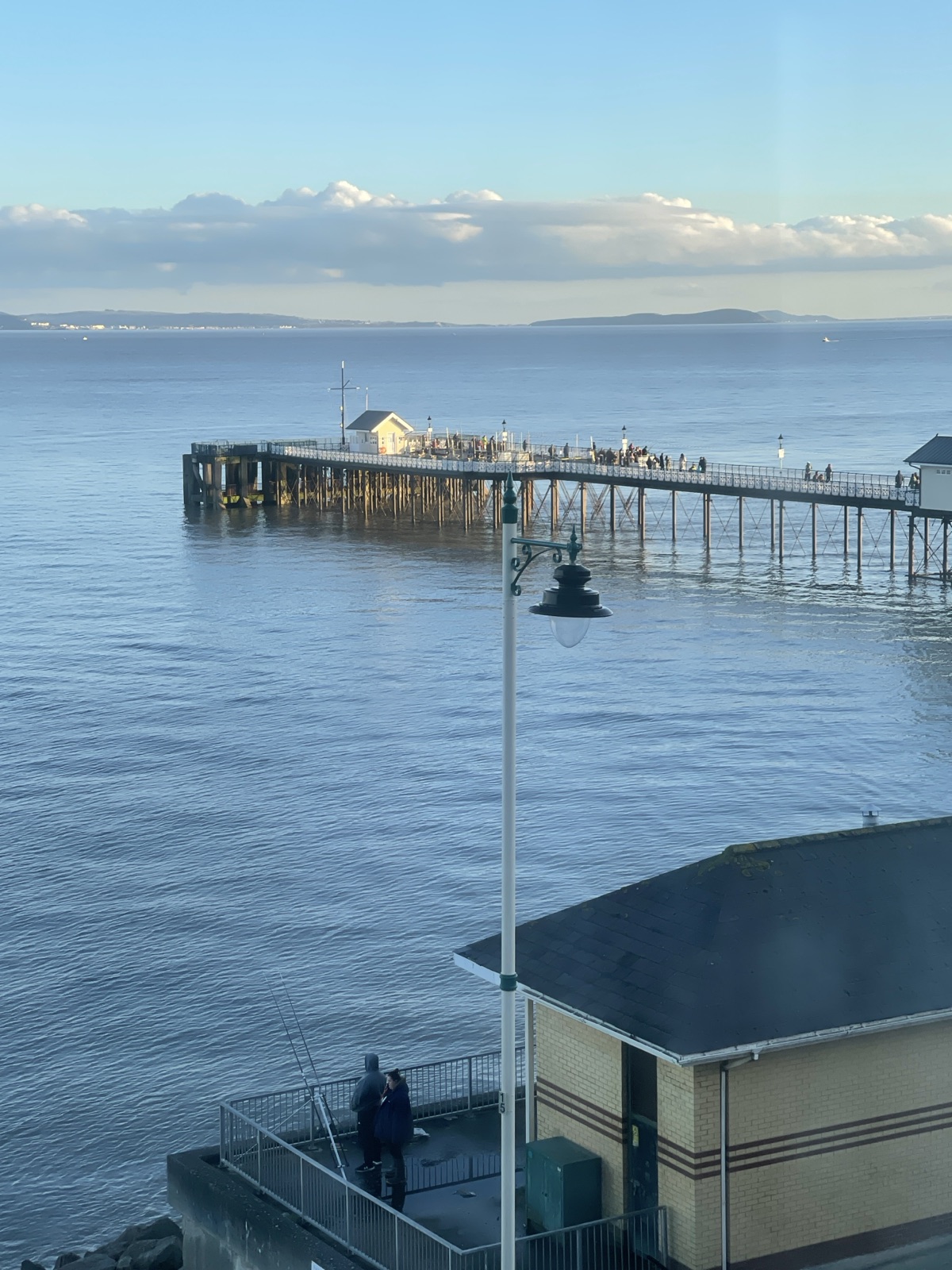
Penarth Pier and Penarth Pier Pavilion
Penarth Pier is the main landmark on this side of the Esplanade. Without it, the promenade would still be beautiful, but the eye would not have the same place to rest.
The Penarth Pier Pavilion sits at the shore end of the pier, with its Art Deco curves and pale roof. The Vale of Glamorgan Council describes the Pavilion as a seafront venue for events, weddings and community use, and the official Penarth Pier Pavilion website is the best place to check current events and Penarth Pier opening times before you go. I would not treat any blog post as a timetable; those things change.
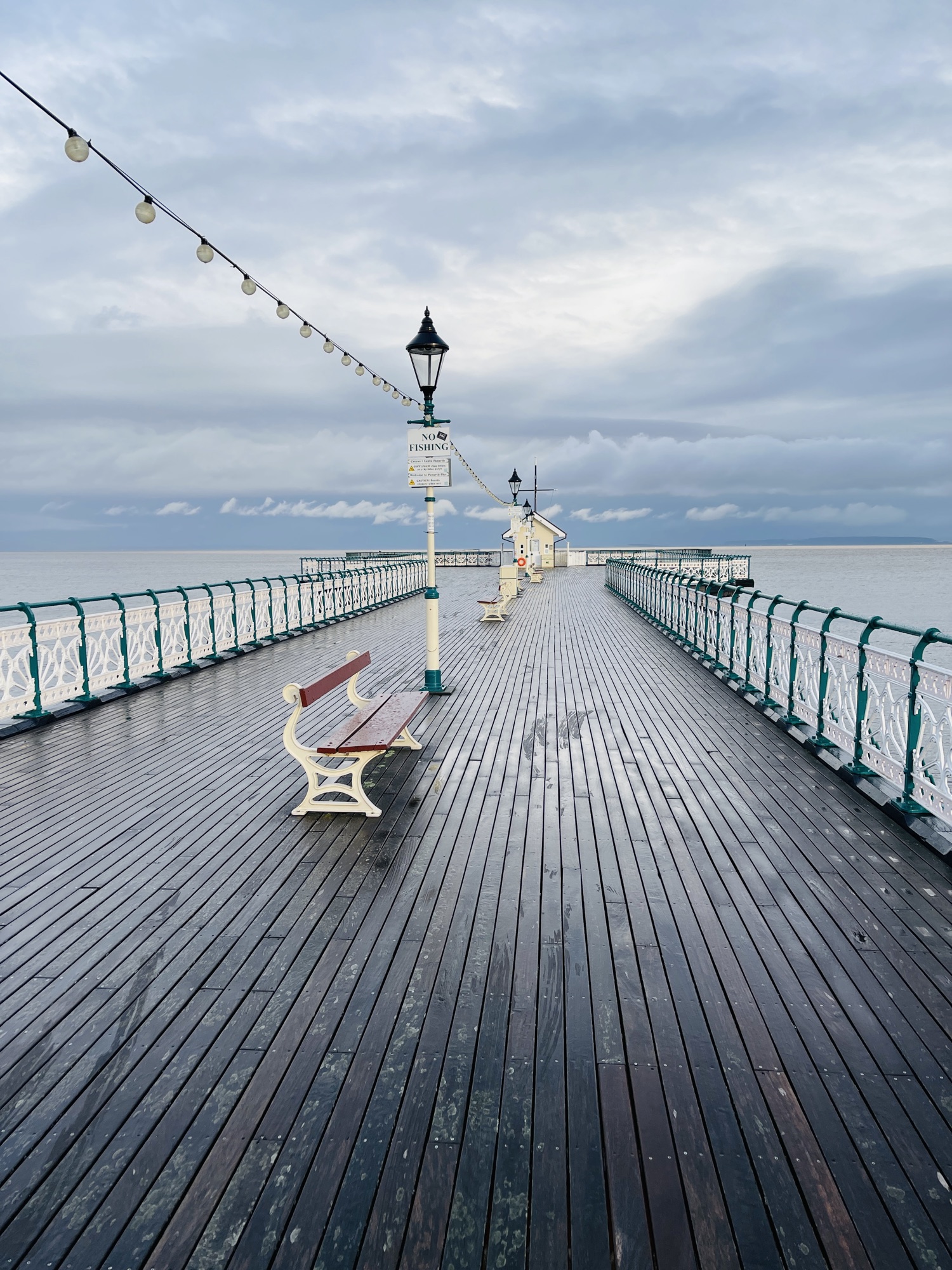
Is Penarth Pier free? Yes, the pier itself is free to walk on. You can step out over the water, look back at the town, or look down through the railings at Penarth beach and the tide.
Penarth Baths and the old swimming pool
The old Penarth Baths are just across from the pier, and they make the whole seafront story feel more complete. The public baths opened in 1885, before the pier, with saltwater from the Bristol Channel stored in reservoirs below Alexandra Park and filtered before filling the pools. Penarth Swimming and Water Polo Club was formed there in 1893 and describes itself as the oldest swimming club in Wales.
The building later became outdated as a public swimming pool, and Cogan Leisure Centre took over that role. The old Baths were converted for other uses, including The Inn at the Deep End, and are now flats, but the building survived because local people fought for it to be listed. That campaign also led to the formation of Penarth Civic Society, which is a nice reminder that local history is not only what happened long ago; sometimes it is what people decide to save.
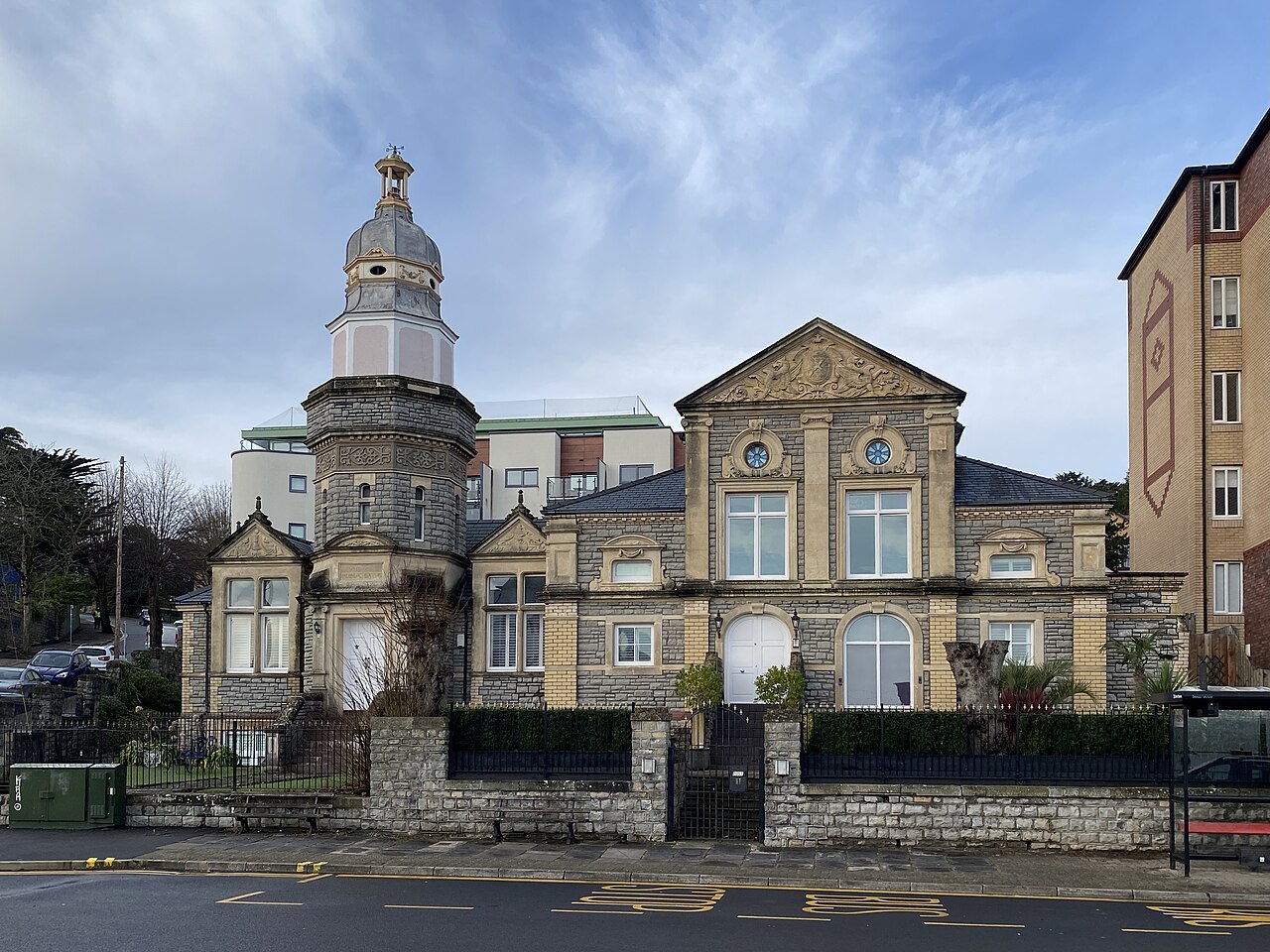
The former Penarth Swimming Baths on the Esplanade. Photo by Alan Hughes / Geograph via Wikimedia Commons, licensed under CC BY-SA 2.0. For an older archive view of the Baths beside the Esplanade Hotel, see Francis Frith’s 1896 photograph.
.jpg)
A short history of the pier
If you are wondering when Penarth Pier was built, the short answer usually given in Penarth Pier history is 1898, when the Victorian pier opened as a promenade and landing stage for steamers on the Bristol Channel. Its history is a little messier, as all pier histories seem to be: work began earlier in the 1890s, and different accounts emphasise different moments of construction, opening and later rebuilding.
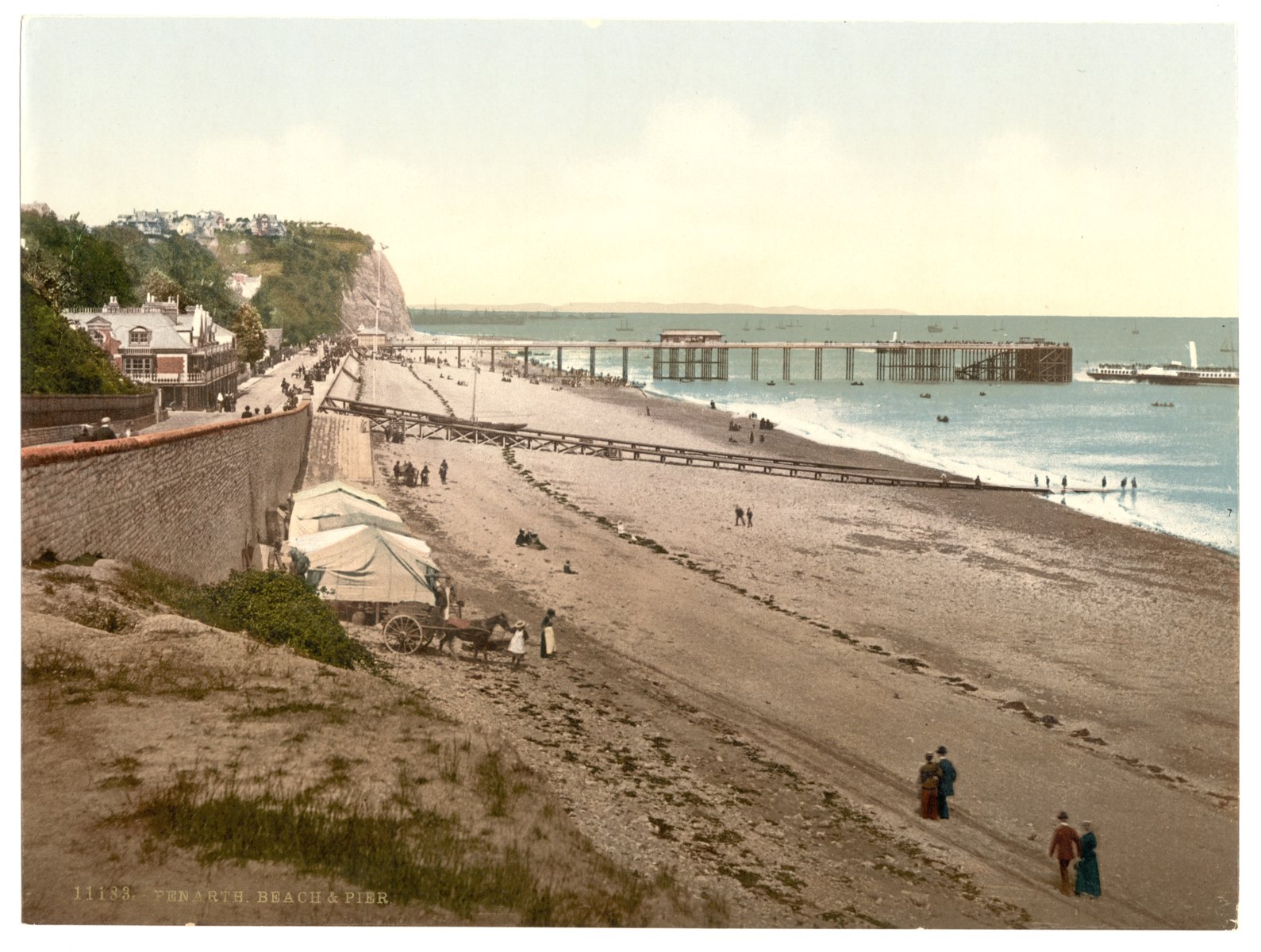
Penarth beach and pier, c.1890-1900. Image from the Library of Congress via Wikimedia Commons, public domain.

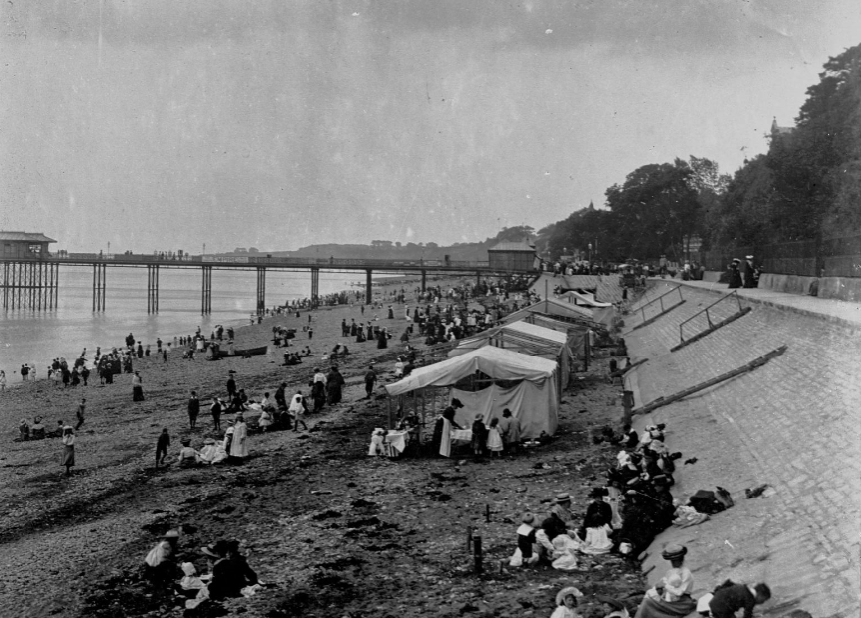
Penarth Pier and beach, c.1905, photographed by Martin Ridley. Image from the Martin Ridley Collection / National Library of Wales via Wikimedia Commons, public domain.
.png)
The pier was not just decorative. It made Penarth part of a wider seaside and steamer culture, with people coming to walk, meet and take pleasure trips across the water. In 1927, Kathleen Thomas became the first person recorded as swimming across the Bristol Channel from Penarth to Weston-super-Mare, an 18-mile crossing still remembered by a plaque on the pier.
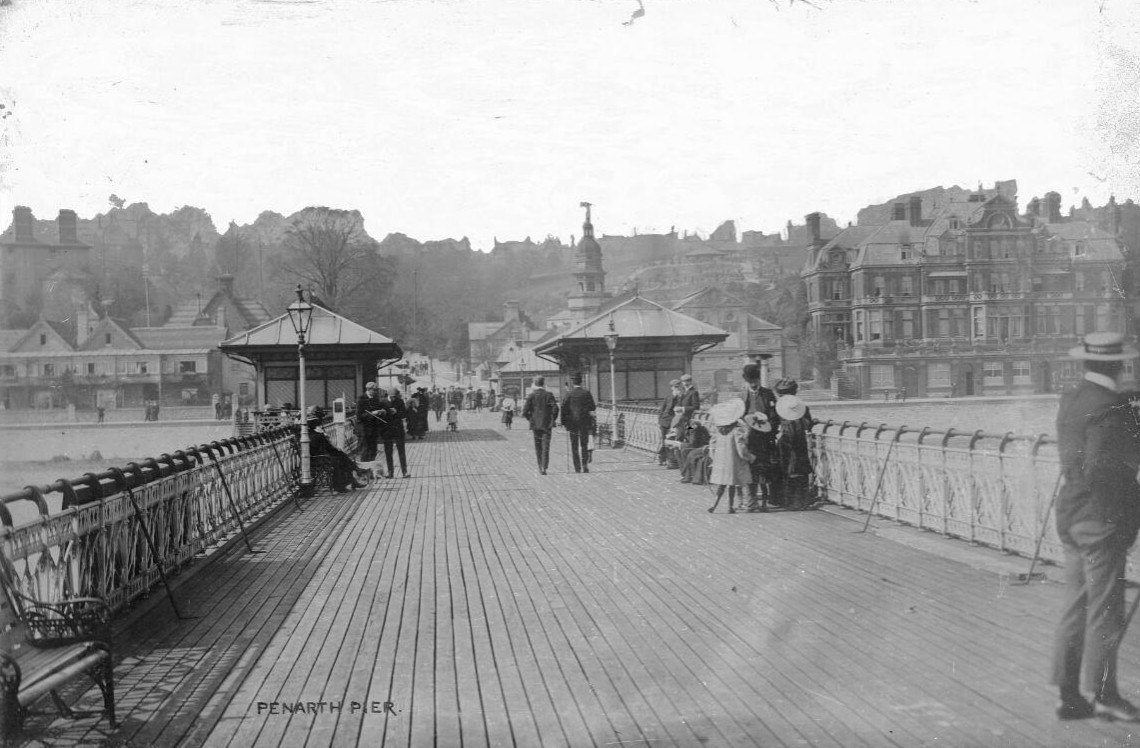
A closer historic view of Penarth Pier, c.1905, photographed by Martin Ridley. Image from the Martin Ridley Collection / National Library of Wales via Wikimedia Commons, public domain.
.jpg)
This is where the old photographs can be confusing, because there were two different pavilion stories on the pier. The wooden Bijou Pavilion was built at the seaward end in 1907, for concerts and dances. The building we know now, the Art Deco Pavilion by the shore, came later: after Penarth Urban District Council bought the pier in 1924, the landing stage was rebuilt in concrete, the landward end was widened, and the old entrance buildings and shops gave way to a much larger entertainment venue. The new shore-end Pavilion opened in 1929, with a hall, stage, shops, cloakrooms, tea rooms and terraces.
The 1931 fire is the story that makes the pier feel suddenly less like a postcard and more like a place where real danger once happened. It broke out on August Bank Holiday, when hundreds of people were on the pier and around 200 were said to be dancing in the old wooden Bijou Pavilion at the seaward end. Everyone escaped, but the Bijou Pavilion, shops, shelters and part of the decking were destroyed, and the old pavilion was never rebuilt. The newer Art Deco Pavilion at the shore end survived, which is why the pier still has that building today. Penarth Nub News has archive photographs and a fuller account of the 1931 Penarth Pier fire, including the damage seen the following day.
Some other close-up historic postcards are worth seeing too, even though I would not reuse them here without clearer permission: the Penarth Framing archive prints include old views of the pier, and the Penarth Dock Collection has several old postcard views of the Bijou Pavilion and pier entrance.
The pier had other rough chapters too. During the Second World War it was closed to the public, in 1947 a 7,000-ton ship, the Port Royal Park, damaged the seaward end during a gale, and in 1966 the pleasure steamer PS Bristol Queen struck the pier while approaching in fog. The Art Deco Pavilion later became a cinema, then the Marina Ballroom, and much later was restored as the building we see now.
Waverley paddle steamer Penarth
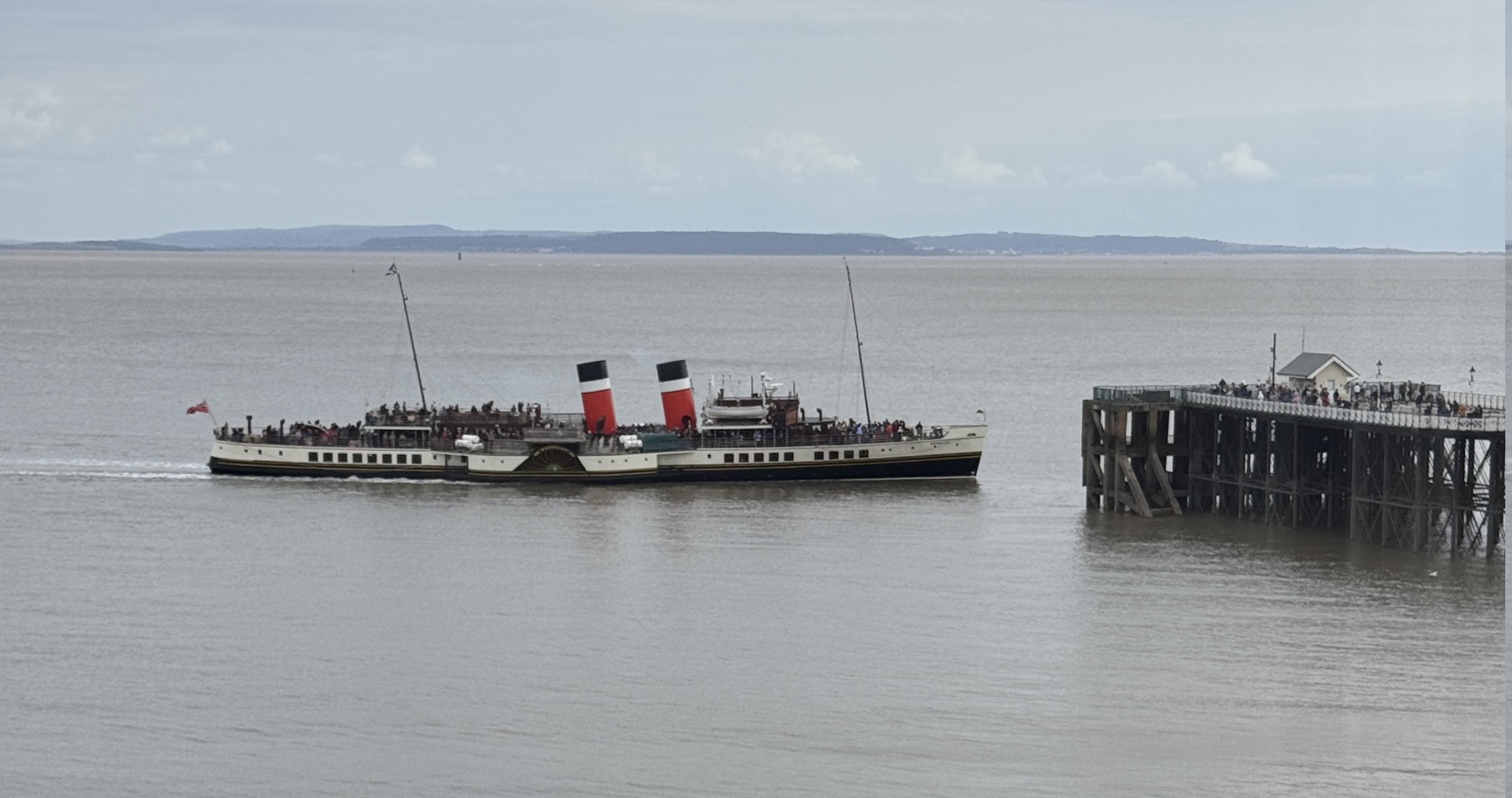
In summer, one of the most exciting sights on the seafront is the Waverley paddle steamer at Penarth Pier. Waverley is famous as the last seagoing paddle steamer in the world, and when she calls at Penarth the pier suddenly feels connected to an older Bristol Channel story.
The landing changes with the tide, and Penarth Pier is a traditional pier, so Waverley Excursions notes that stairs may be needed to reach the gangway. If you want to sail, check the Waverley Bristol Channel departure information rather than relying on memory or local rumour, however enthusiastic the rumour sounds.
Even if you are not going aboard, it is worth seeing her arrive. A paddle steamer beside a Victorian pier still feels like part of the place, not a novelty added on top of it.
Penarth sea swimming and winter swimmers
Penarth sea swimming is part of the Esplanade now. You see Penarth swimmers in summer, of course, but the early-morning swimmers are the ones people remember: small figures in dark water, bright tow floats, towels pulled tight around shoulders afterwards. The local Dawnstalkers Sea Swim Club has made that dawn habit part of the seafront, meeting before sunrise on Penarth seafront and keeping the water busy even when the weather looks uninviting from dry land.
The water here is tidal, silty and very much itself, not the clear blue sea of a postcard. That does not seem to put people off. If anything, it makes the morning swims feel more rooted in Penarth: familiar water, familiar stones, familiar wind, and the pier just beside them.
Penarth Esplanade cafes and fish and chips on the seafront
Penarth Esplanade cafes are part of the walk. You can make it a coffee walk, an ice cream walk, or a fish and chips Penarth seafront walk, depending on weather, appetite and how much wind is coming off the water.
There is practical information too: Penarth Esplanade parking changes, and charges or waiting limits can apply, so check local signs when you arrive. The Vale of Glamorgan Council has also published parking updates for Penarth Esplanade and nearby car parks, which is more useful than guessing from an old memory of where you once parked.
Penarth beach, the lifeboat station and the end of the promenade
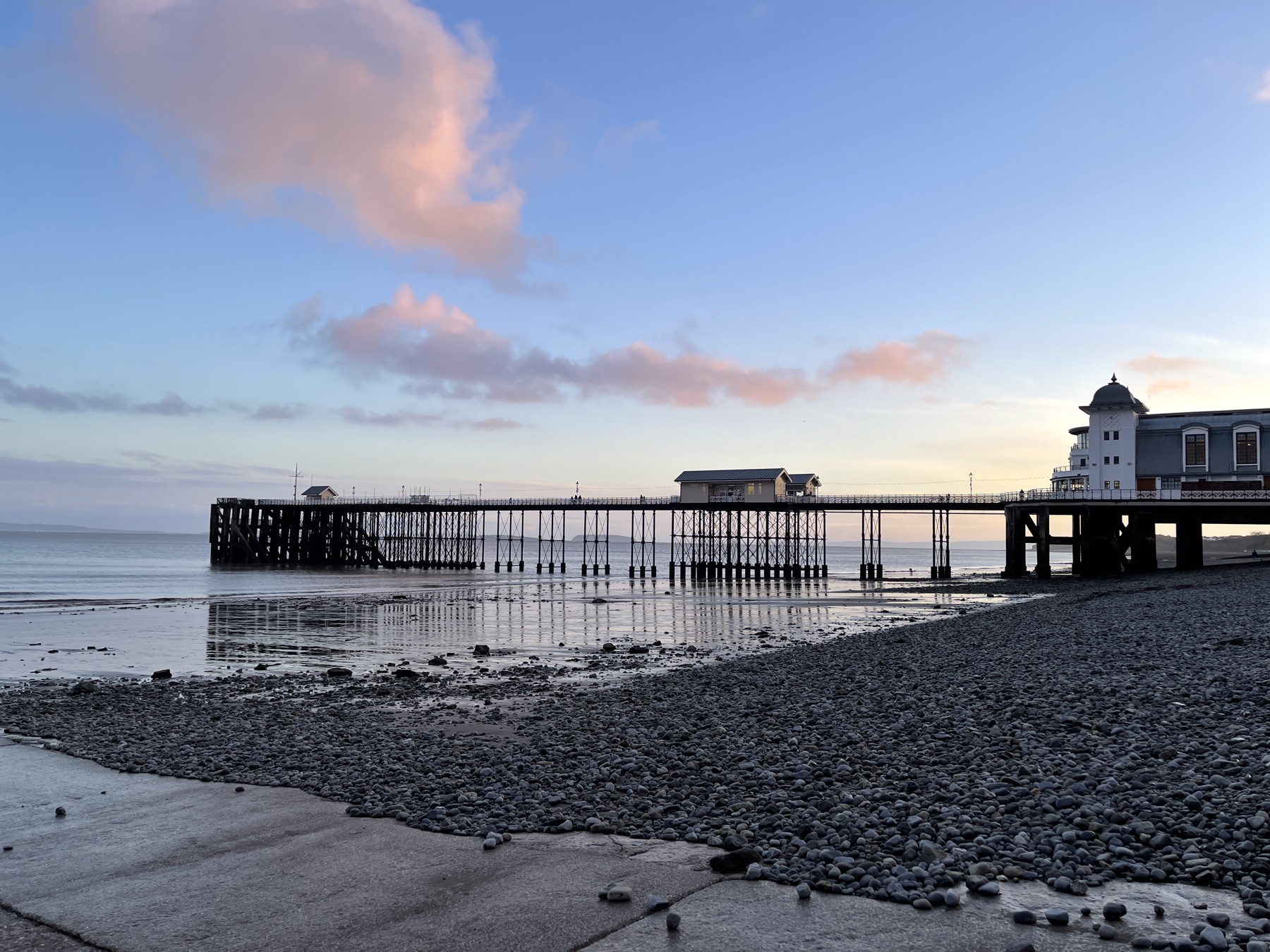
Keep walking and the Esplanade becomes less about the postcard view and more about the working edges of the place. Penarth beach is stony, tidal and changeable. It can look wide and exposed at low tide, then almost vanish when the water comes in.
The RNLI lifeboat station is part of that seafront story too. The RNLI Penarth Lifeboat Station operates inshore lifeboats and covers part of the Bristol Channel, which is a reminder that this coast is not only scenic.
When you carry on past the pier, the rhythm of the walk changes. You can look back along the railings and see how the whole Esplanade fits together: pier, Pavilion, beach, lifeboat station, cafes, Italian Gardens, cliff top, sky.
Sketching Penarth Pier and drawing the seafront
For me, sketching Penarth Pier starts with these ordinary walks: the pier in sun, fog, rain, evening light, or seen quickly while passing the Pavilion. I have written separately about painting Penarth Pier, so I will keep this part brief, but a lot of those paintings begin somewhere on this stretch of seafront.
If you are looking for a Penarth Pier painting, these are a few pieces connected with this stretch of seafront that are available at the moment:


For me, the Esplanade works because it is specific. The same walk changes with the tide, weather and light, and that is enough reason to keep painting it.