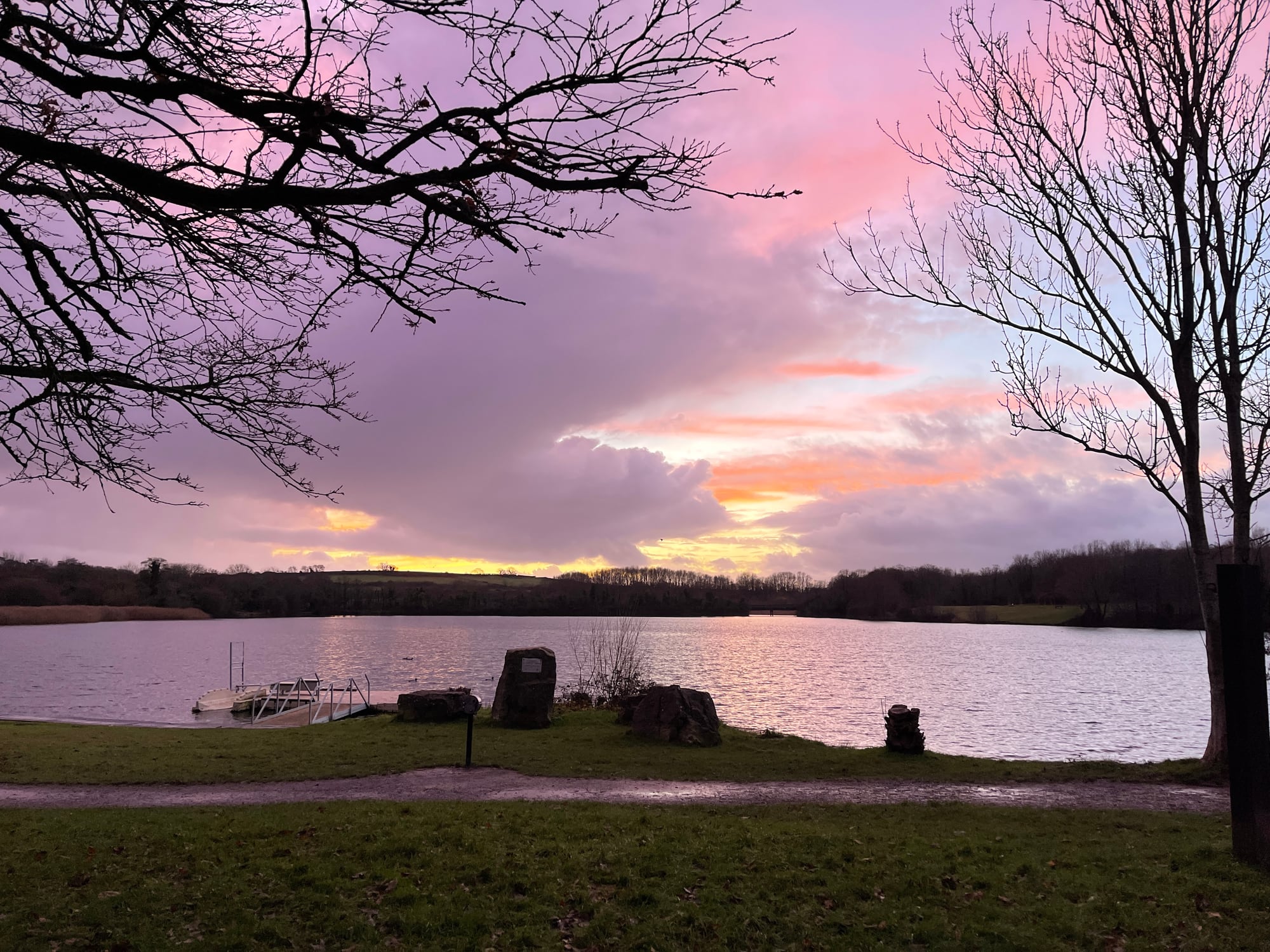
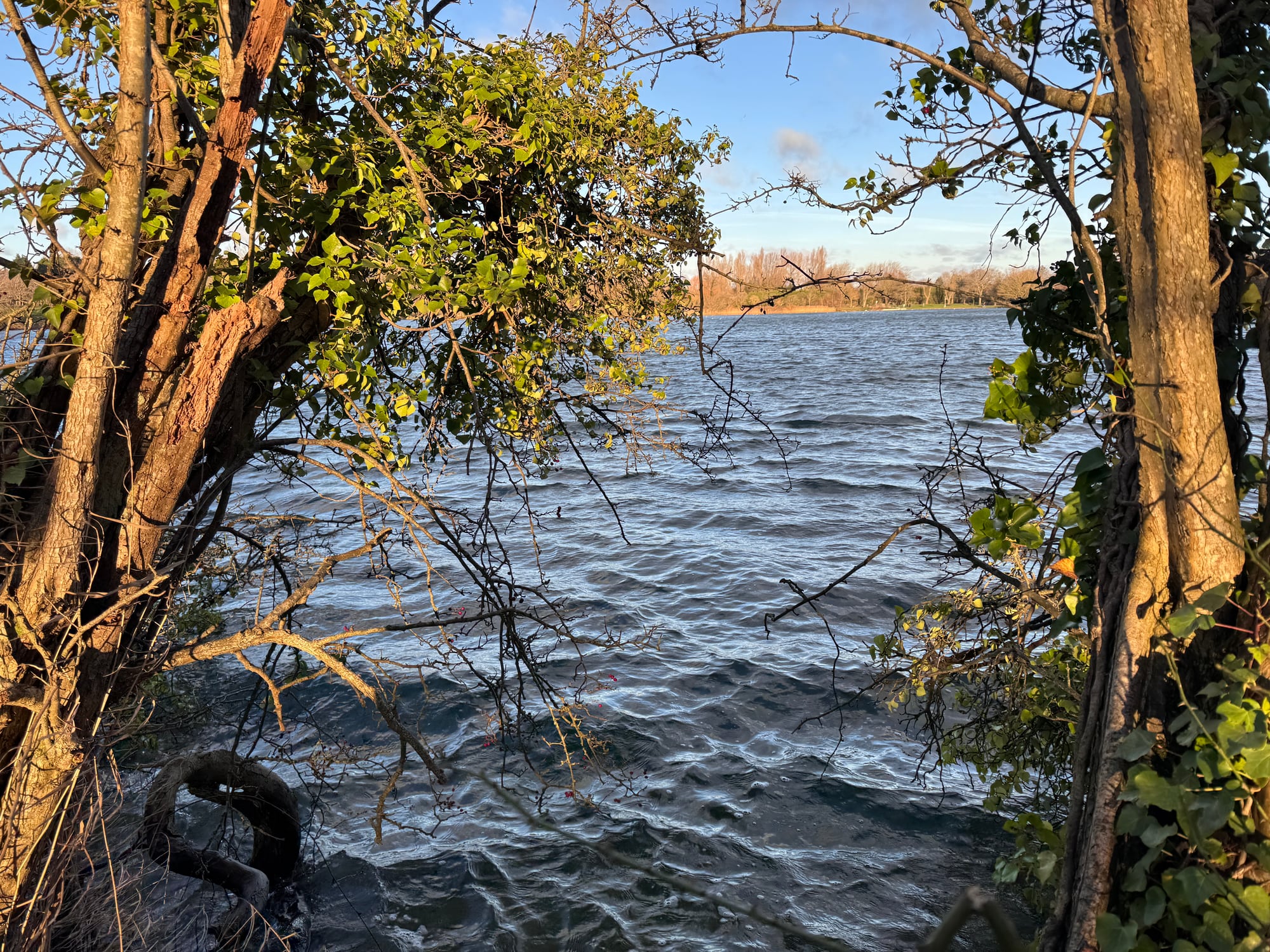
Cosmeston Lakes Country Park sits just outside Penarth, past Lavernock Road. Most days it is a simple pleasure: two lakes, dramatic swans, reeds, dog walkers, a café. You can come for an hour, draw water and birds, and call it a good day.
But walk along the eastern side and you reach a wooden gate. Behind it stands a medieval village. Thatched roofs, wattle fences, sometimes smoke from a fire. It is not a film set. A real village stood on this exact spot seven hundred years ago. Almost everything we know about it was read from broken pottery. Not by me, I should say at once — by archaeologists, over many years. I only read their findings. They turned out to be one of the best local history stories I know.
The lakes are the newest thing here
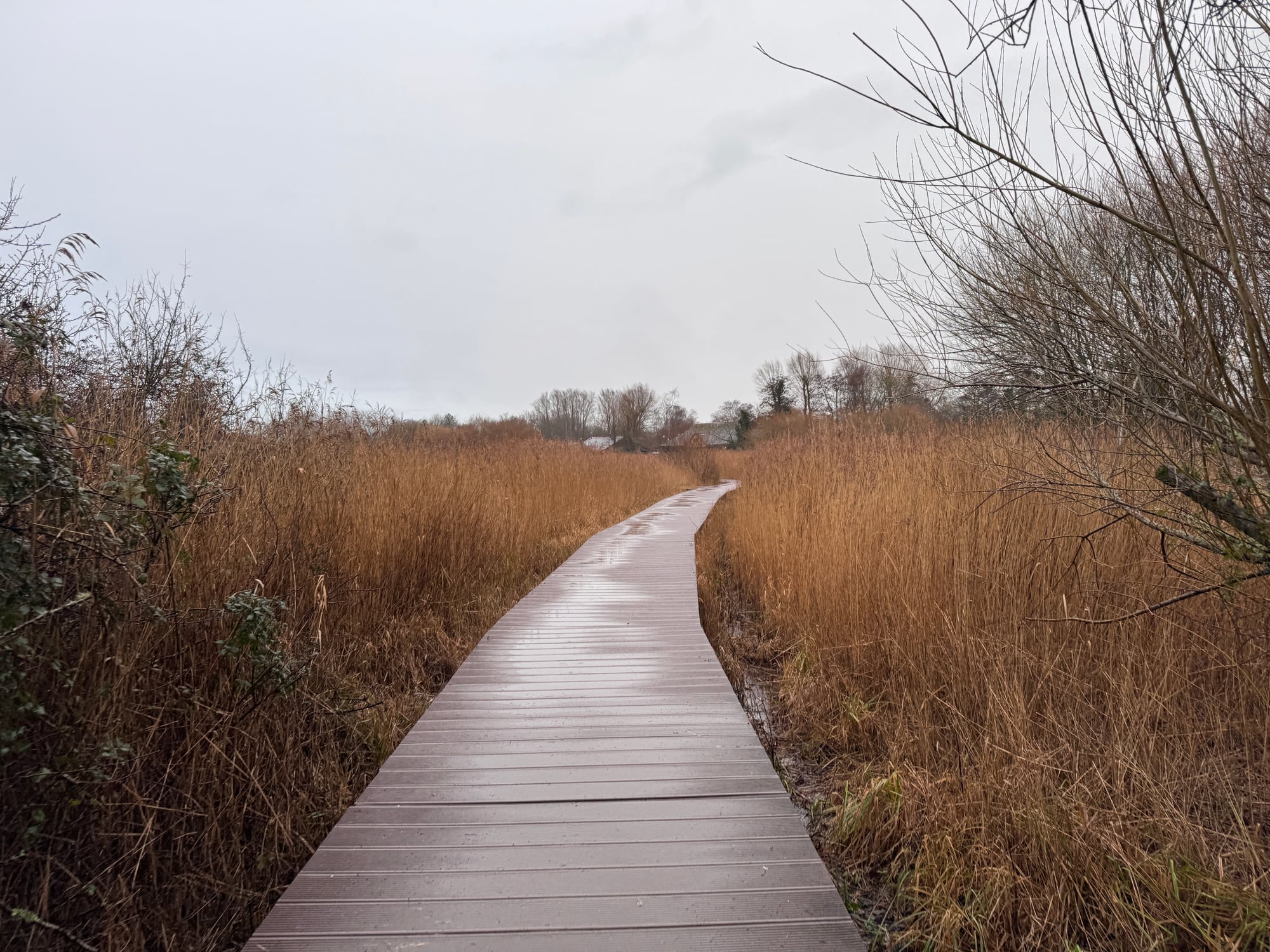
The lakes look eternal. They are barely older than colour television. This was a limestone quarry. Work stopped in 1969, and the site closed in 1970, when the cement company Blue Circle left. Four big holes remained. Two of them filled with spring water and became the West and East lakes. In 1978 the site opened as a country park. That same year, while the park was being laid out, archaeologists found the remains of the medieval village.
I like this order of events. The most natural-looking part of the park is industrial. And the medieval part came back to light because of a quarry. Landscapes have layers; here the layers are shuffled.
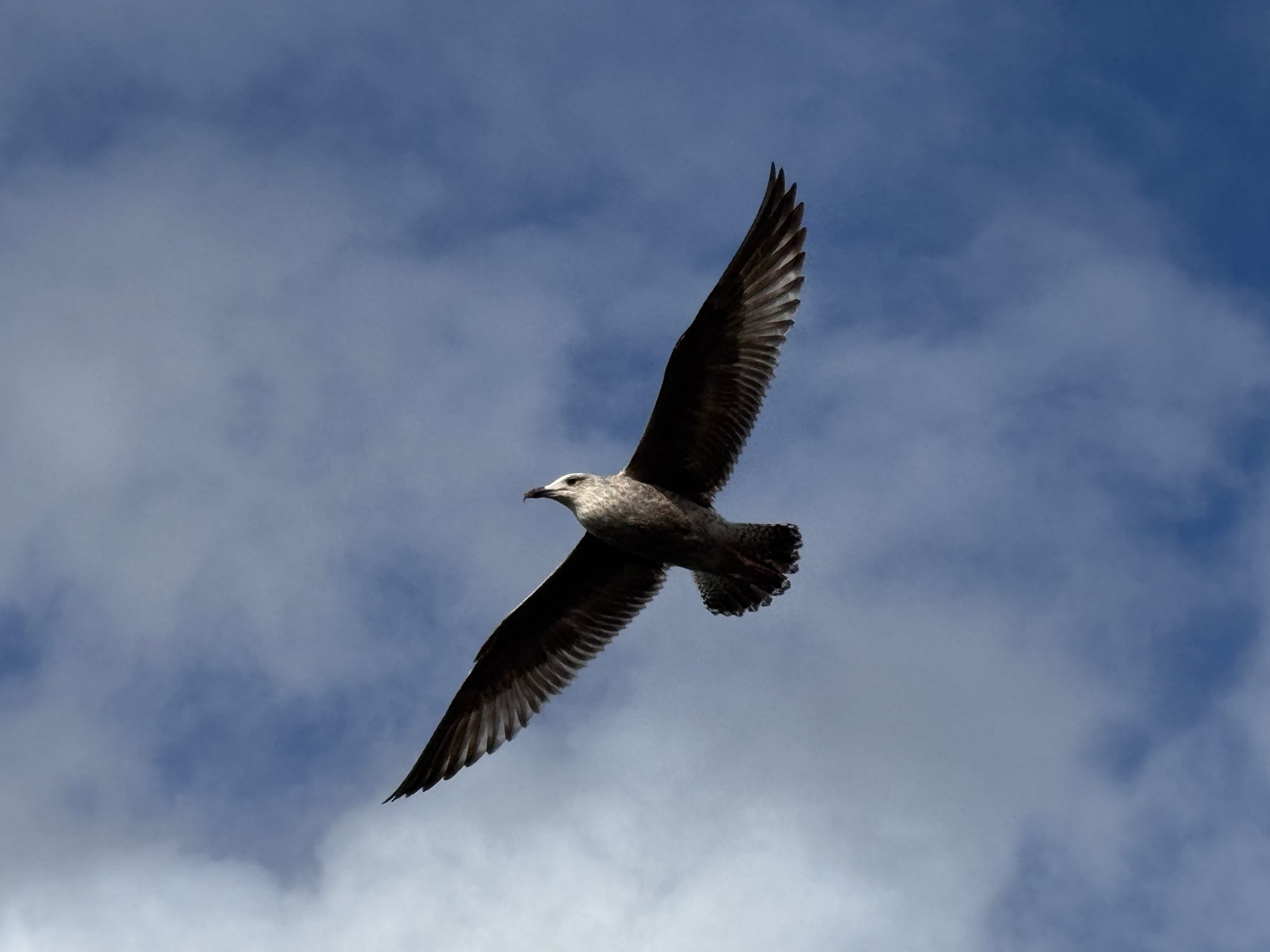
The lakes are generous for drawing: reeds close up, water birds that hold a pose better than most models, long views with trees behind. There are benches, flat paths, and a café by the visitor centre for the usual Welsh weather plan. Parking is at the main entrance off Lavernock Road. Dogs are everywhere and welcome; the nature reserve asks for leads. If you want to know what I bring on walks and outdoor sketching meetups, I have written about that too.
A family from Normandy
The village behind the gate has a very old name. In the early 12th century, a Norman family called de Costentin built a fortified manor here. They came over after William the Conqueror. Their name came from the Cotentin peninsula in Normandy. The settlement around the manor became Costentinstune — Costentin’s farm. Nine hundred years of Welsh and English pronunciation ground it down to “Cosmeston”.
I find this genuinely moving. The name of a French peninsula, carried across the sea by one family, is still printed on the local bus stops. On old maps of Glamorgan — Camden’s, and Yates’ map of 1799 — the place is plain “Coston”. The name wore down even shorter, then bounced back.
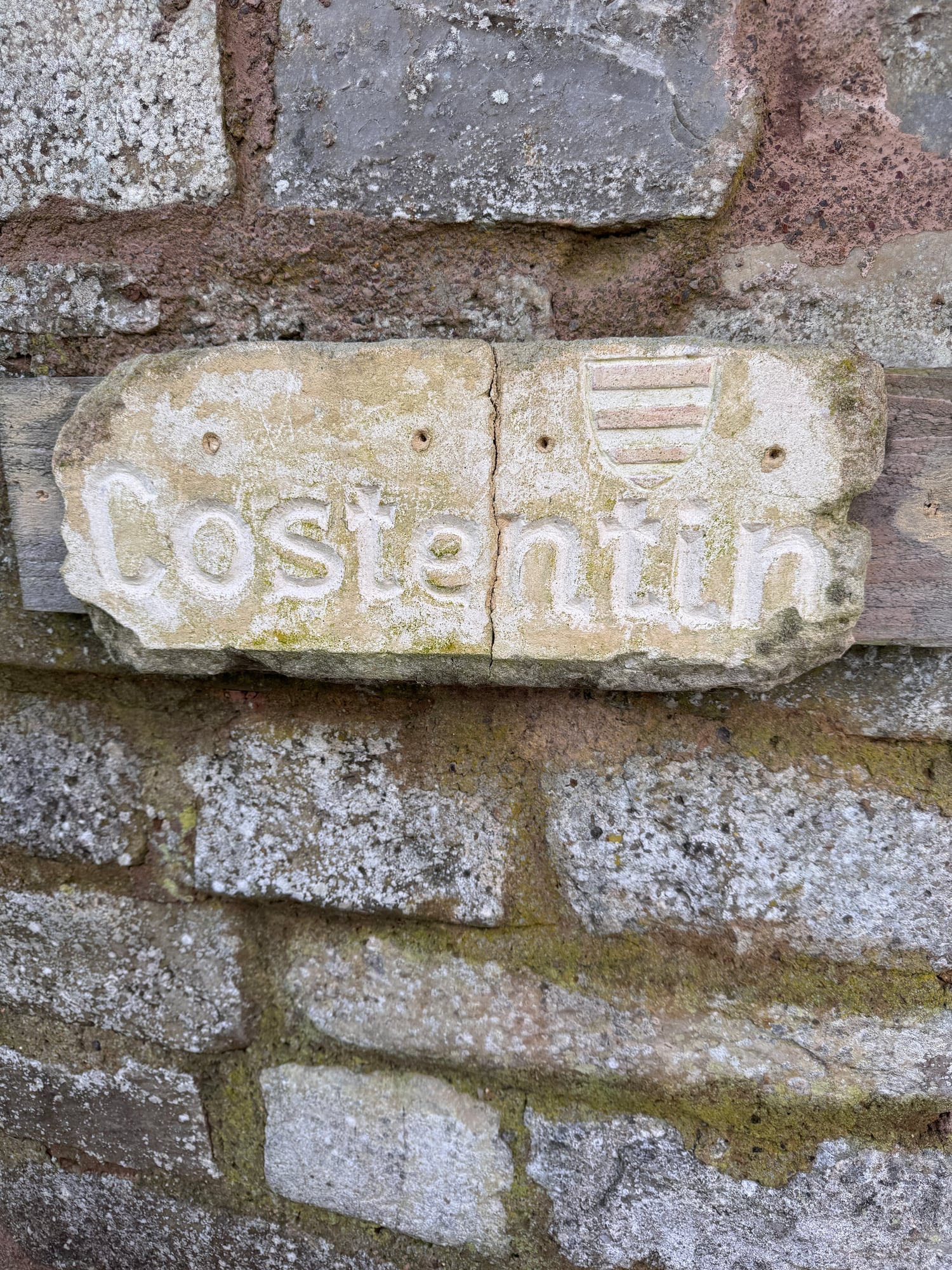
In 1316 the manor passed to another Norman family, the de Cavershams. They wanted a working, profitable estate: a manor house in the middle, and around it the households that served it — a dairy, a bakehouse. Both will matter later in this story. There was also a small round building. Archaeologists politely call it “either a dovecot or an oven”. I prefer to say it has kept its secret for seven hundred years.
The village that came back
After the 1978 discovery, the site was dug through the 1980s, and again in 2007–2011. The buildings you walk through today stand on the original foundations and follow the excavation evidence. In 1985 the reconstruction won a Heritage in Britain Award. The chosen moment is around 1350, under Edward III. The village at its height — just before the Black Death reached Wales.
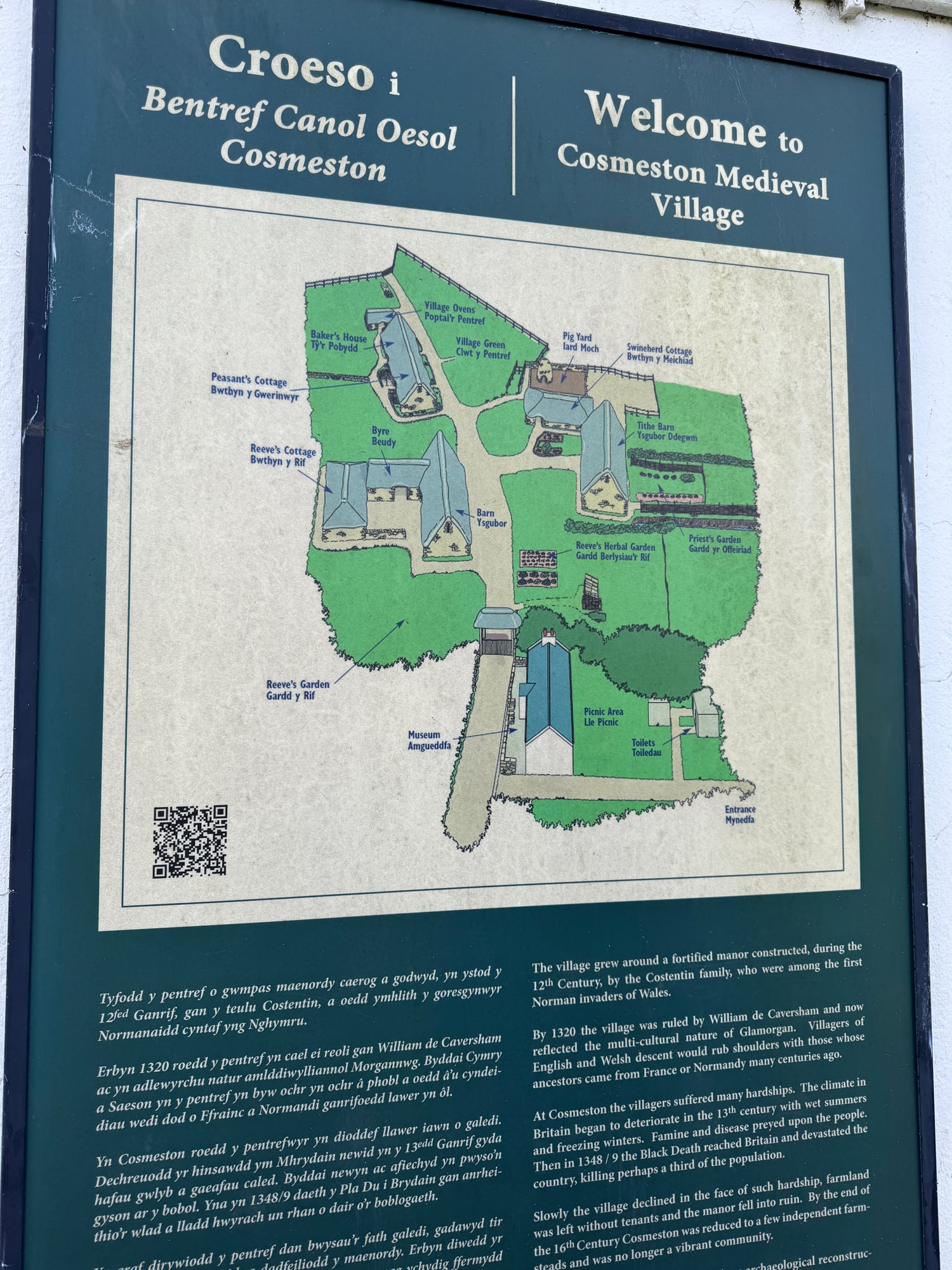
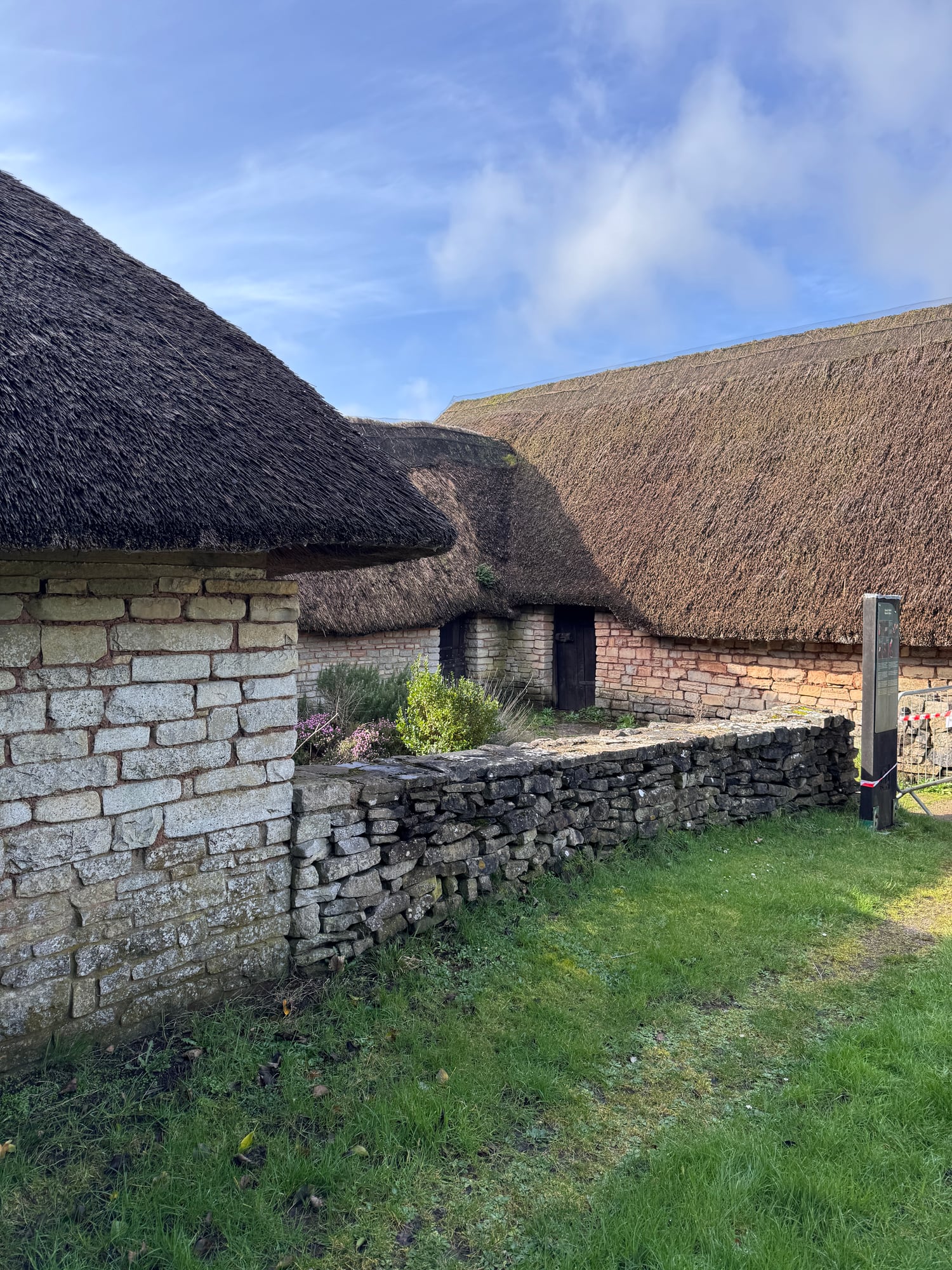
On event days there are re-enactors. On ordinary days it is quieter, which I prefer for drawing. Wattle, thatch and smoke make wonderful textures. And nobody in costume asks what you are sketching.
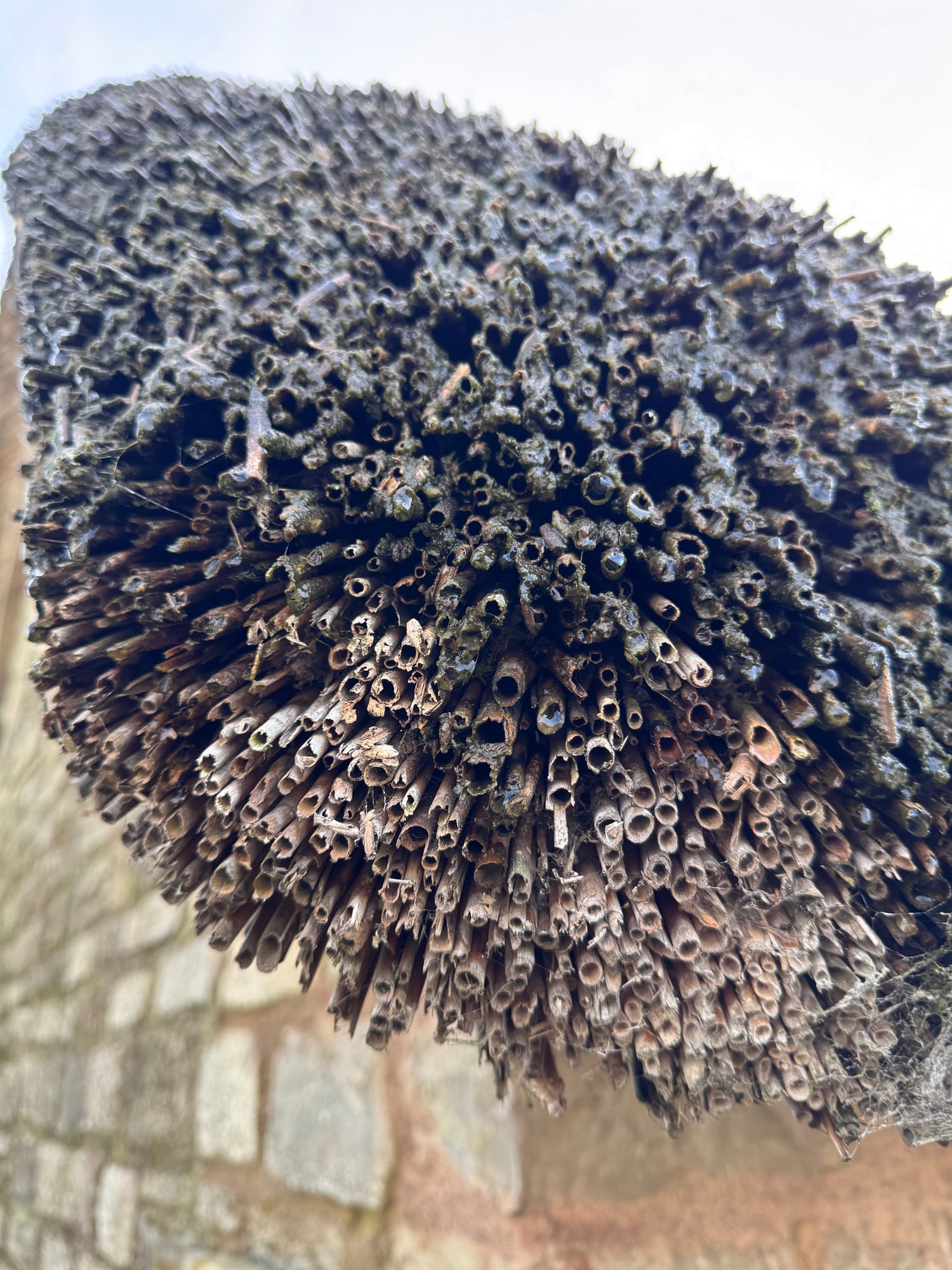
The reconstructed village rewards close looking. Seen from underneath, a thatched roof becomes a dense structure of cut stems — less like a soft rustic surface and more like careful construction.
What broken pots can tell you
The digs at Cosmeston produced the largest excavated collection of medieval pottery in South Glamorgan. Thousands upon thousands of fragments — enough for an entire Cardiff University doctoral thesis, written by archaeologist Alice Forward. Here is what the pots said.
Start with the strangest fact. Before the Normans arrived, people here barely used pottery at all. Cooking and storage were managed with wood, leather and metal. Then the de Costentins and their neighbours turned up — and with them came jugs and jars. First imported ones, from kilns near Bristol and from the Cotswolds. Later, local ones, made from Vale clay. At Cosmeston, pottery itself was once the new foreign fashion.
The villagers had no rubbish pits. Rubbish pits are a town habit. In a village, broken pottery went under your feet. Sherds were laid down as a hard surface in the yards of the dairy and the bakehouse, where cattle and people churned the ground every day. People paved their working lives with their broken dishes. In one household — the dairy, “property 3” in the reports — archaeologists counted at least 37 separate jugs. Roughly a century of daily use and breakage, preserved as a floor.
A medieval kitchen, in fragments
The finds read like a kitchen inventory. Incurved dishes were for dairy work: cream, curds, cheese. Cisterns were for brewing beer at home. Costrels were travellers’ flasks — the medieval water bottle. And my favourite word in the whole thesis: curfews. These were heavy clay covers, placed by the fire to control the embers overnight. The English word curfew comes from the French couvre-feu, “cover the fire”. Before it meant “everyone off the streets”, it meant this clay dome, keeping the household fire safe while everyone slept.
The pots also quietly show who was who. Peasant houses were full of curfew fragments. The manor produced exactly one — and even that one may have strayed there. Different houses, different nights. Someone banked the embers carefully, because fire was survival. Someone else had their fire tended for them.
Status shows in the glaze too. Everyone used local Vale Ware jugs, from the manor down. But the manor’s jugs carried richer decoration, made for show as much as for use. And Saintonge Ware — pale glazed jugs shipped from Gascony in France, the pottery of wine-drinking households — appears only at the manor. The peasant houses had none. Archaeologists call it a “dividing ceramic”: you could sort the village’s social order by glaze alone. One Saintonge jug found here has a parrot-shaped spout. A French parrot jug, in a Welsh farming village, seven hundred years ago.
The grandest object is the ram aquamanile — a water jug shaped like a ram, used for washing hands at table. It was found in pieces in the demolition layers of the manor during the 2011 dig. Only three such vessels are known from all of South Glamorgan. The other two come from Cardiff Castle and the manor at Rumney. All three were made locally, from the same Vale clay. Three connected households, apparently buying their fashionable tableware from the same workshop. The 14th-century version of spotting your own dinner set at a friend’s house.
And the face jug — a local jug with a face modelled on it, the only one from Cosmeston. It did not come from the manor. It came from the rubble of the dairy, among those 37 everyday jugs. Someone made that face. Someone poured from it and washed it for years. When the building came down, the face went into the rubble with everything else — and waited seven centuries for an archaeologist.
The five-hundred-year motorway
The pots also draw a map. They travelled through Bristol, Cardiff and Swansea, and through the small landings at Sully and Aberthaw, a coastal village between Barry and Llantwit Major. This network barely changed across five hundred years. It follows routes already visible in the Iron Age and Roman periods. The Bristol Channel worked as a motorway. Even a small manor was plugged into roads running from Bristol to Bordeaux.
There is a sad coda. By the mid-15th century, pottery production in South Glamorgan had mostly ended — just as ceramics became fashionable across Britain. New vessels were simply easier to ship in from Somerset and North Devon. The village faded, as most villages did after the 14th century. The water road outside kept running. It runs still — you can watch the ships from Penarth seafront.
A still life, seven hundred years long
I paint jars, kettles and bottles — the things we see every day and never notice. Cosmeston is the same still life, with the clock run further. Jugs, cooking pots, fire covers: used until they broke, then trodden into the yard. Nobody in 1350 thought their jug was history. It was just the jug.
That is the quiet lesson I take from this place. Ordinary objects outlast their owners and end up telling the story. Draw the kettle. You never know who will read it in seven hundred years.
Sources and further reading
Historical and archaeological details are drawn from Alice Forward’s PhD thesis, Cardiff University, 2013 — a 472-page study of what broken pottery reveals about everyday life in medieval South Glamorgan — and from the Vale of Glamorgan Council’s pages on Cosmeston Medieval Village and Cosmeston Lakes Country Park. For opening times and event days, check the council pages.